Art Flow Activity 🔵 Workshop: Cyanotype & Chlorotype – Printing with Sunlight
Before the digital sensor, before the darkroom, before the film — there was light and chemistry. Two of the oldest photographic processes in history came back to life during the ART FLOW Youth Exchange. Some images are not taken — they are revealed. Through light, time, and chemistry. Participants explored alternative photographic processes where the sun itself becomes part of the creation, and every image emerges slowly, shaped by nature and intention.
Facilitated by: Mgr.art. Soňa Sadloňová (Professional Photographer from Slovakia)

Educational Approach
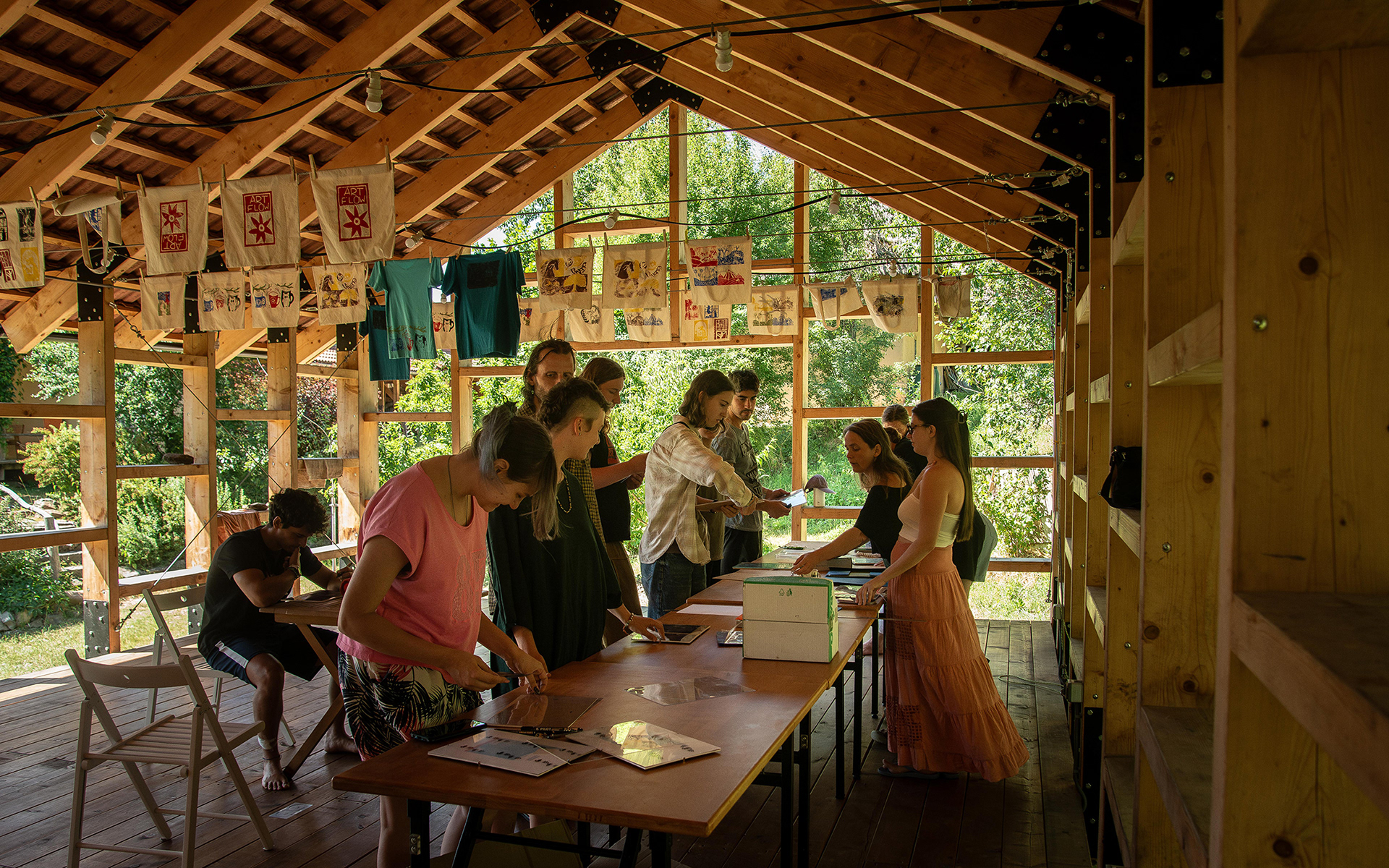
This workshop embodied the full spectrum of non-formal learning. Preparation began days before the actual workshop — participants were introduced to the techniques in advance, emulsions were prepared, watercolour papers were coated with light-sensitive solutions, and participants were invited to upload their own visuals to a shared drive for use in their compositions. This extended preparation was itself a learning experience, building anticipation and conceptual thinking before a single sheet of paper touched the sun.
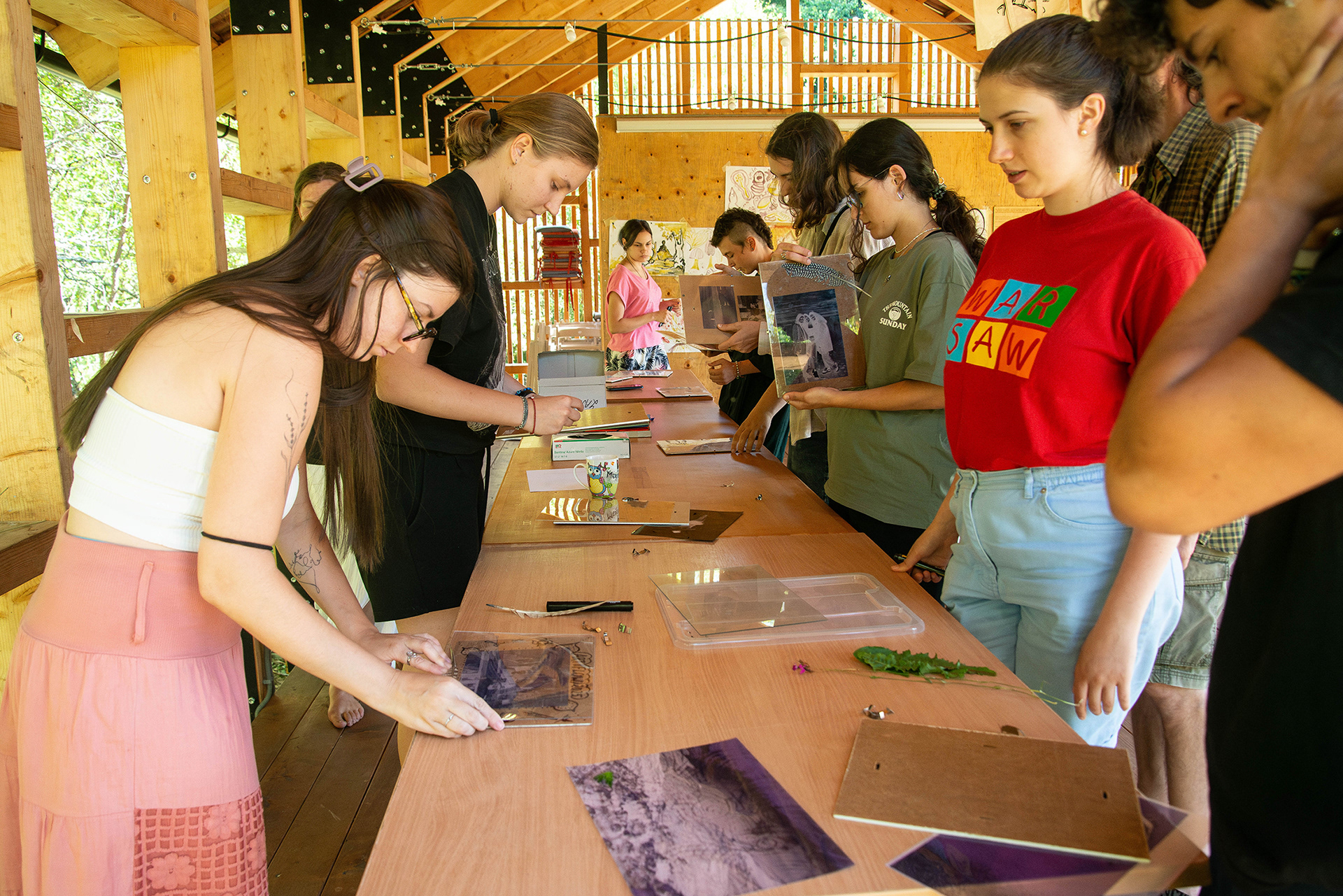
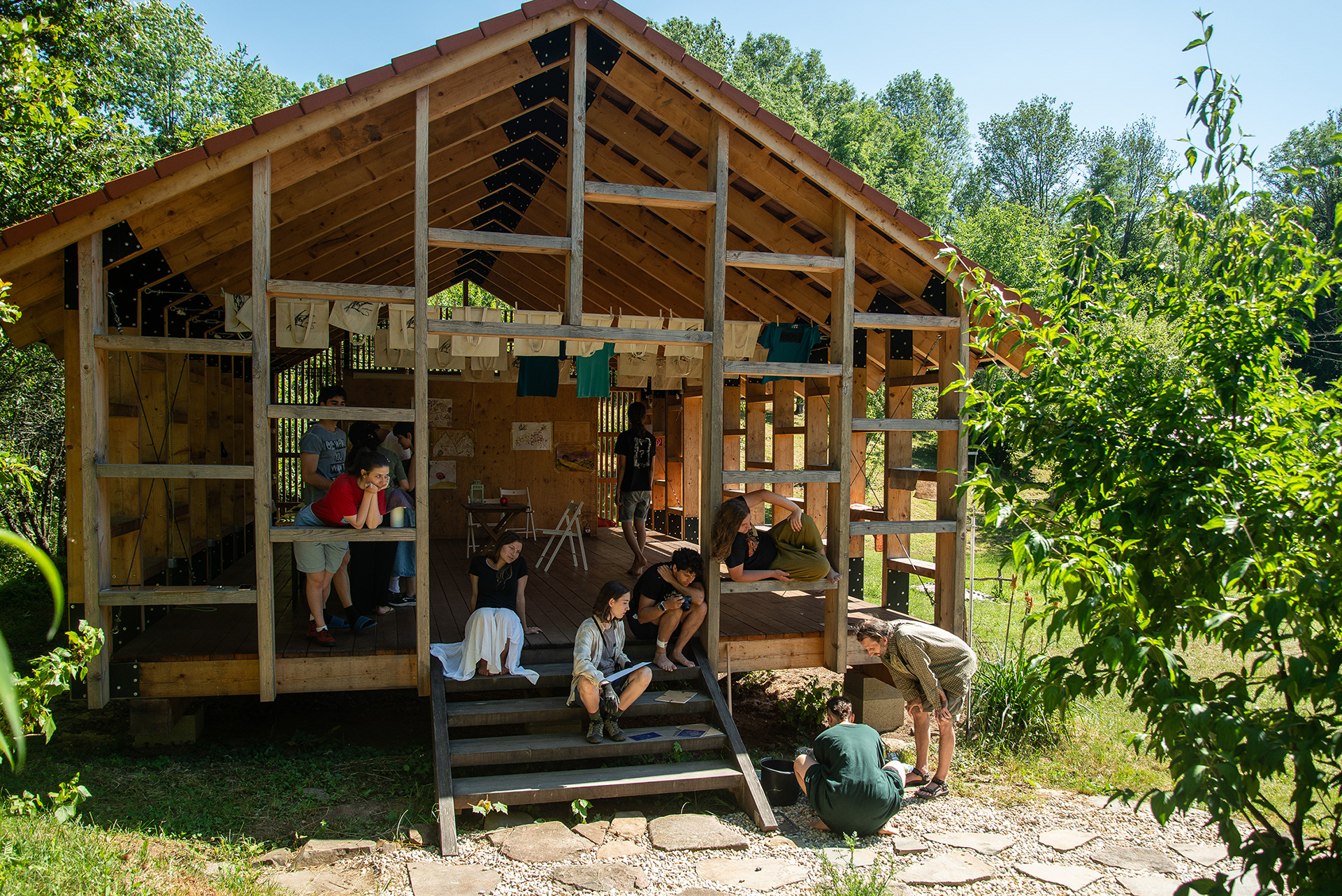
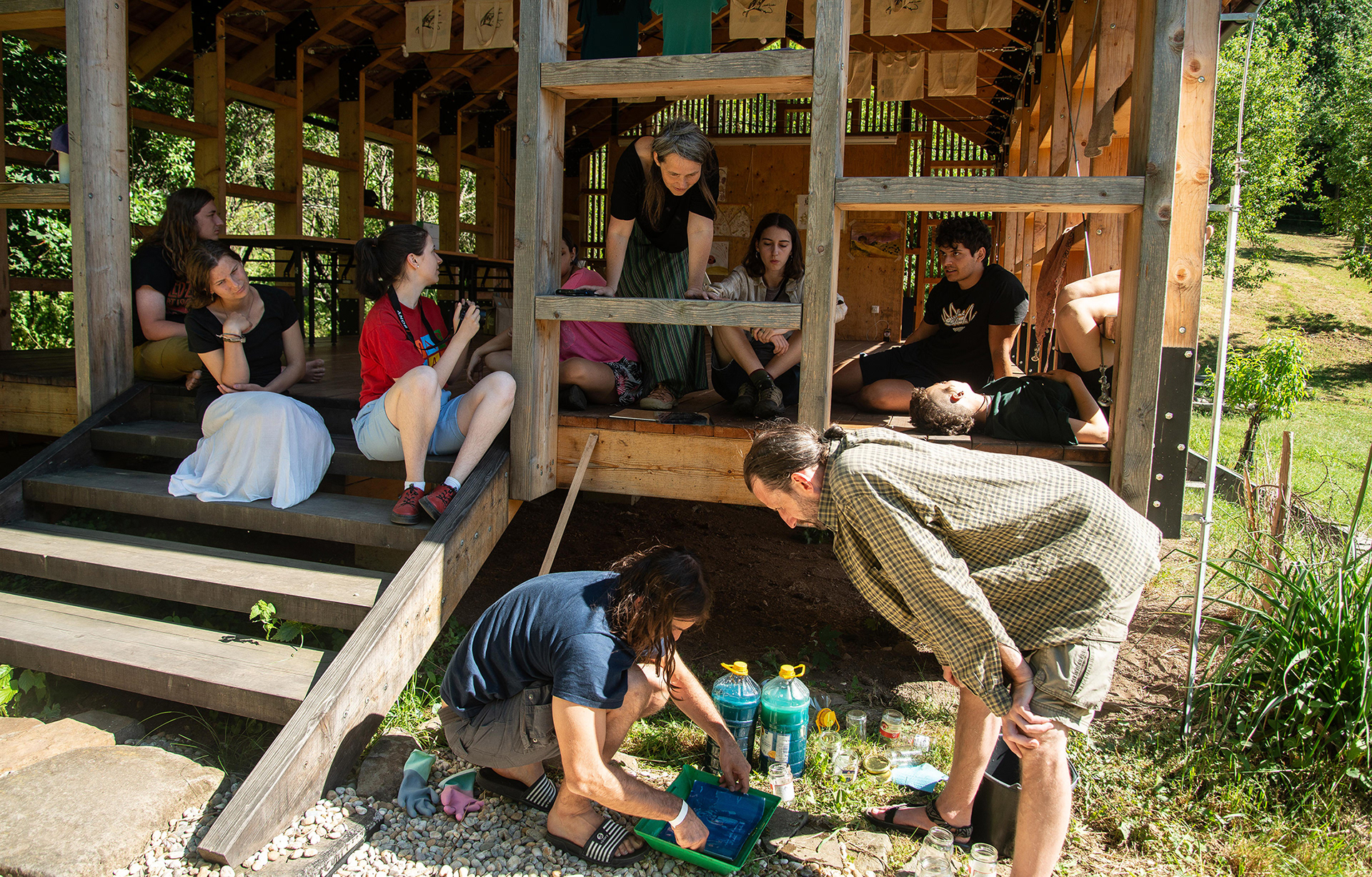
The workshop combined Visual Learning (exploring historical and contemporary examples of both techniques), Peer-to-Peer Learning (participants sharing discoveries and helping each other during exposure), and Learning by Doing in its most literal sense — the sun itself was the tool, and time was the variable.
Objectives
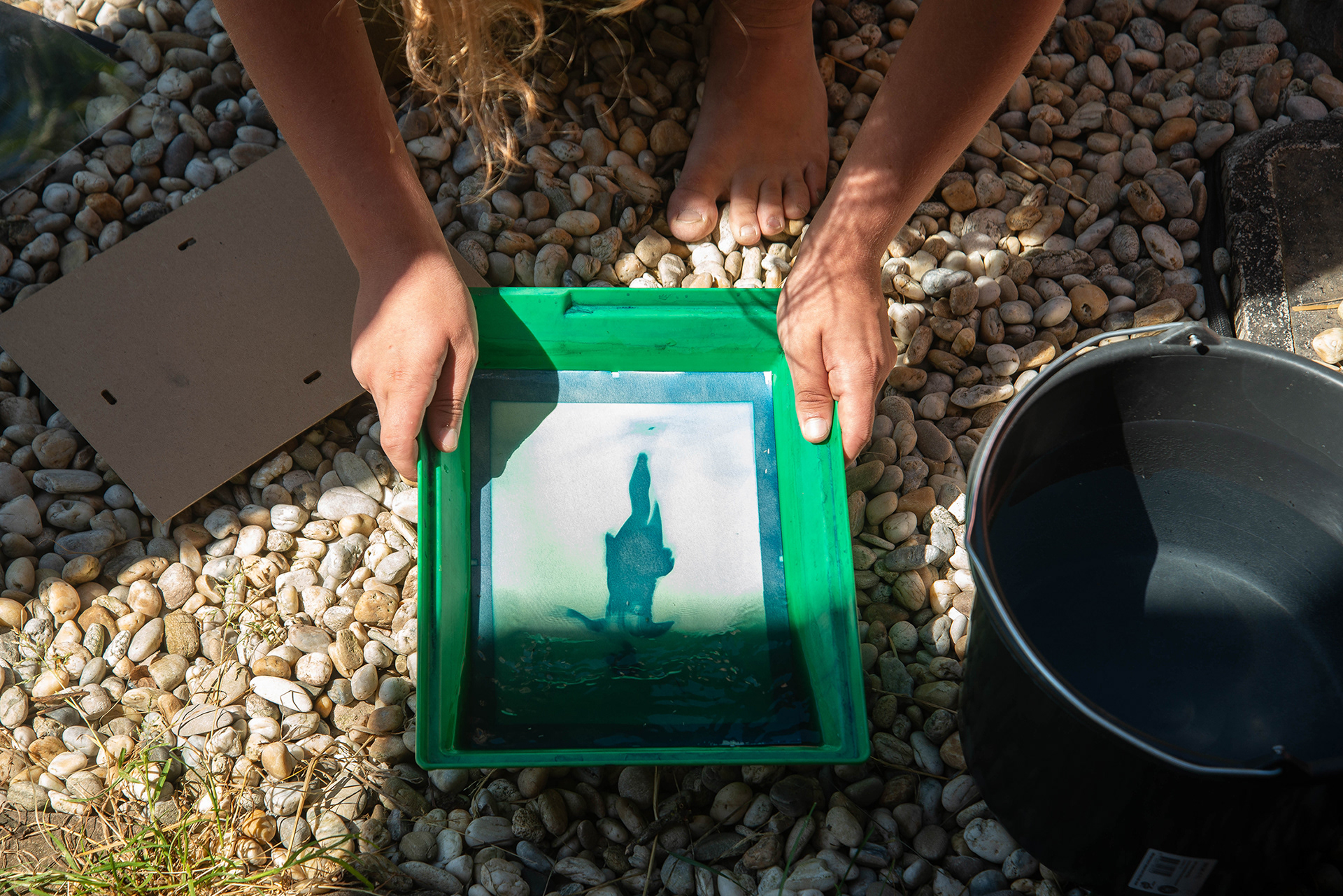
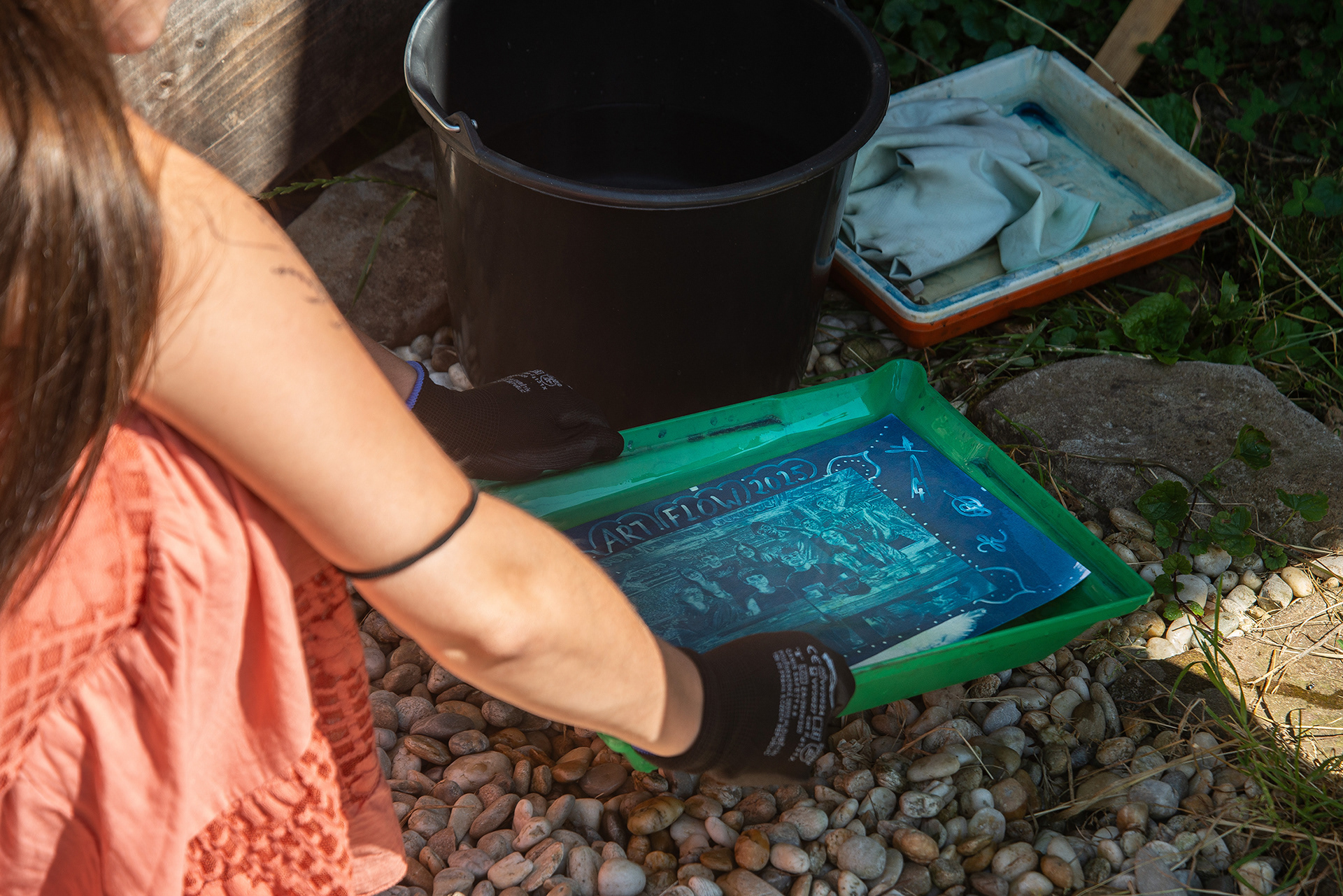
☀️ Understanding Alternative Photographic Processes: Learning the principles of light-sensitive chemistry through two of the oldest photographic techniques — Cyanotype (iron-based, producing deep Prussian blue prints) and Chlorotype (plant-based, producing warm organic tones).
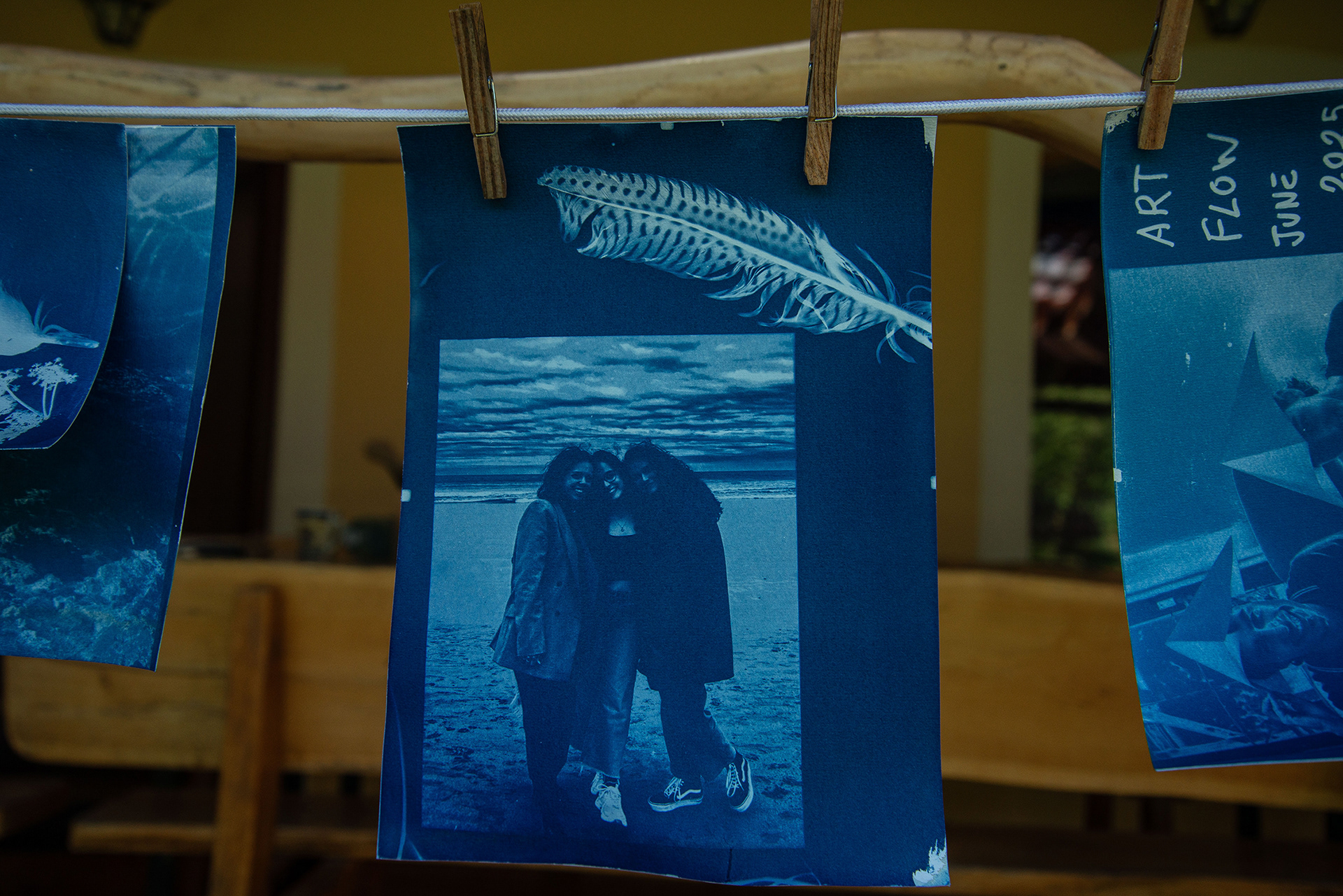
☀️ Digital-to-Analog Translation: Preparing digital negatives from personal photographs in Photoshop and printing them onto transparent film — bridging digital skills with analog output.
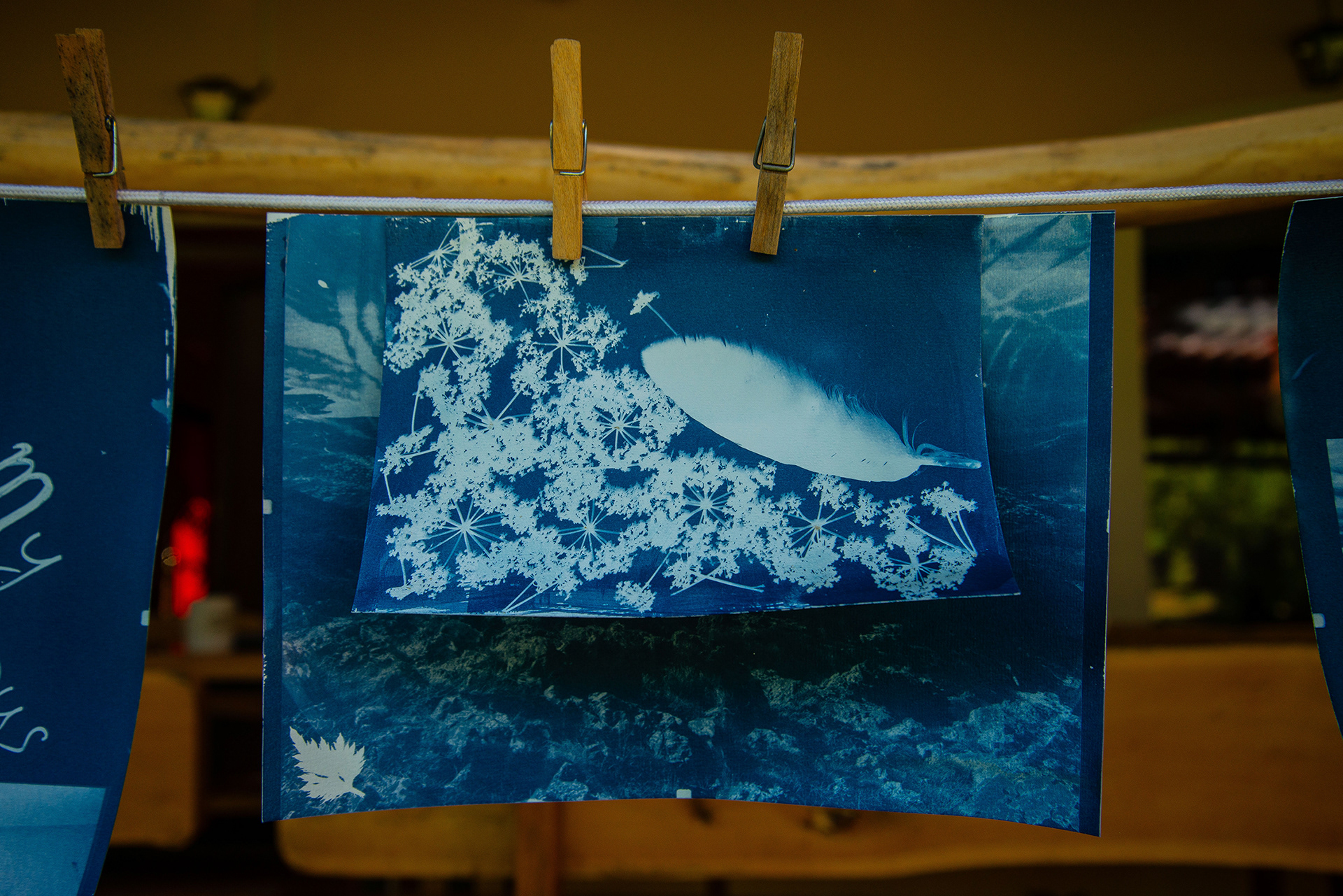
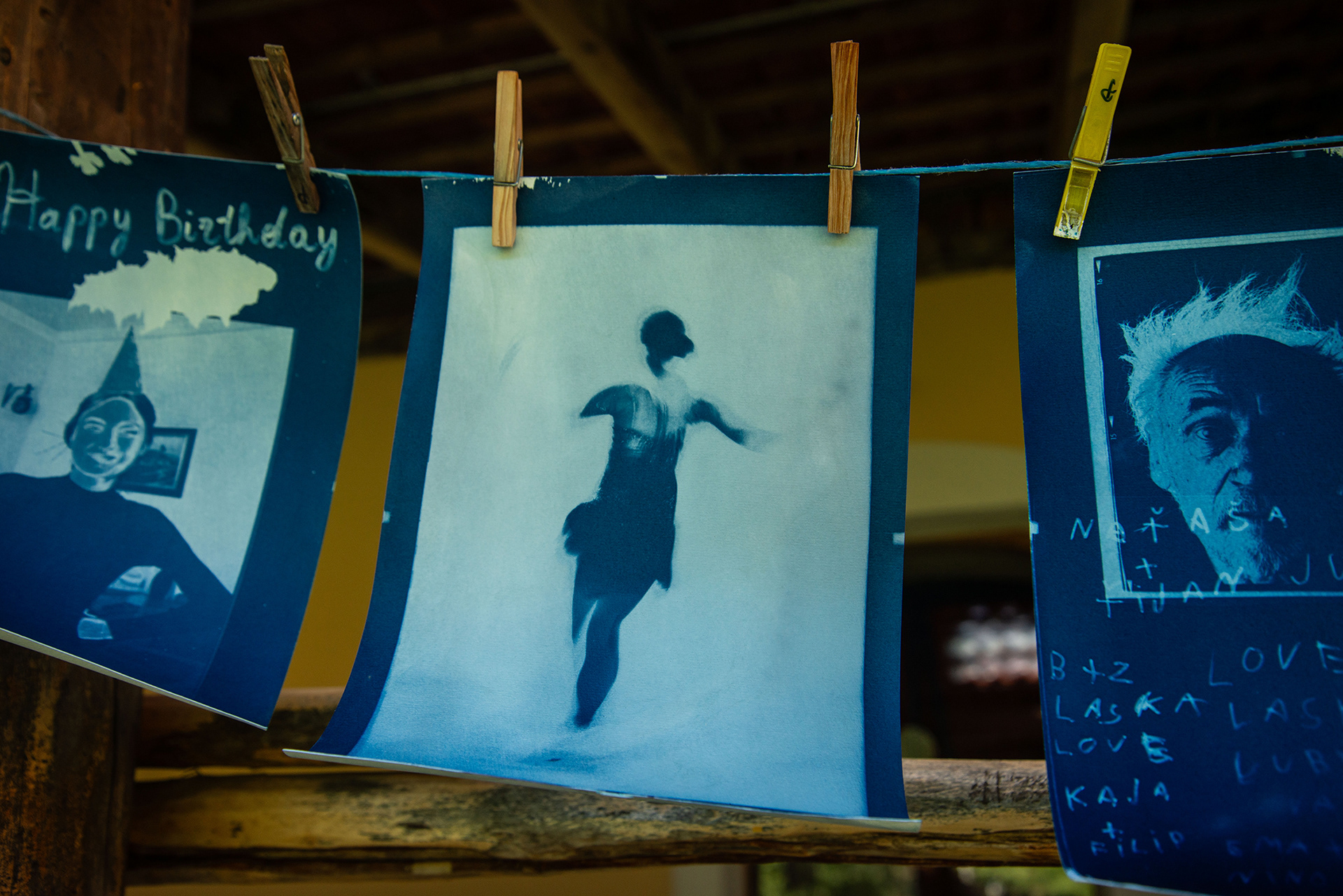
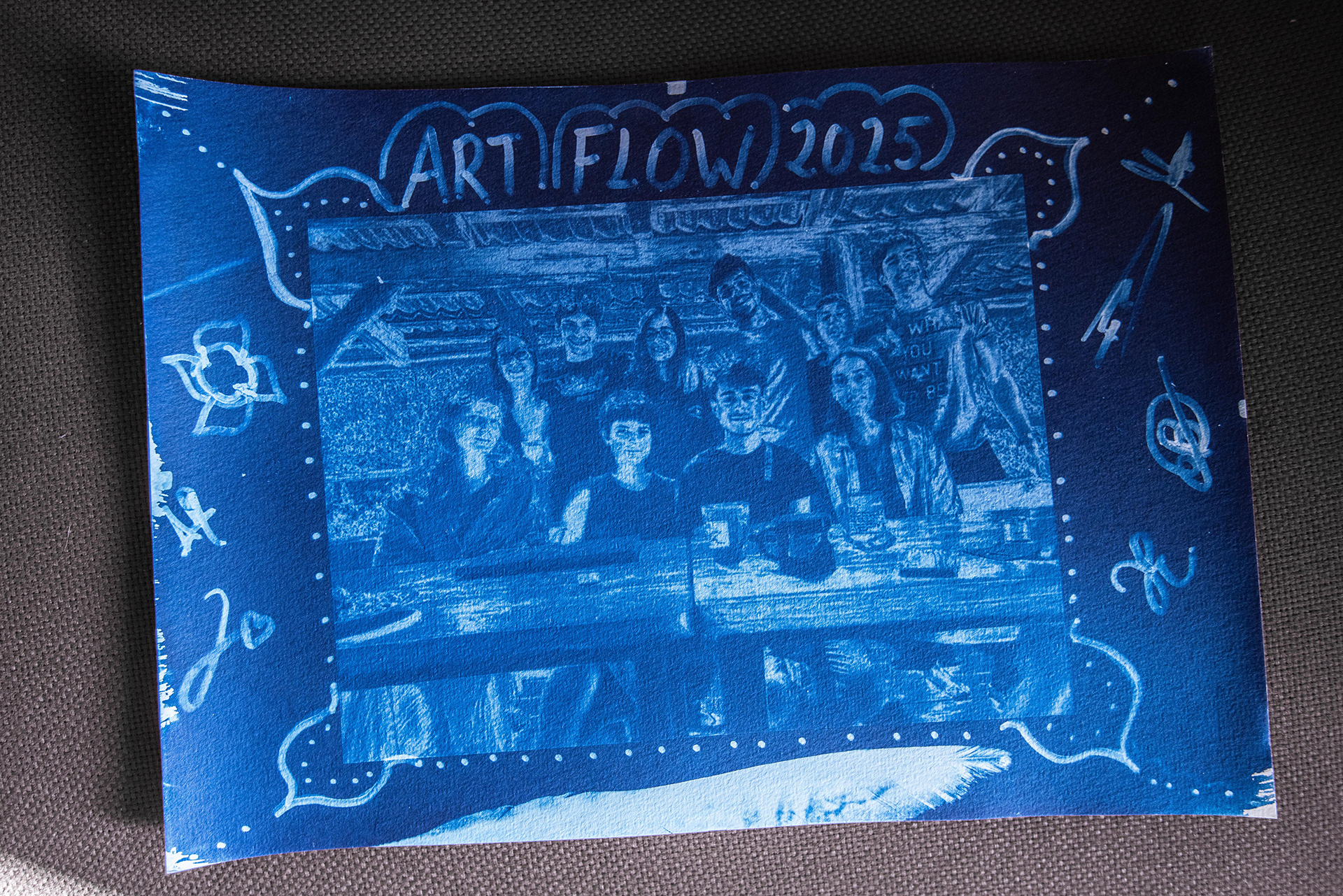
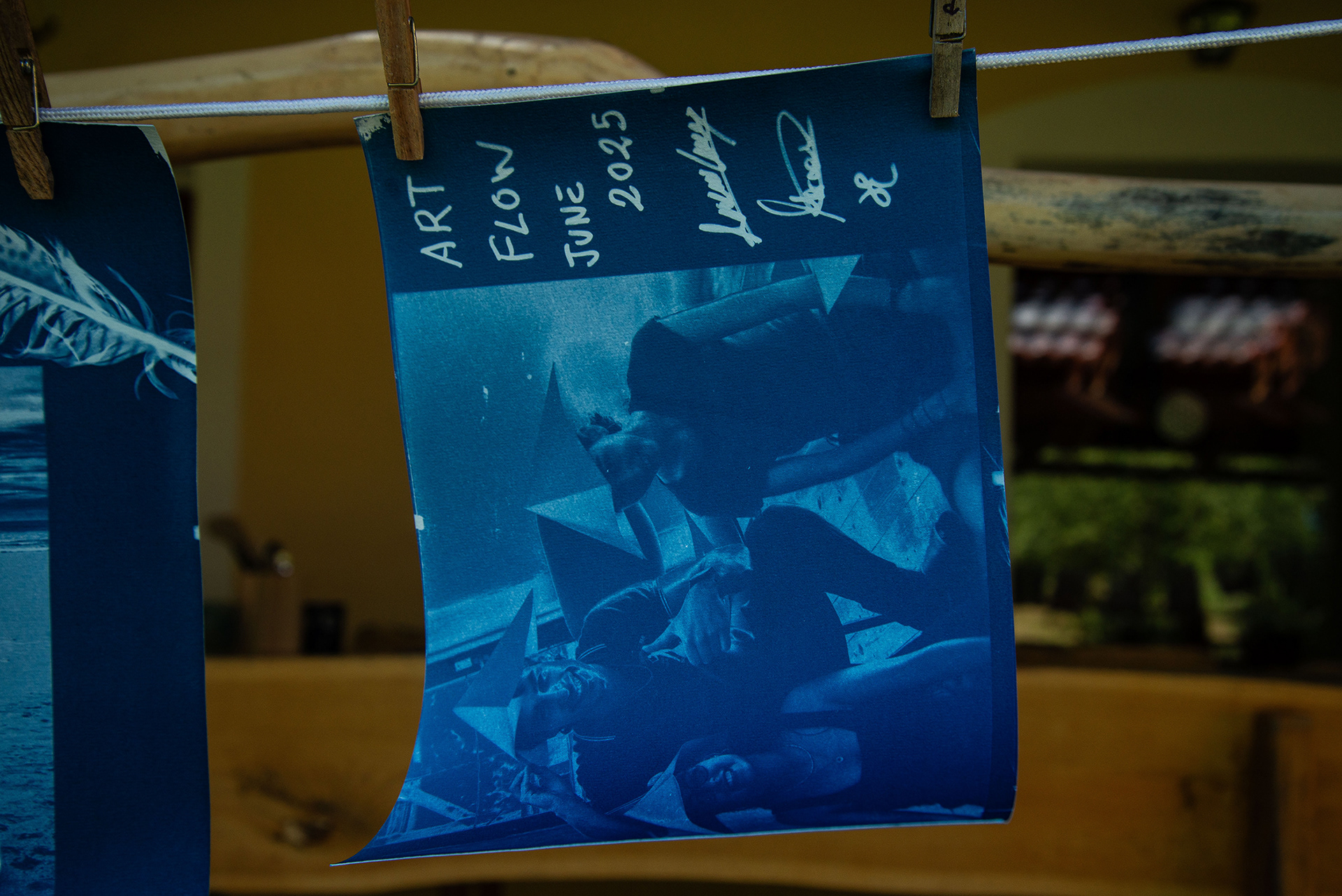
☀️ Compositional Thinking: Combining photographic negatives with botanical elements, hand-drawn marks, and found natural materials to create layered, unique compositions.
☀️ Experimental Mindset: Embracing uncertainty, testing variables, and finding value in unexpected results — especially in the case of Chlorotype, which even the facilitator was attempting for the first time.
☀️ Environmental Sensitivity: Working with plant-based processes and natural materials as a conscious, eco-friendly approach to image-making.
Activity Process
The workshop unfolded across multiple days, reflecting the slow, deliberate nature of the techniques themselves:
Phase 1 — Preparation & Digital Negatives:
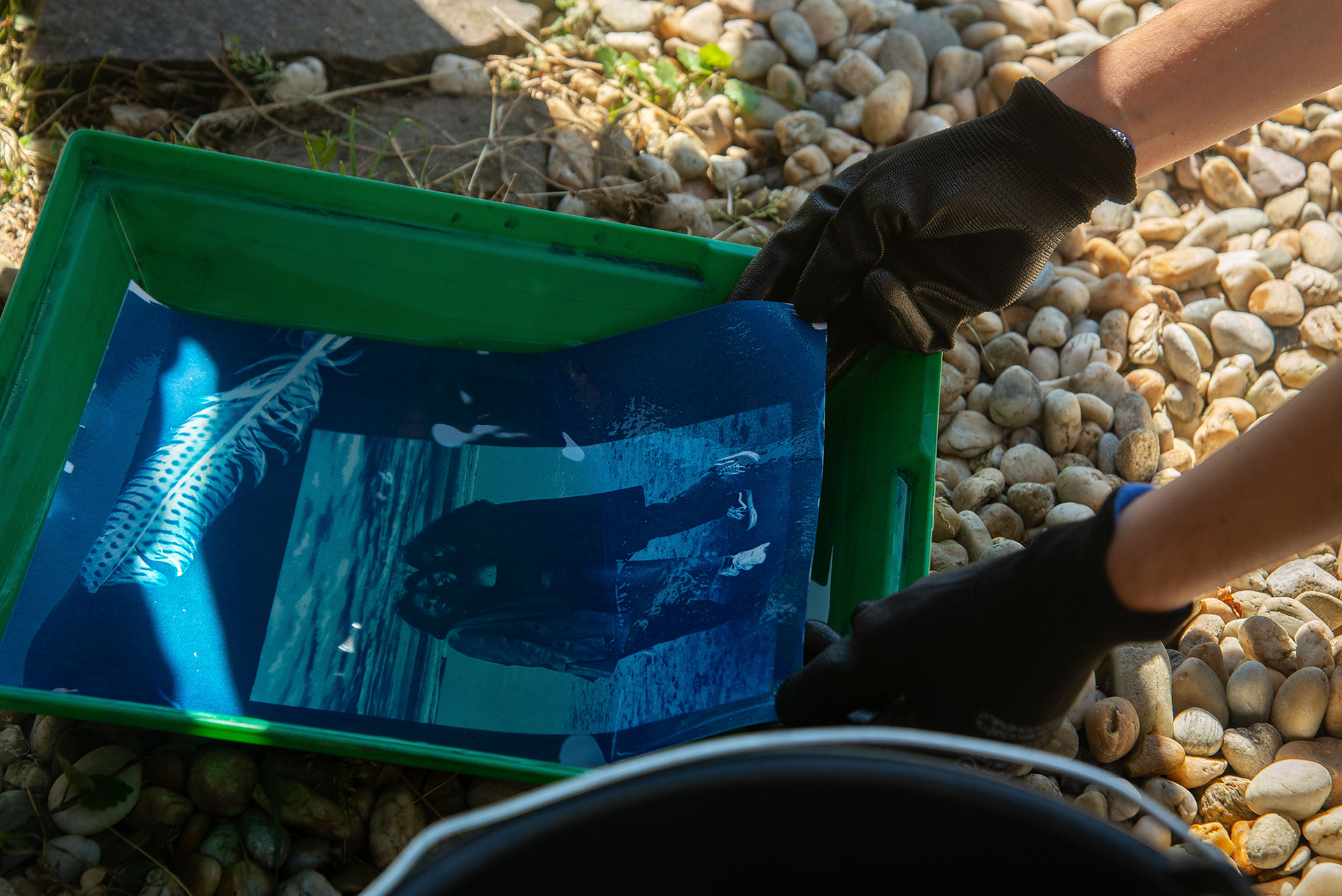
Days before the hands-on session, participants selected personal photographs and converted them into digital negatives specifically adjusted for alternative printing. They also coated watercolour papers with light-sensitive chemicals for the Cyanotype series.
Days before the hands-on session, participants selected personal photographs and converted them into digital negatives specifically adjusted for alternative printing. They also coated watercolour papers with light-sensitive chemicals for the Cyanotype series.
Phase 2 — The Chlorotype Experiment:
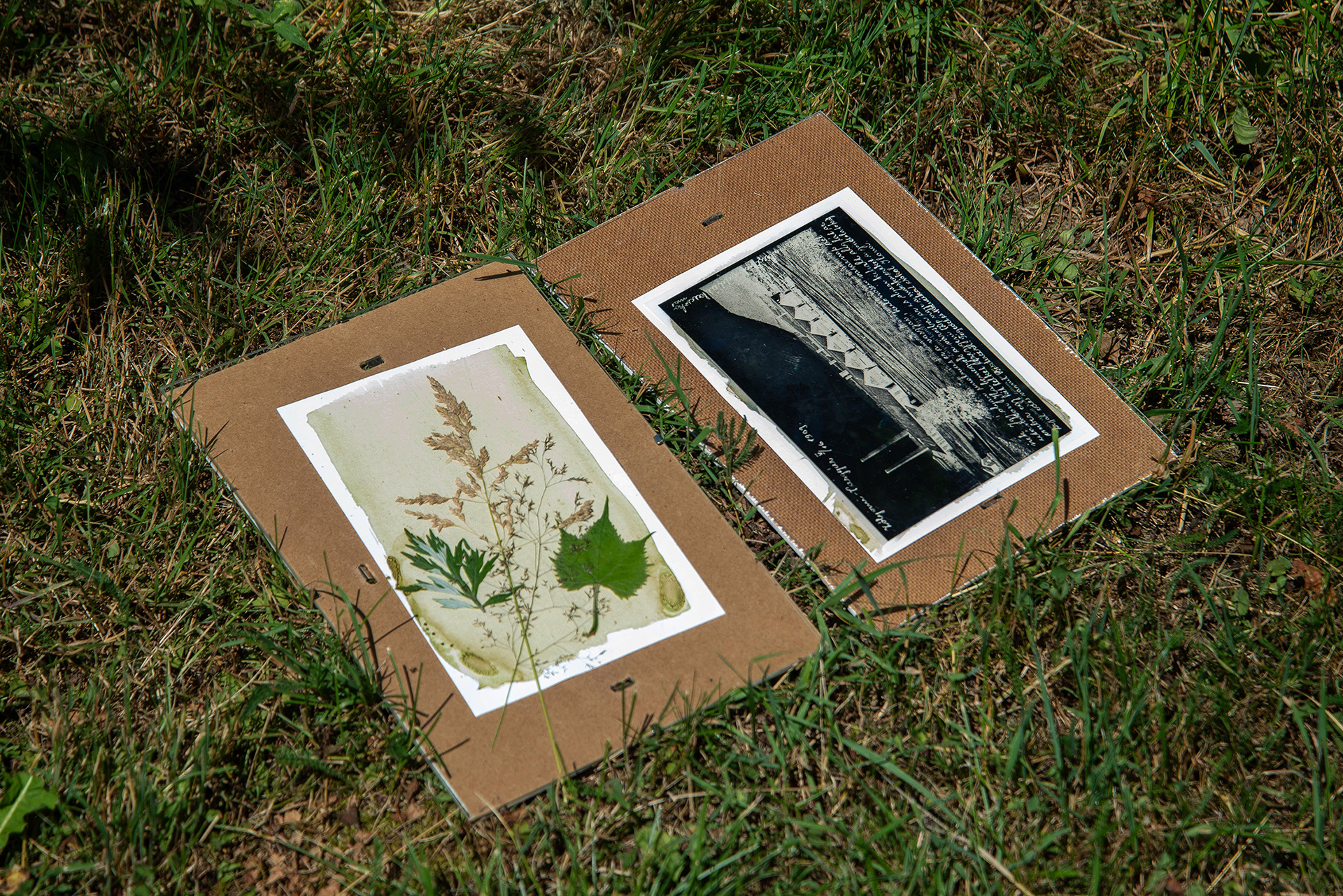
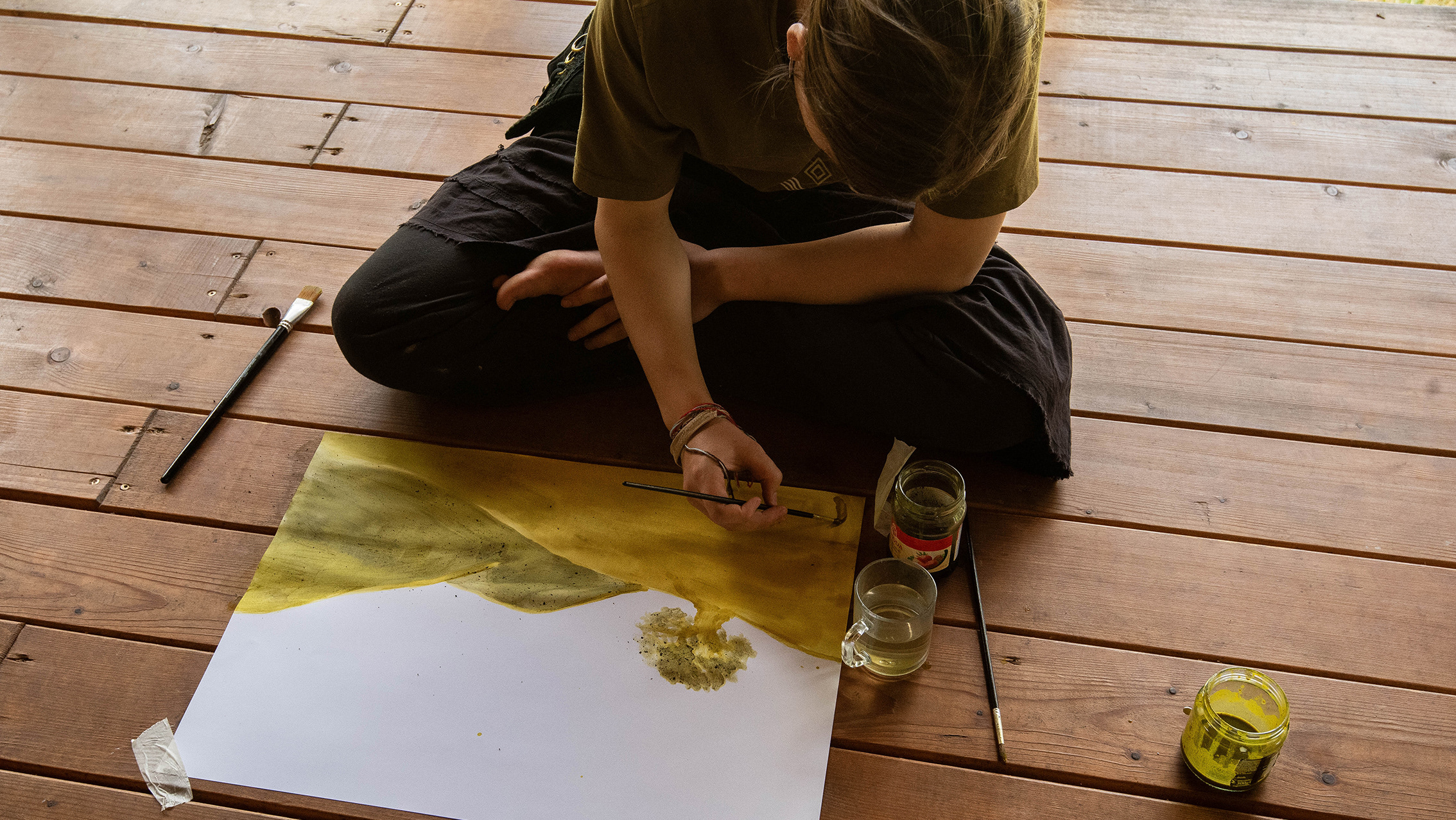
This was a completely organic process. Participants gathered fresh green leaves, which were then finely blended into a natural, chlorophyll-rich emulsion. This "green ink" was carefully hand-applied to watercolour paper, creating a light-sensitive surface made entirely from the surrounding landscape.
This was a completely organic process. Participants gathered fresh green leaves, which were then finely blended into a natural, chlorophyll-rich emulsion. This "green ink" was carefully hand-applied to watercolour paper, creating a light-sensitive surface made entirely from the surrounding landscape.
Phase 3 — Composition & Sun Exposure:
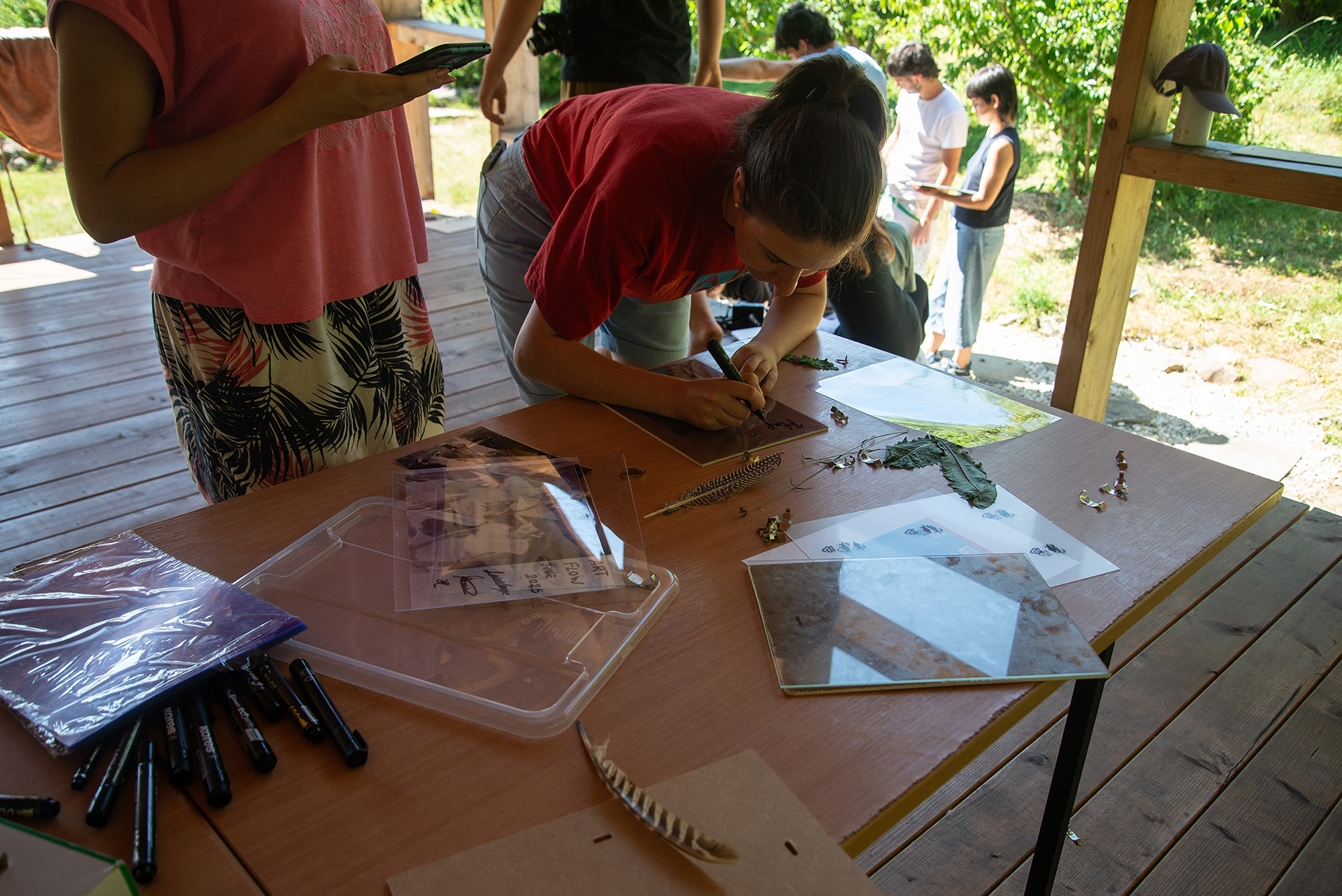
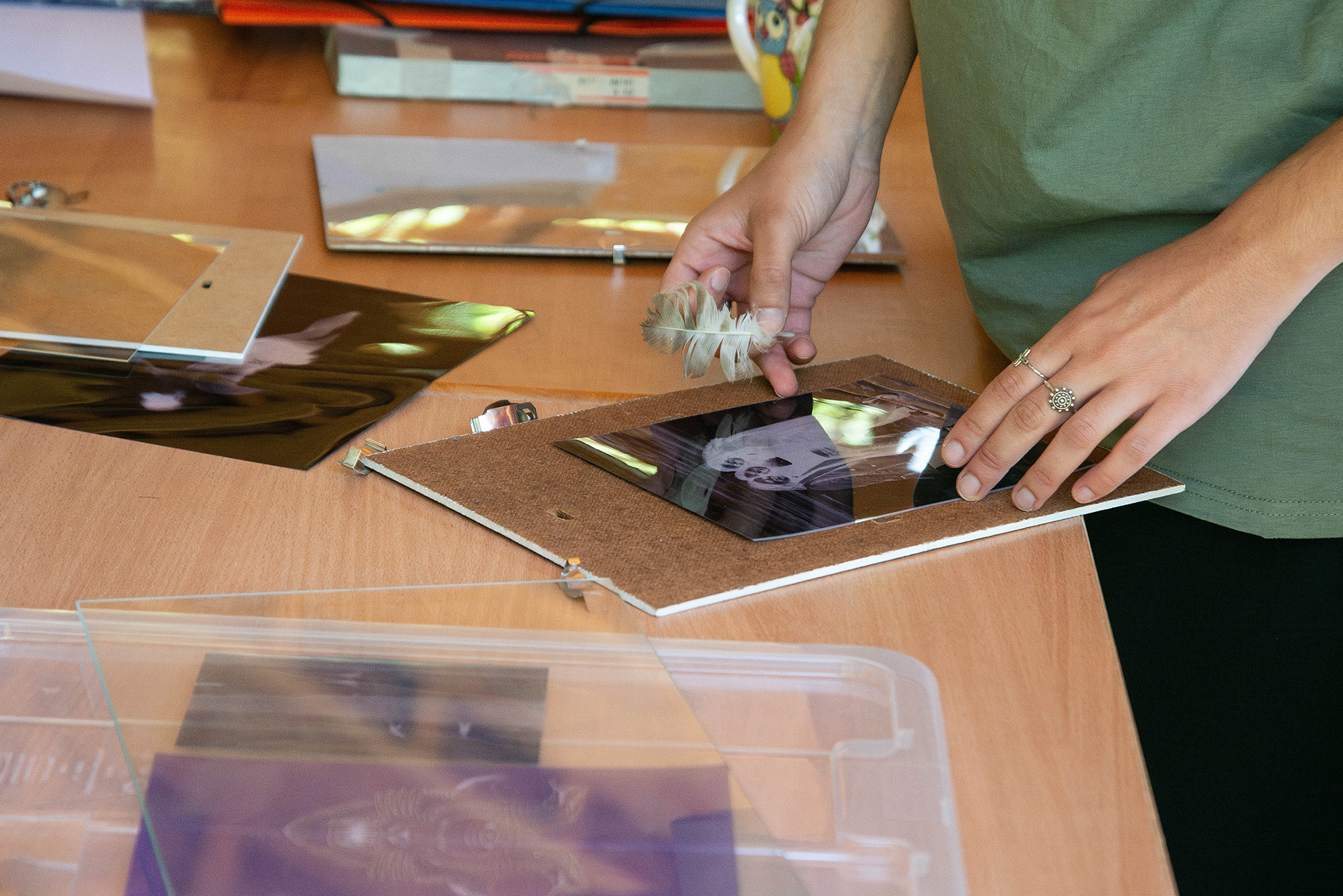
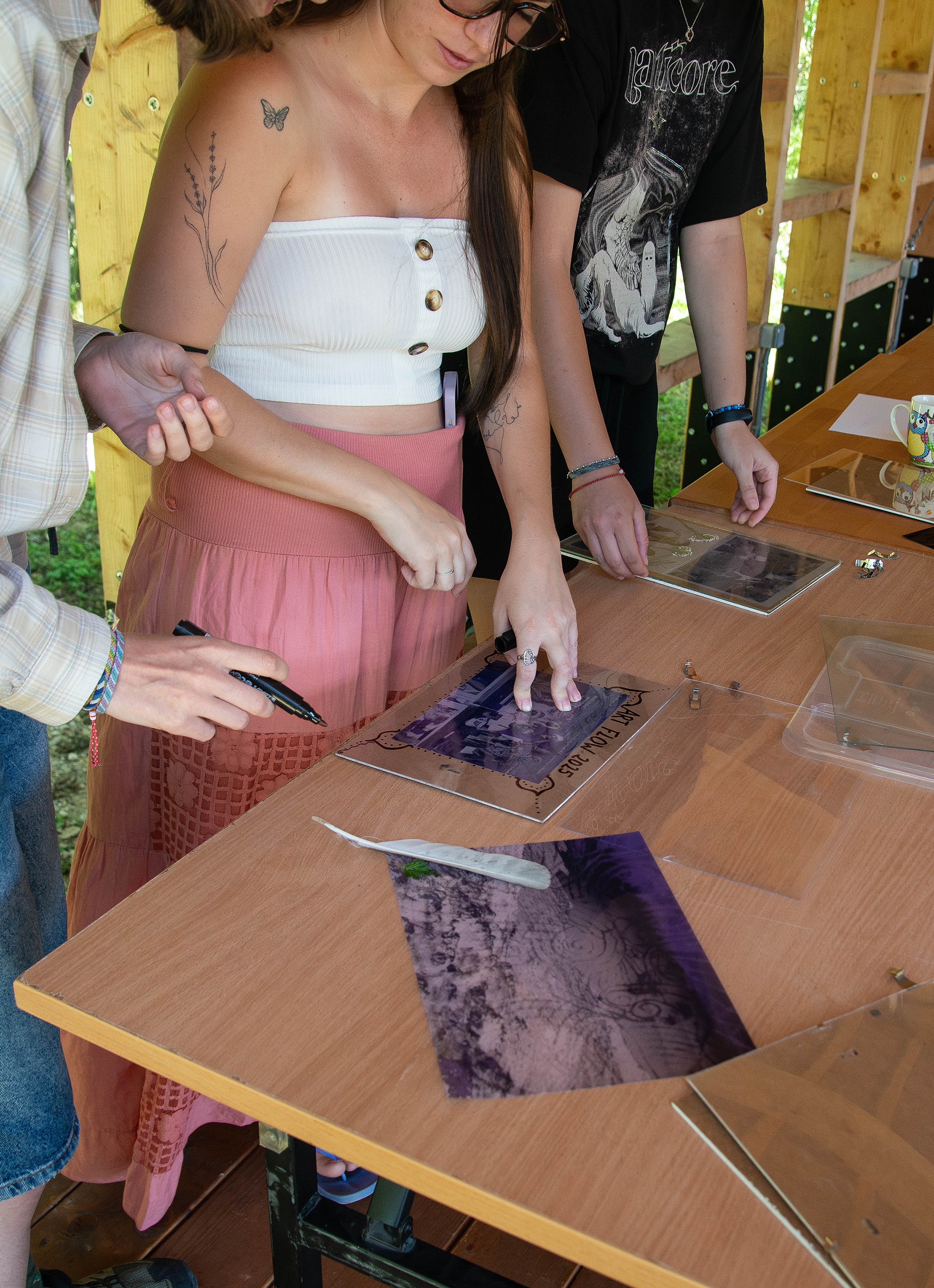
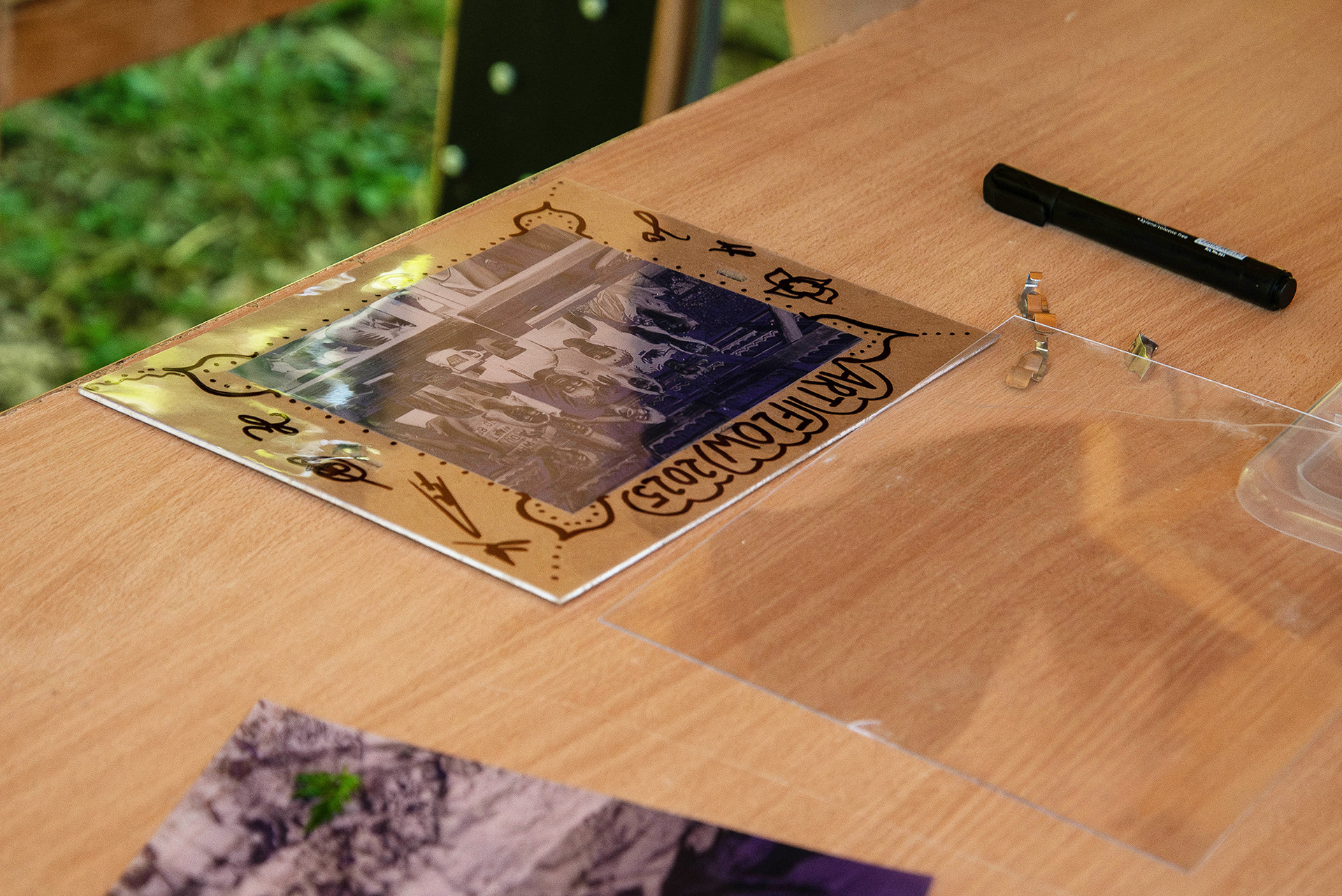
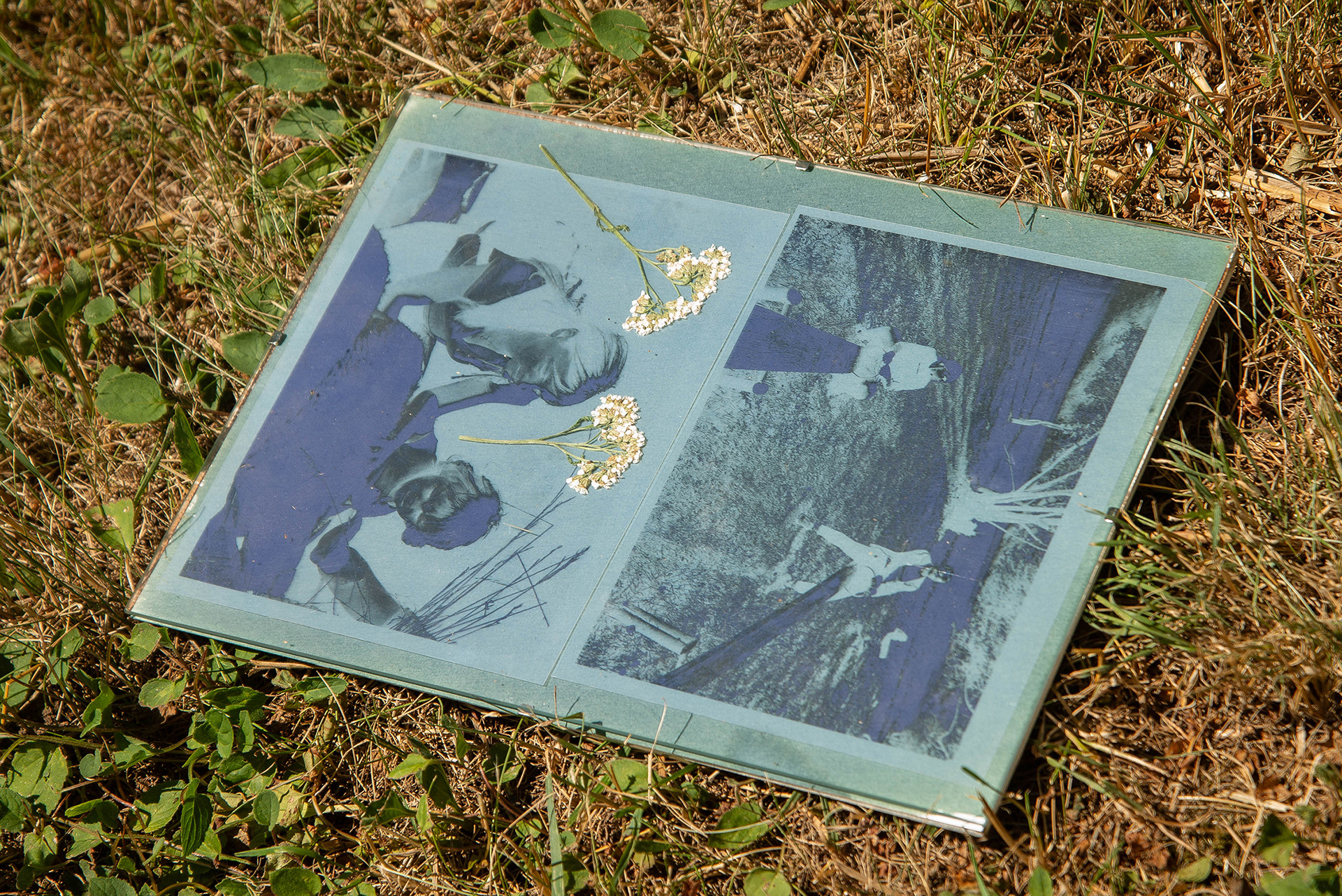
Participants assembled their compositions by layering their transparent negatives, pressed plants, and drawn elements over the prepared papers.
Participants assembled their compositions by layering their transparent negatives, pressed plants, and drawn elements over the prepared papers.
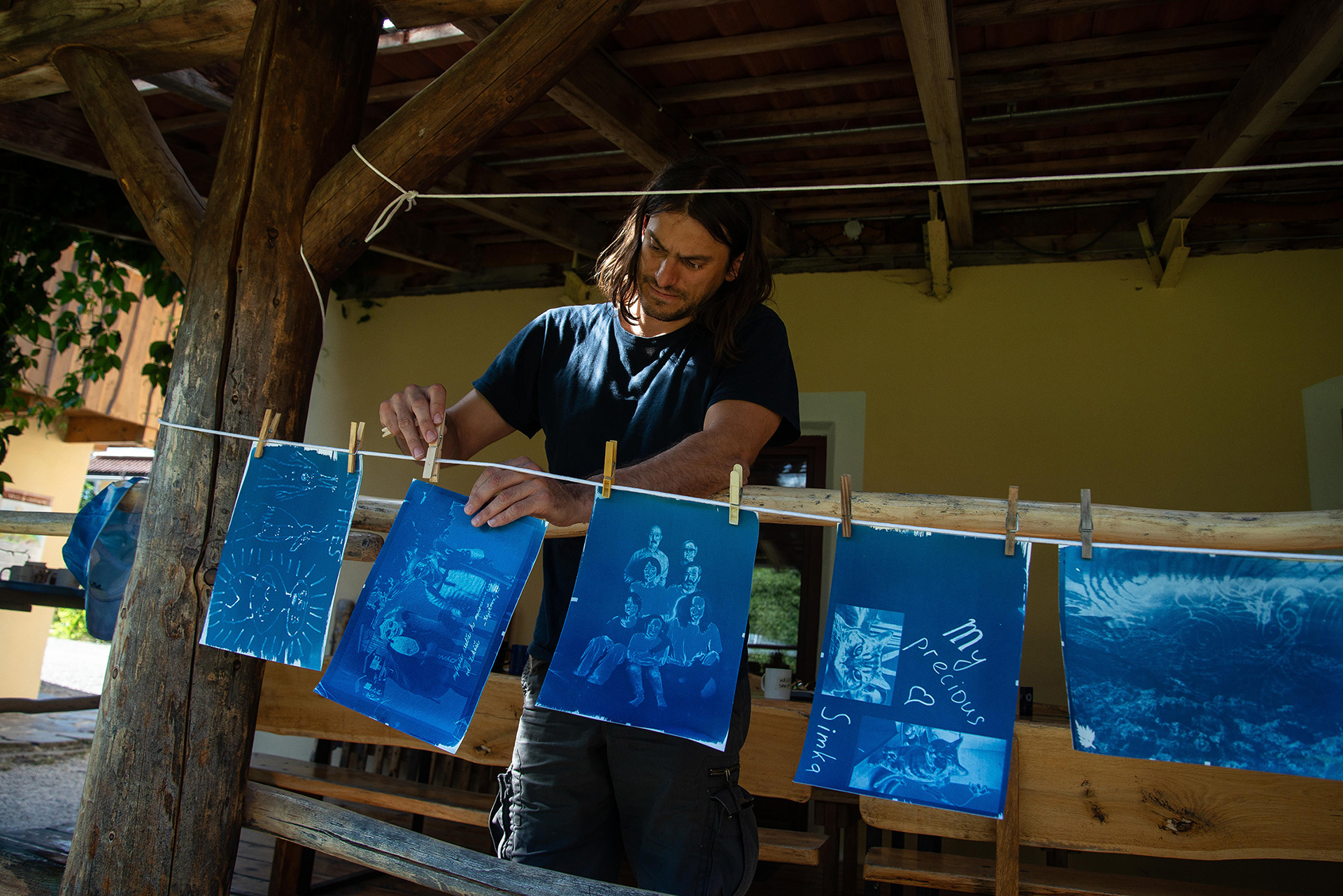
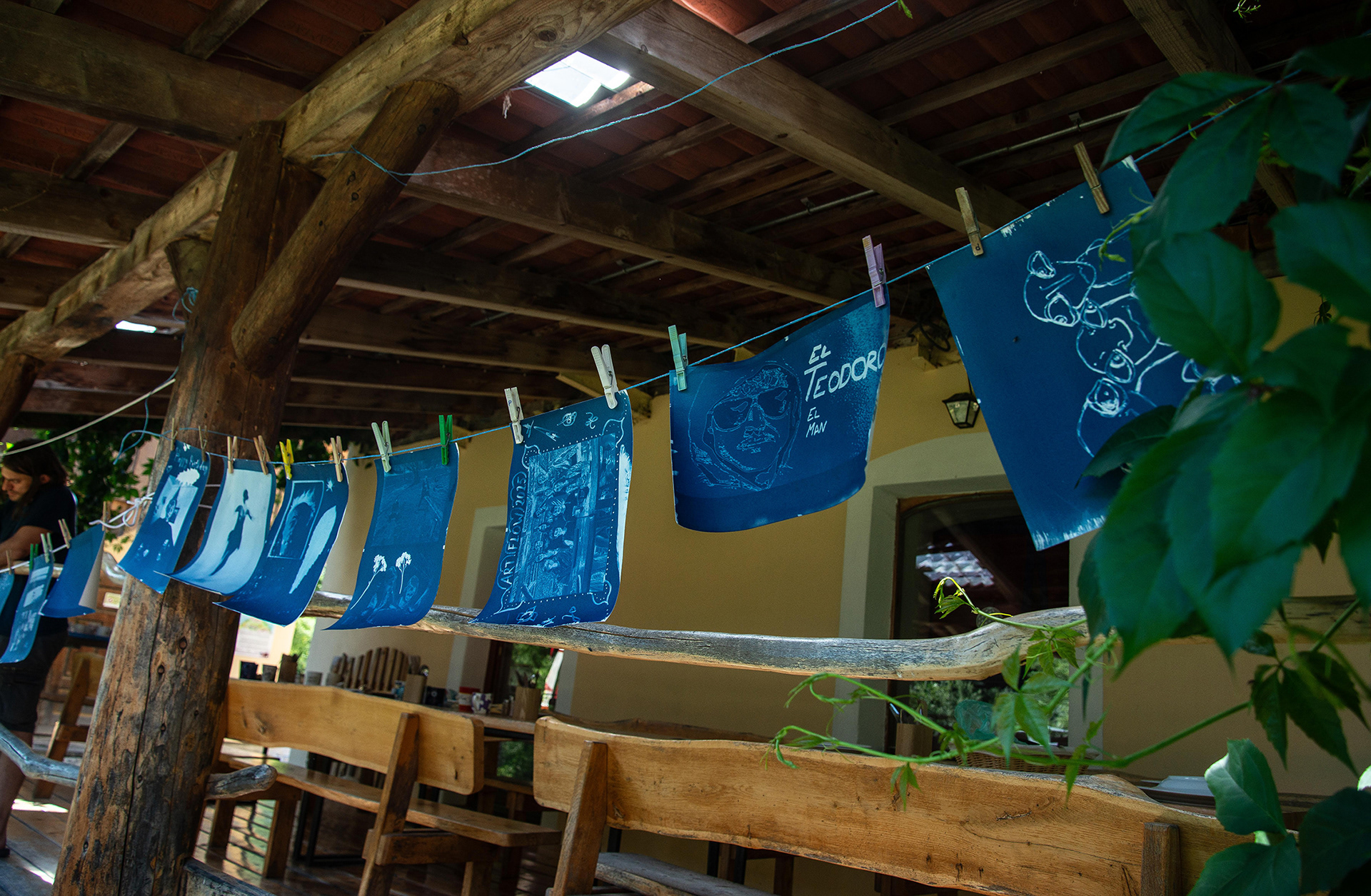
Cyanotype: Required direct midday sun to produce its iconic sharp, deep Prussian blue results.
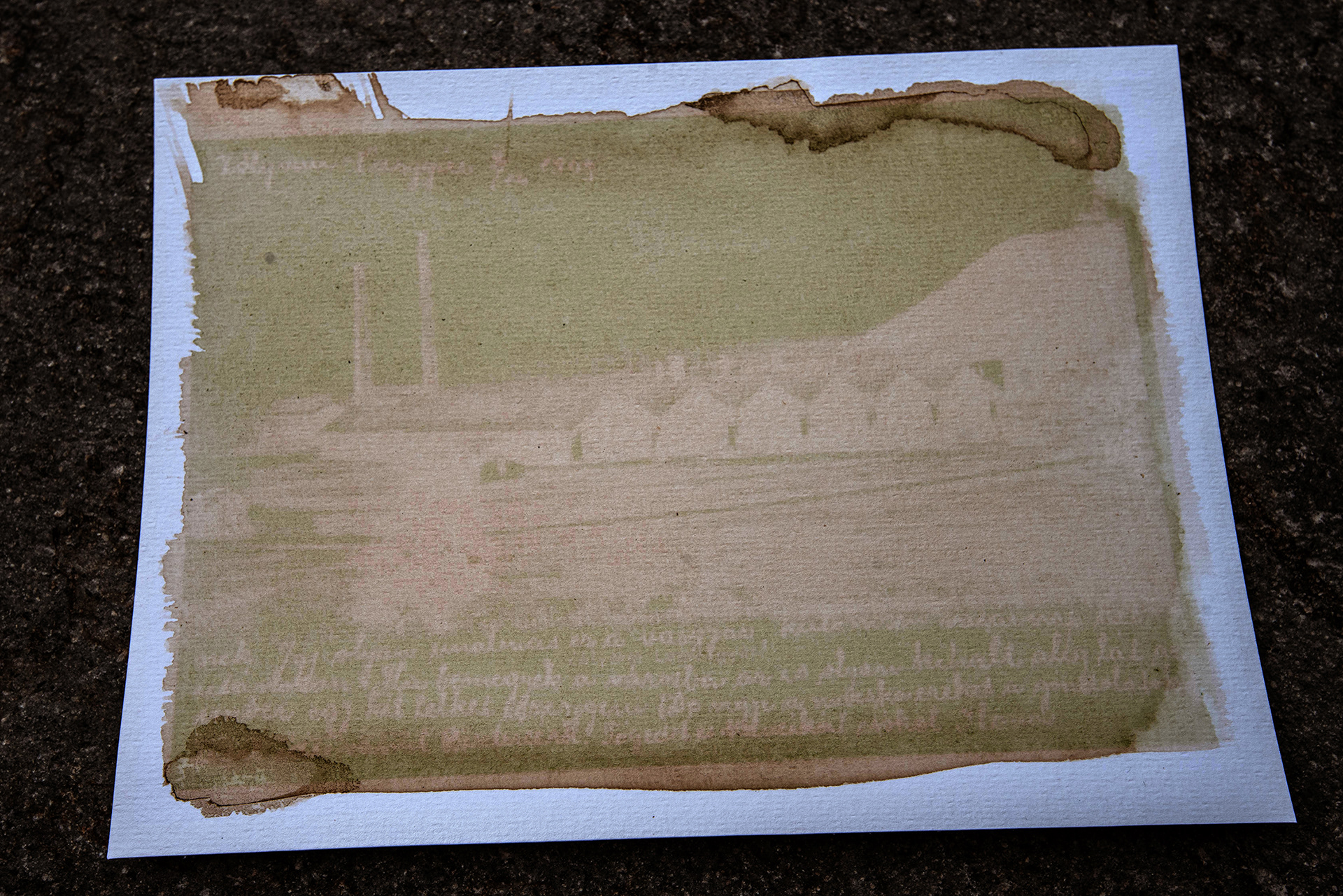
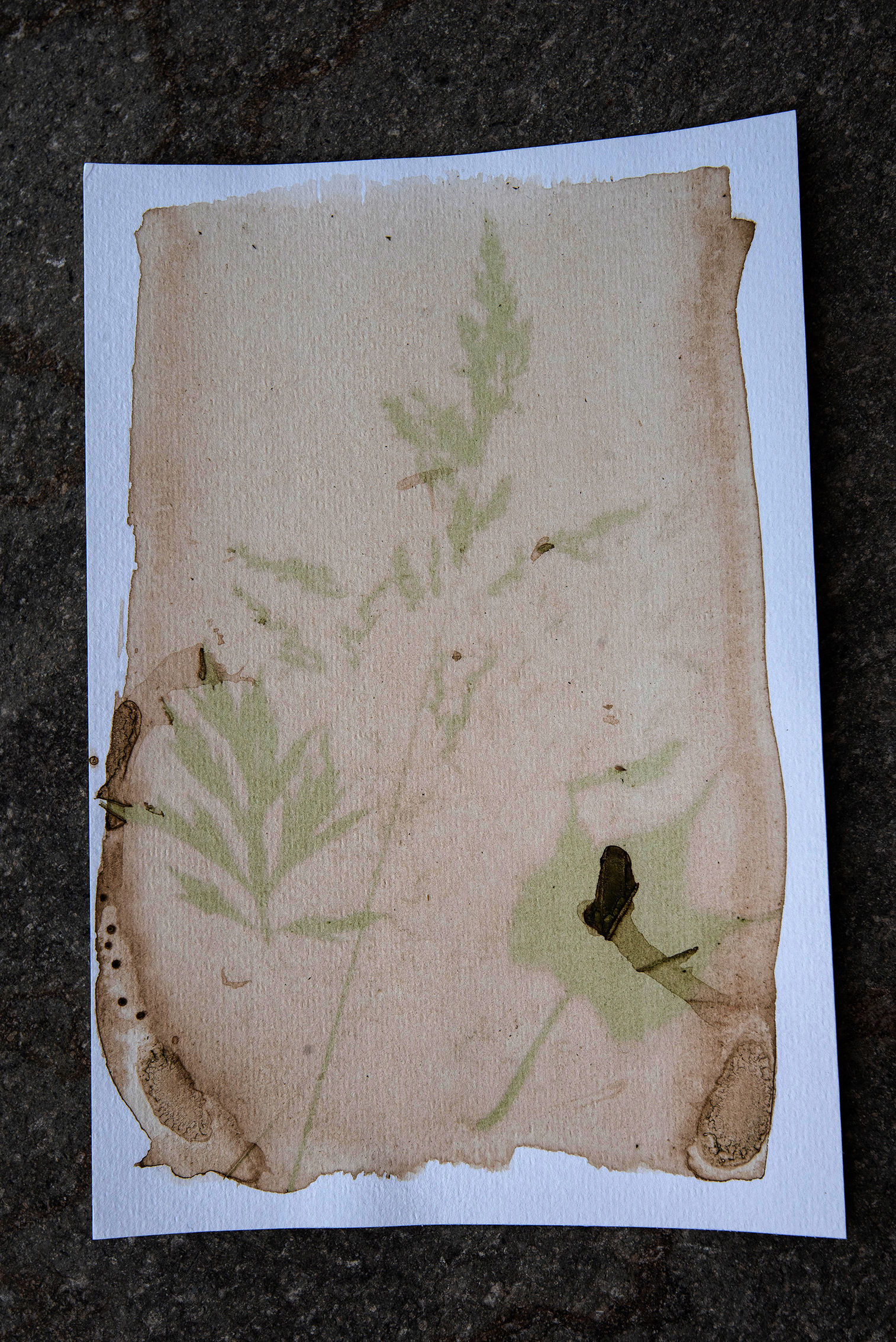
Chlorotype: This was a test of patience. Because the plant-based emulsion is less sensitive than chemicals, the compositions had to be left to expose in direct sunlight for an entire day, allowing the sun to slowly "bleach" the image into the chlorophyll.
.
Results & Impact
🔵 Series of Unique Photographic Prints: Each participant created their own one-of-a-kind Cyanotype or Chlorotype print — combining personal photographs, botanical elements, and hand-drawn details into compositions that could not be digitally replicated.
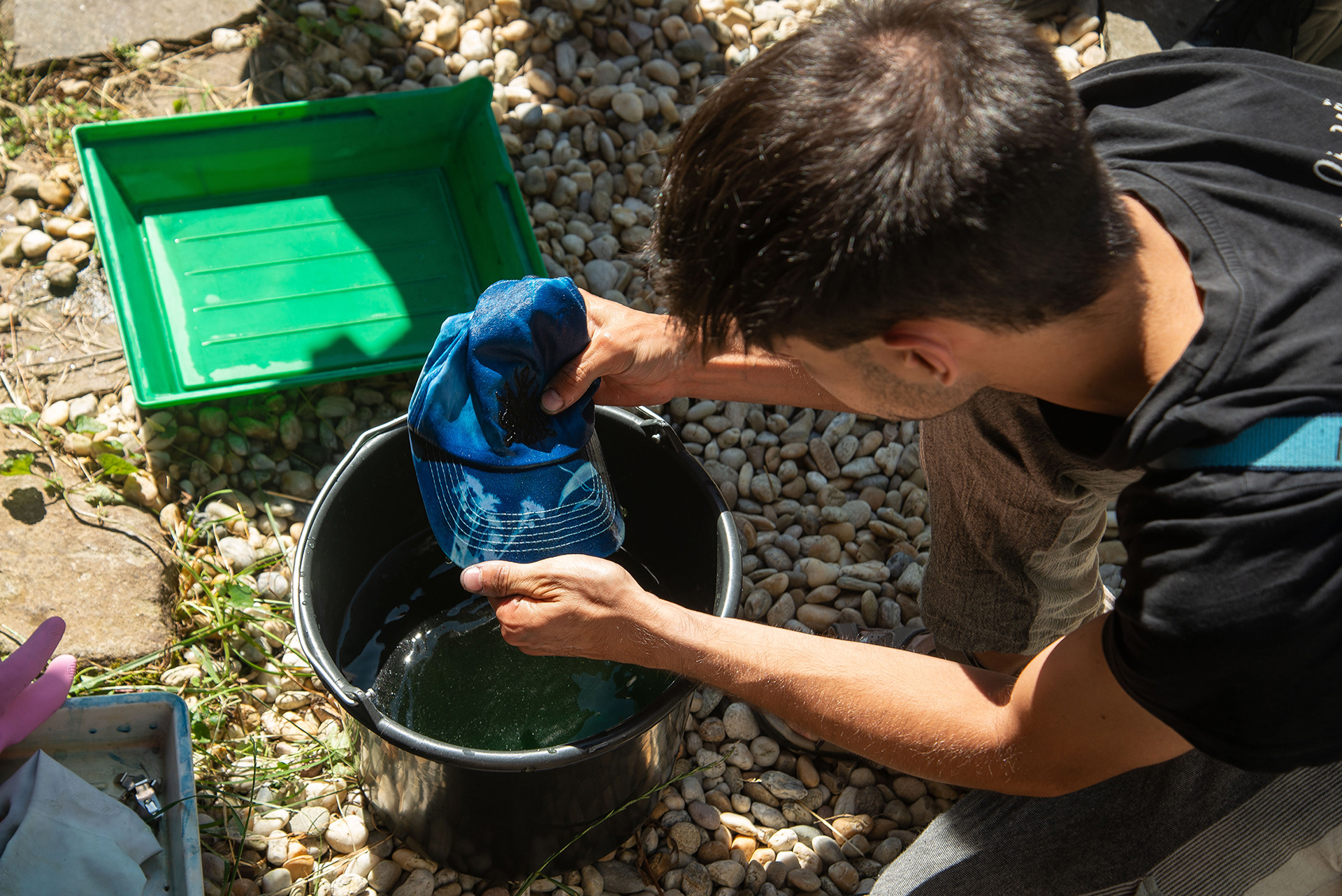
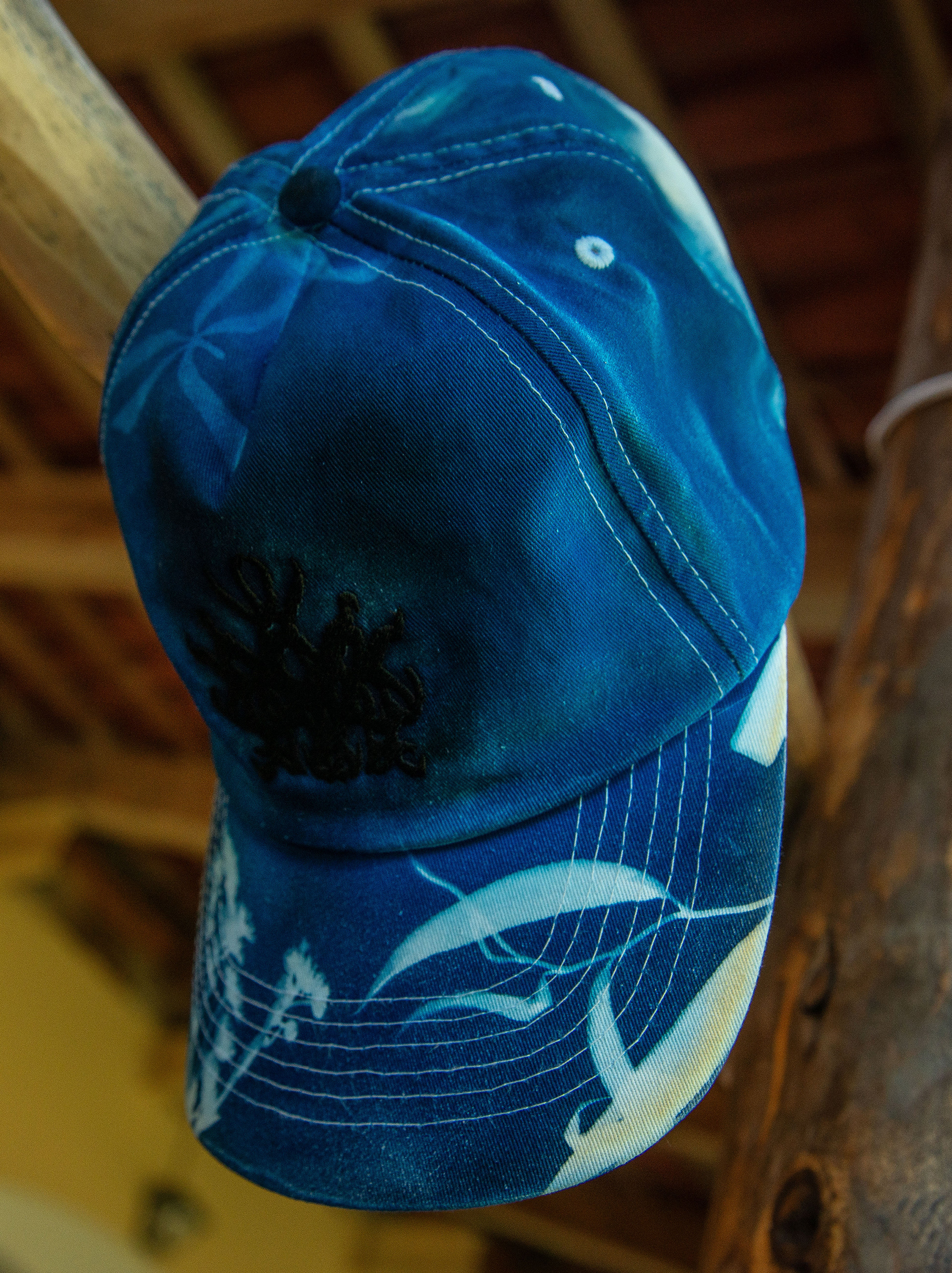
🔵 Wearable Art: One participant took the process further, applying Cyanotype directly onto a cotton cap — demonstrating the versatility of the technique beyond paper.
🔵 Successful Chlorotype Experiment: Despite being a first attempt for the facilitator, the Chlorotype prints emerged beautifully — a reminder that the best learning happens at the edge of the unknown.
🔵 Digital-to-Analog Skill Bridge: Participants applied their Photoshop skills in a completely new context — not for screens, but for sunlight — expanding their understanding of what digital tools can produce.
🔵 Slowing Down: In a world of instant images, this workshop invited participants to work with a completely different rhythm — one measured in hours of sunlight rather than milliseconds of shutter speed.