Art Flow Activity 👕 Workshop: "Graphic Techniques on Upcycled Clothes – Art Meets Sustainable Fashion"
Every piece of clothing tells a story. But what if you could write that story yourself — carve it, ink it, and press it into fabric with your own hands? During the ART FLOW Youth Exchange, participants transformed second-hand garments into one-of-a-kind wearable artworks, proving that sustainability and creativity are not opposites — they are the perfect collaboration.
Facilitated by: Tomáš Brichta (Intermedia student at the Academy of Fine Arts and Design, Bratislava, Slovakia)

Educational Approach
This workshop was a vivid example of Youth Leading Youth — Tomáš, himself a young art student, guided participants through complex graphic techniques with the energy and openness of a peer rather than a teacher. The methodology was rooted in Learning by Doing: every concept was immediately applied in practice, from the first cut into linoleum to the final print on fabric. The workshop also introduced a collaborative dimension in its final phase, where international groups co-created shared narratives — combining individual artistic voices into a single collective work.
Objectives
🎯 Technical Skill Development: Learning the principles and practice of linocut — from design and carving to inking and printing.
🎯 Sustainable Thinking: Exploring upcycling as a creative and conscious approach to fashion, giving new life to second-hand garments and cotton tote bags.
🎯 Individual Expression: Designing and producing a unique personal print — a wearable piece created entirely by hand.
🎯 Collaborative Storytelling: Working in international groups to co-create a shared visual narrative, with each participant contributing one frame of a collective story.
🎯 Cross-Cultural Exchange: Using visual language as a bridge between participants from different countries and backgrounds.
Activity Process
The workshop unfolded across several sessions, each building on the previous one:
Phase 1 — Introduction to Linocut:
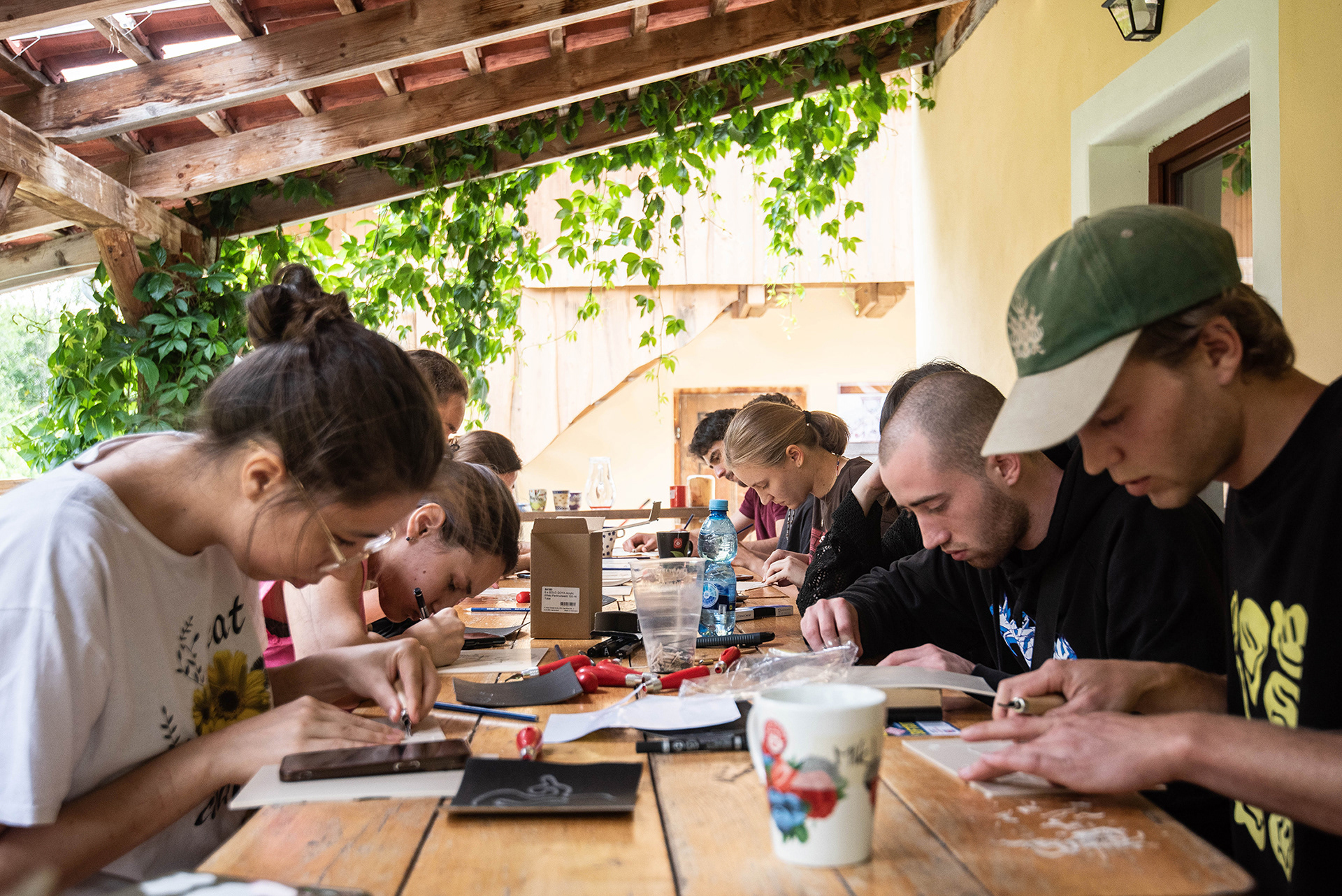
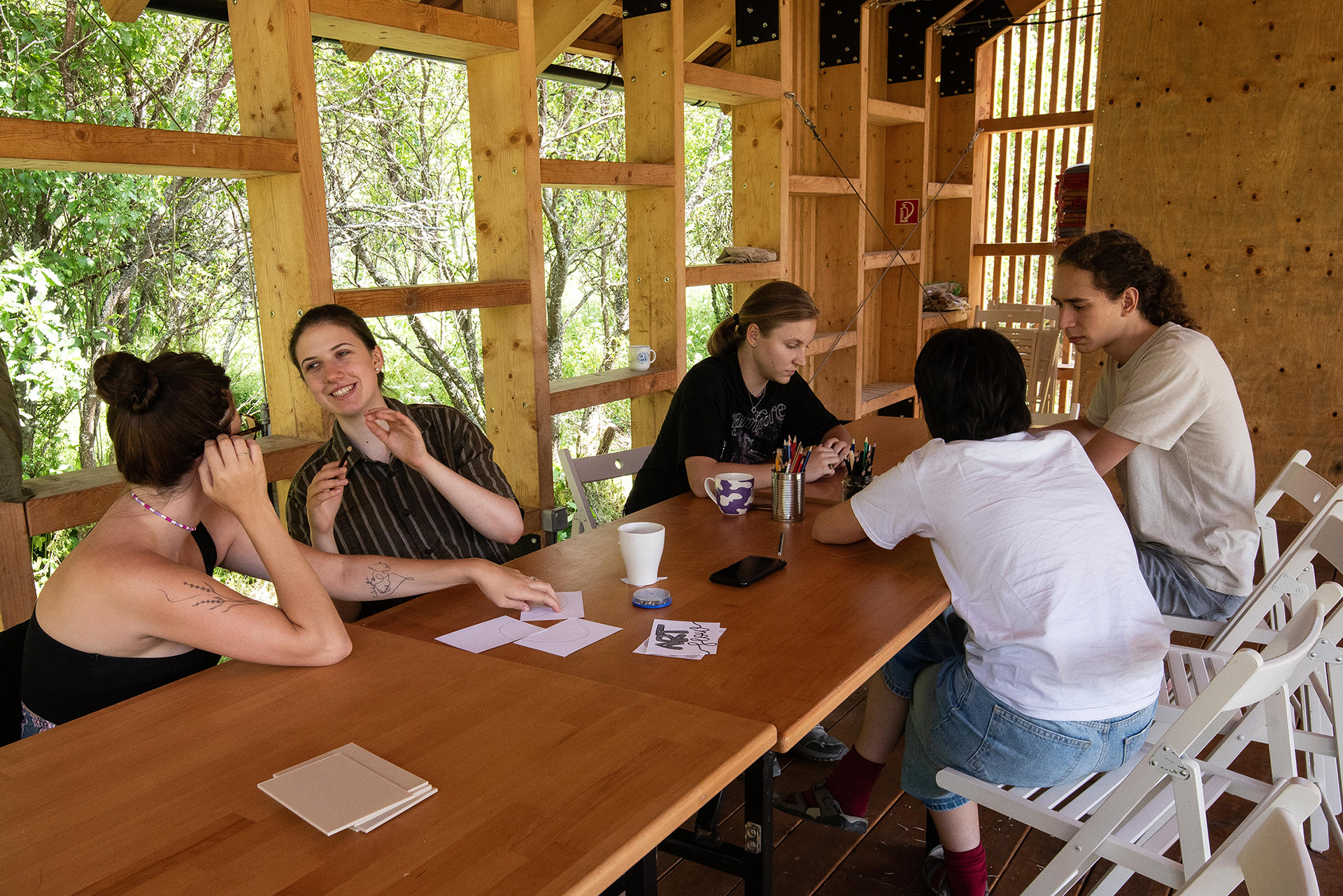
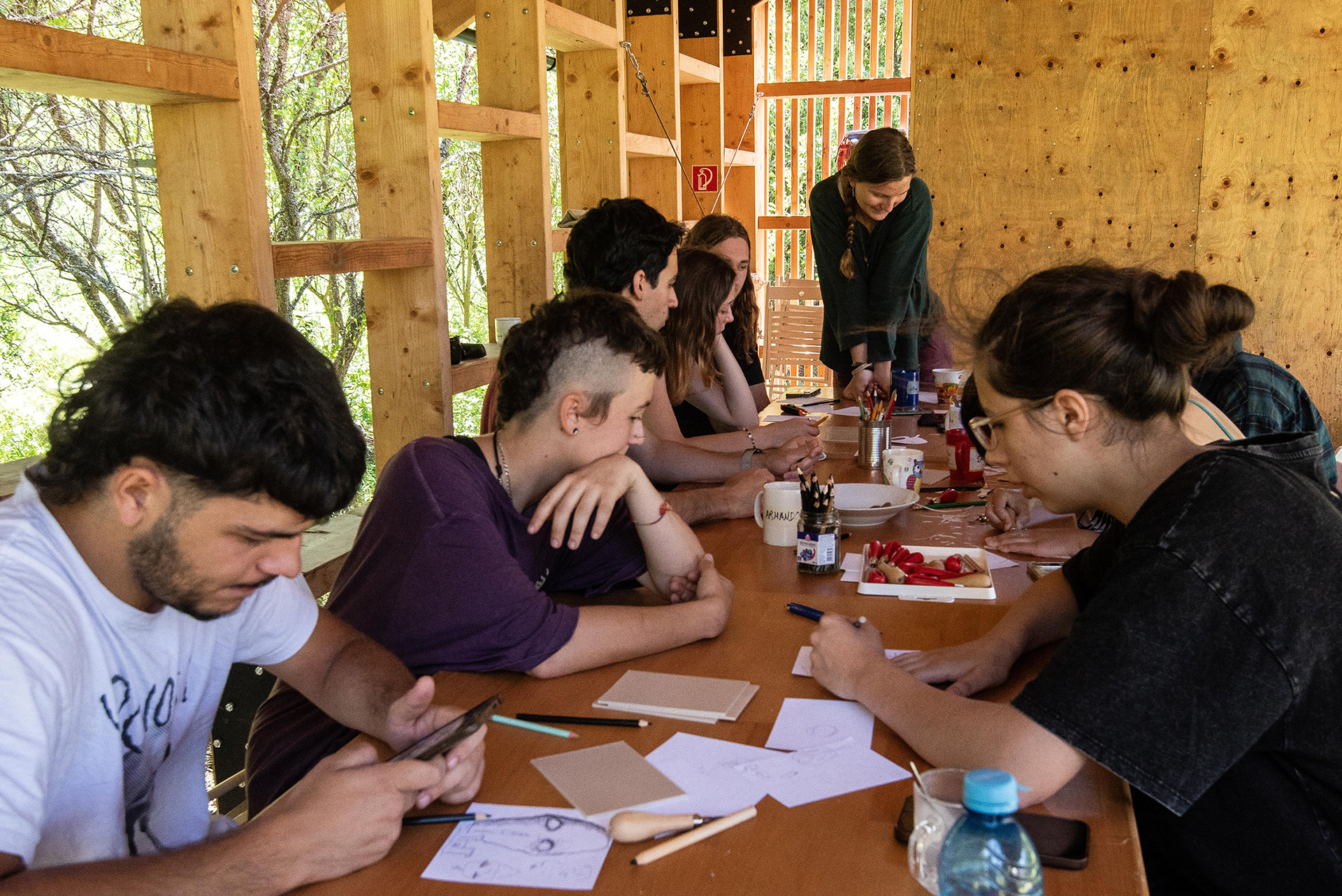
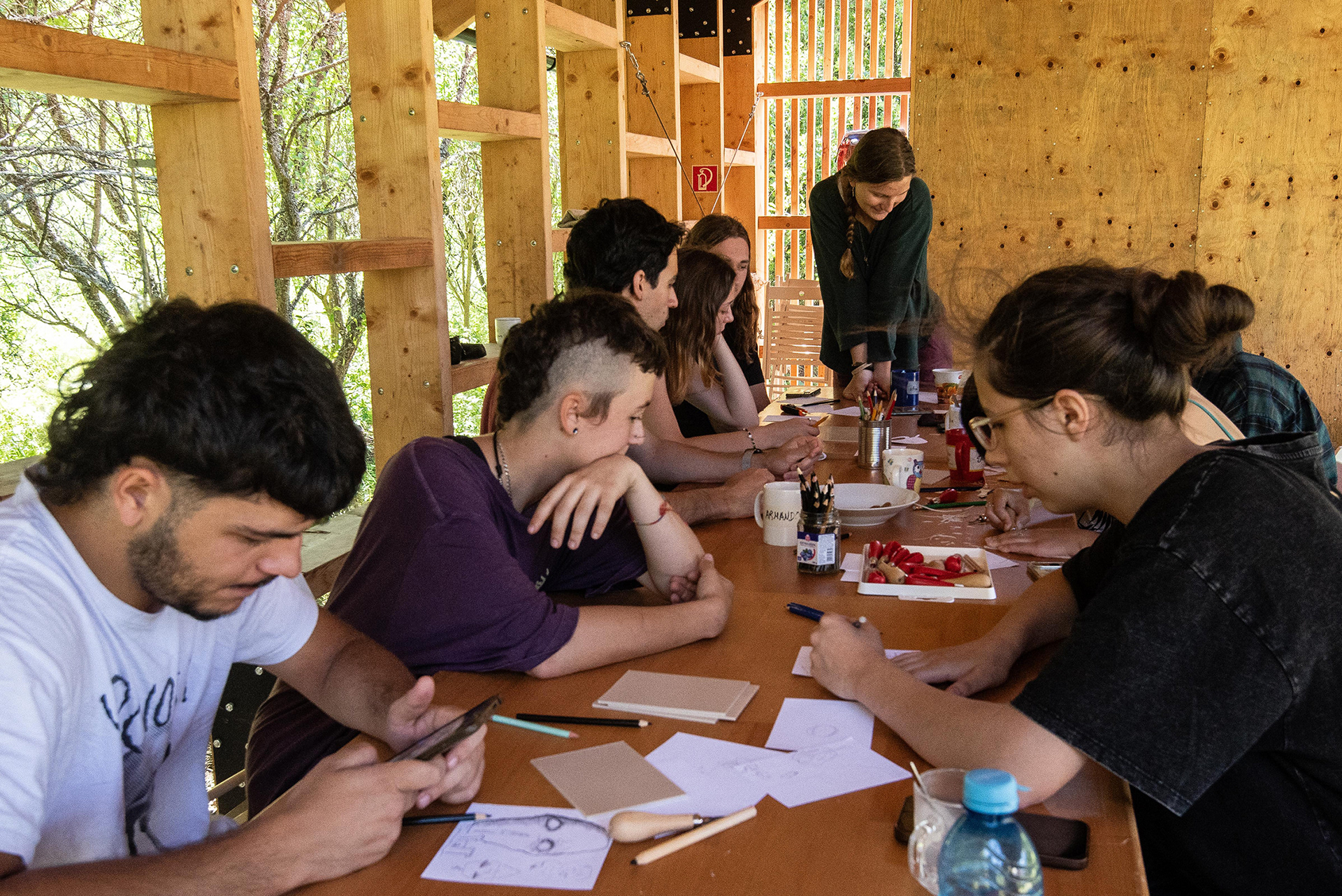
Participants were introduced to the tools, materials, and possibilities of linocut printing. They explored examples of graphic art and began developing their own individual designs — sketching, refining, and transferring their ideas onto linoleum blocks before picking up the carving tools.
Participants were introduced to the tools, materials, and possibilities of linocut printing. They explored examples of graphic art and began developing their own individual designs — sketching, refining, and transferring their ideas onto linoleum blocks before picking up the carving tools.
Phase 2 — Carving & Individual Prints:
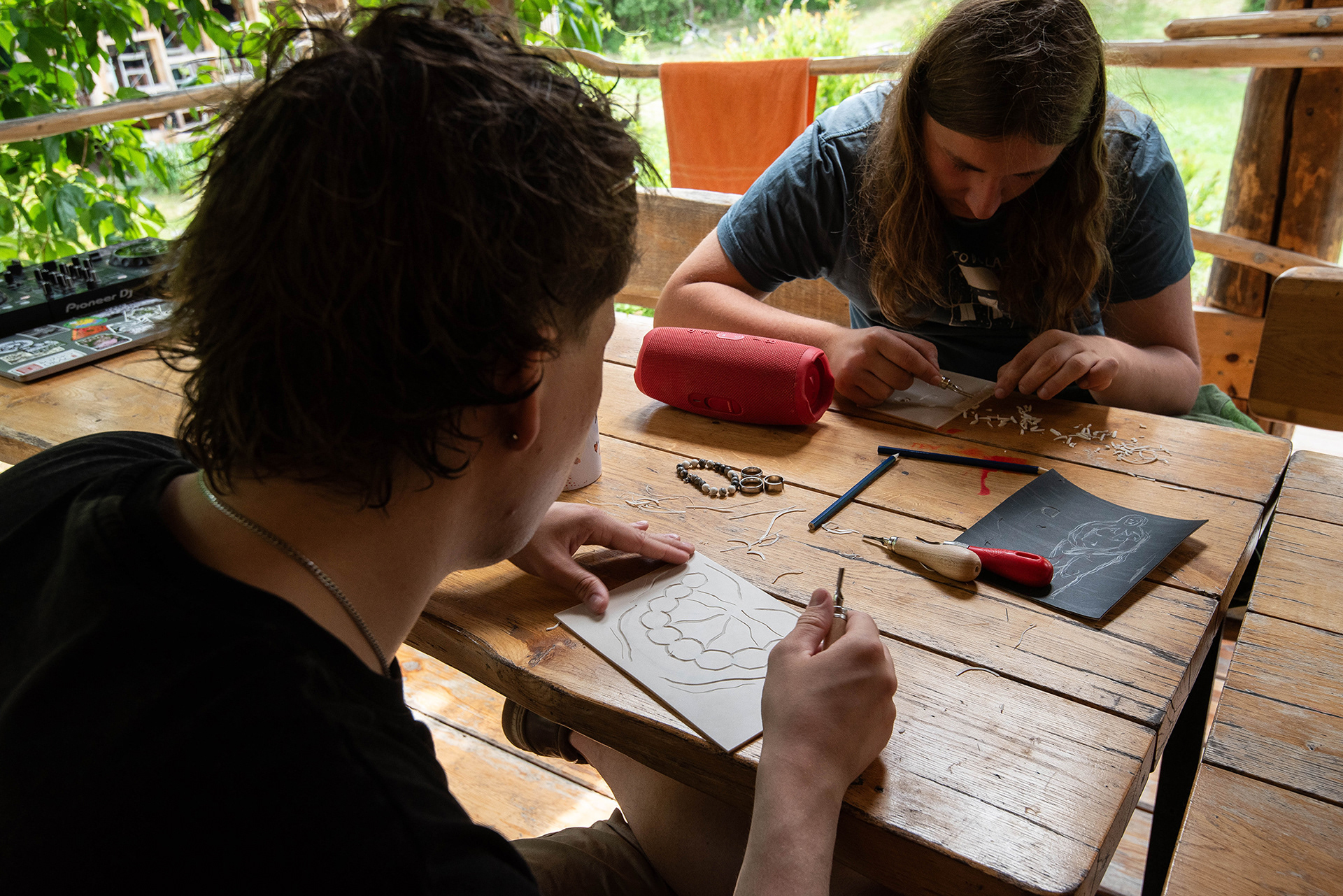
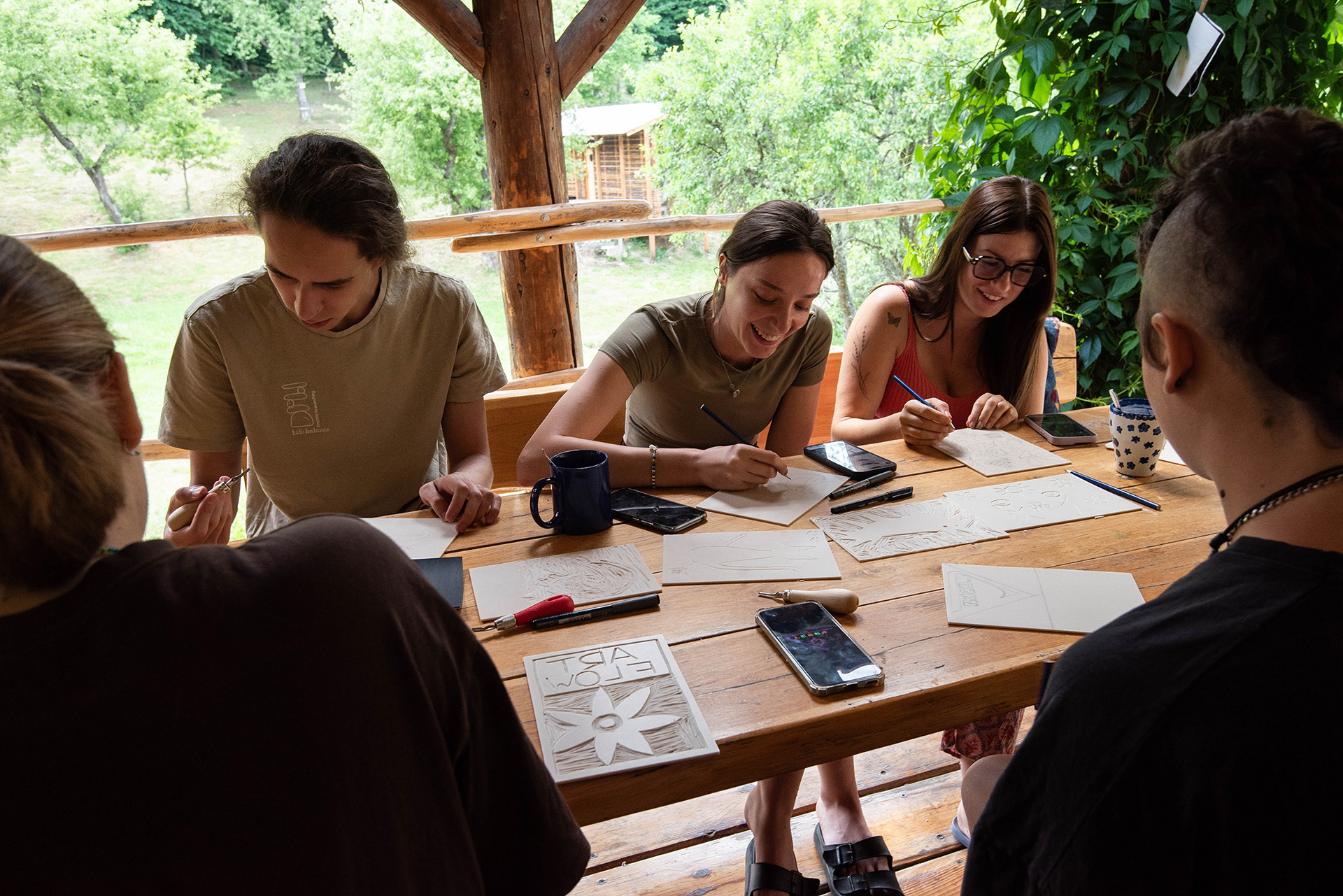
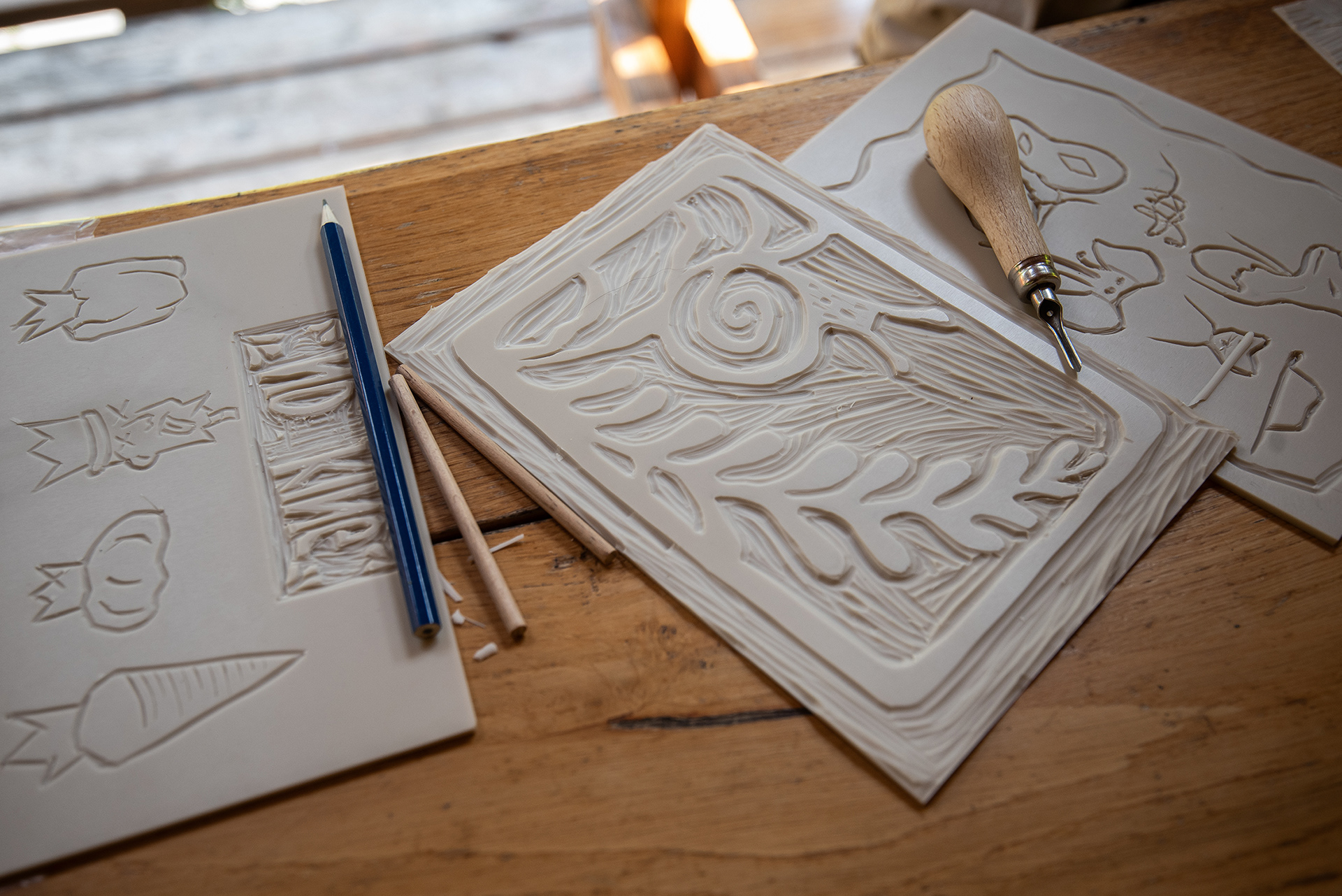
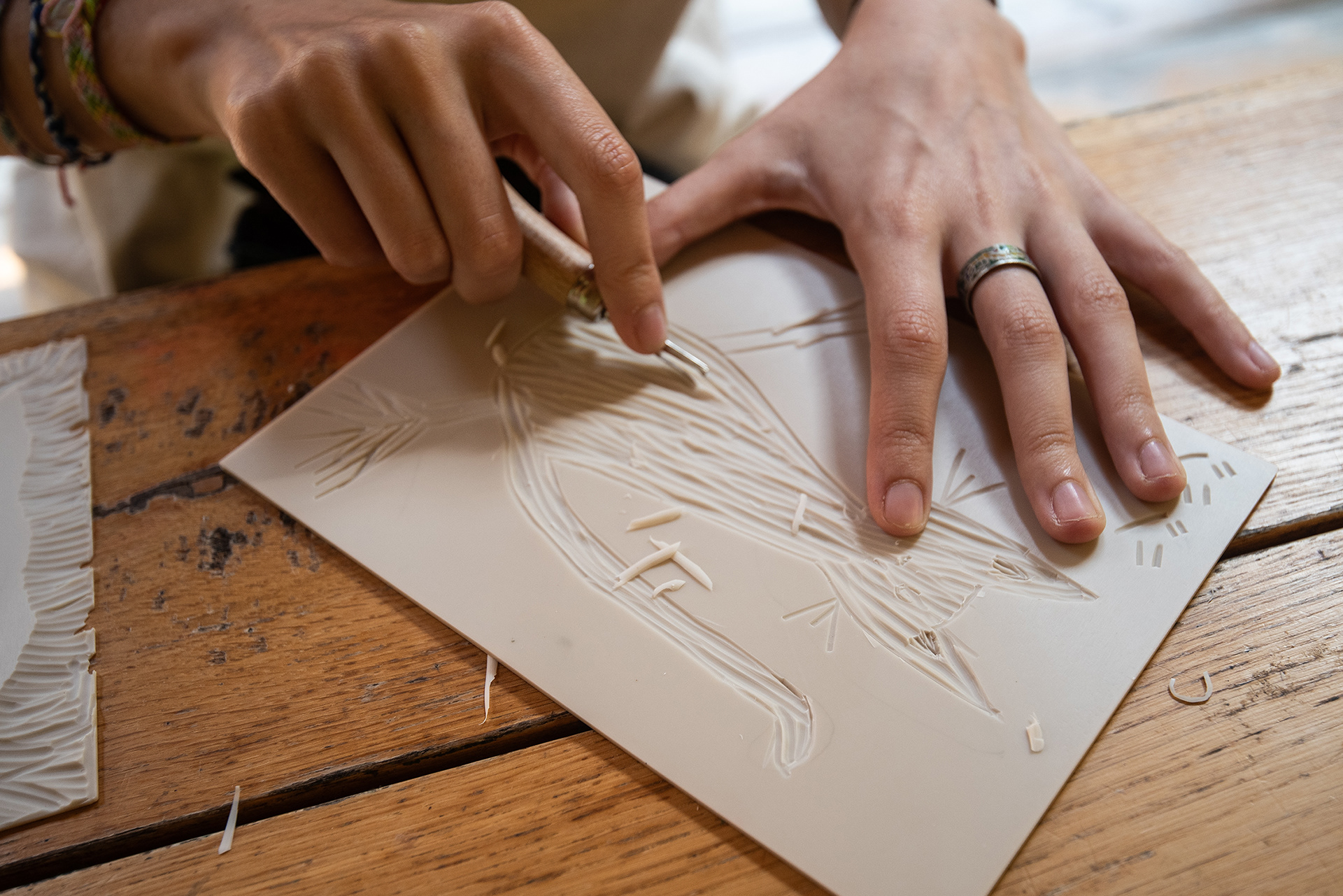
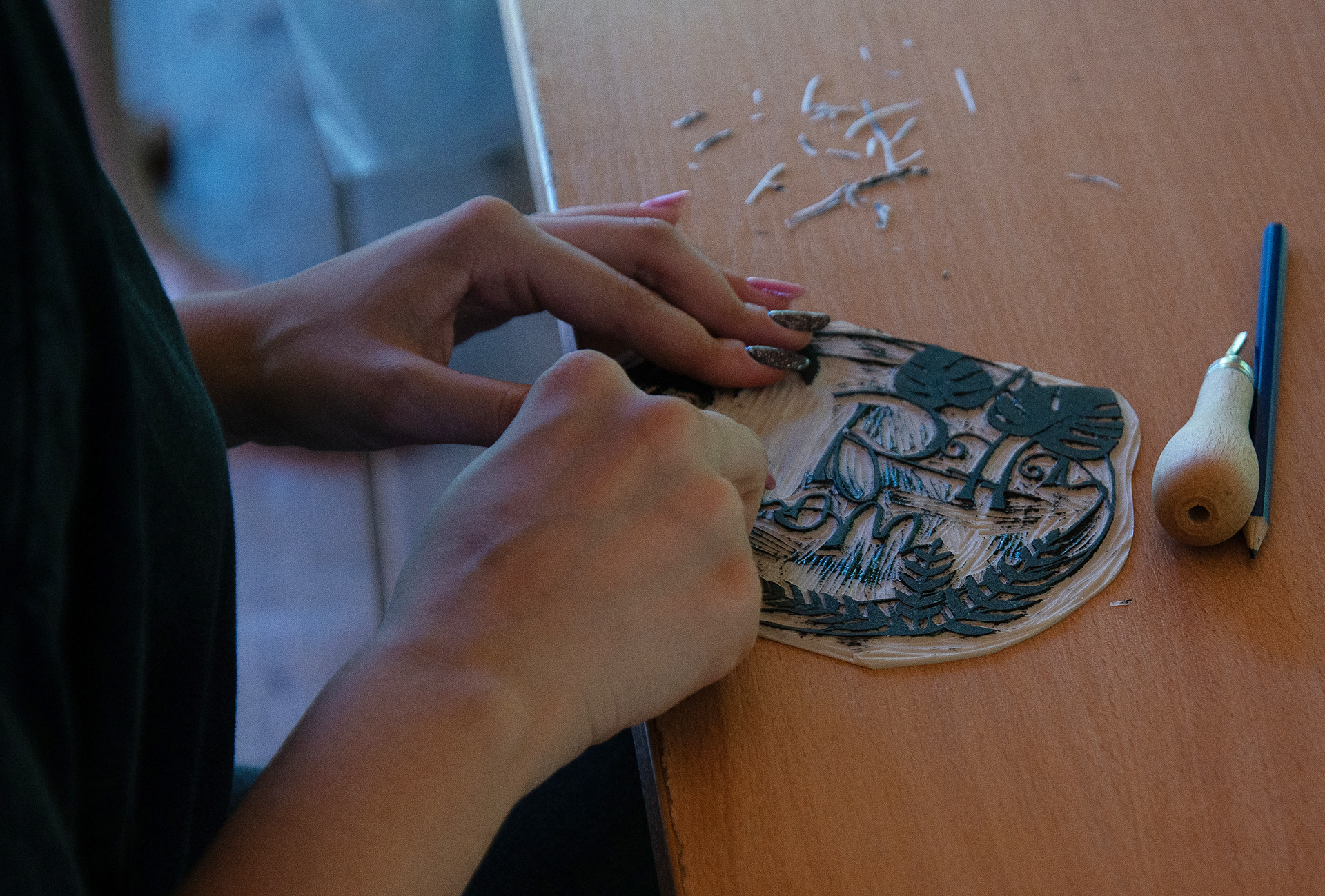
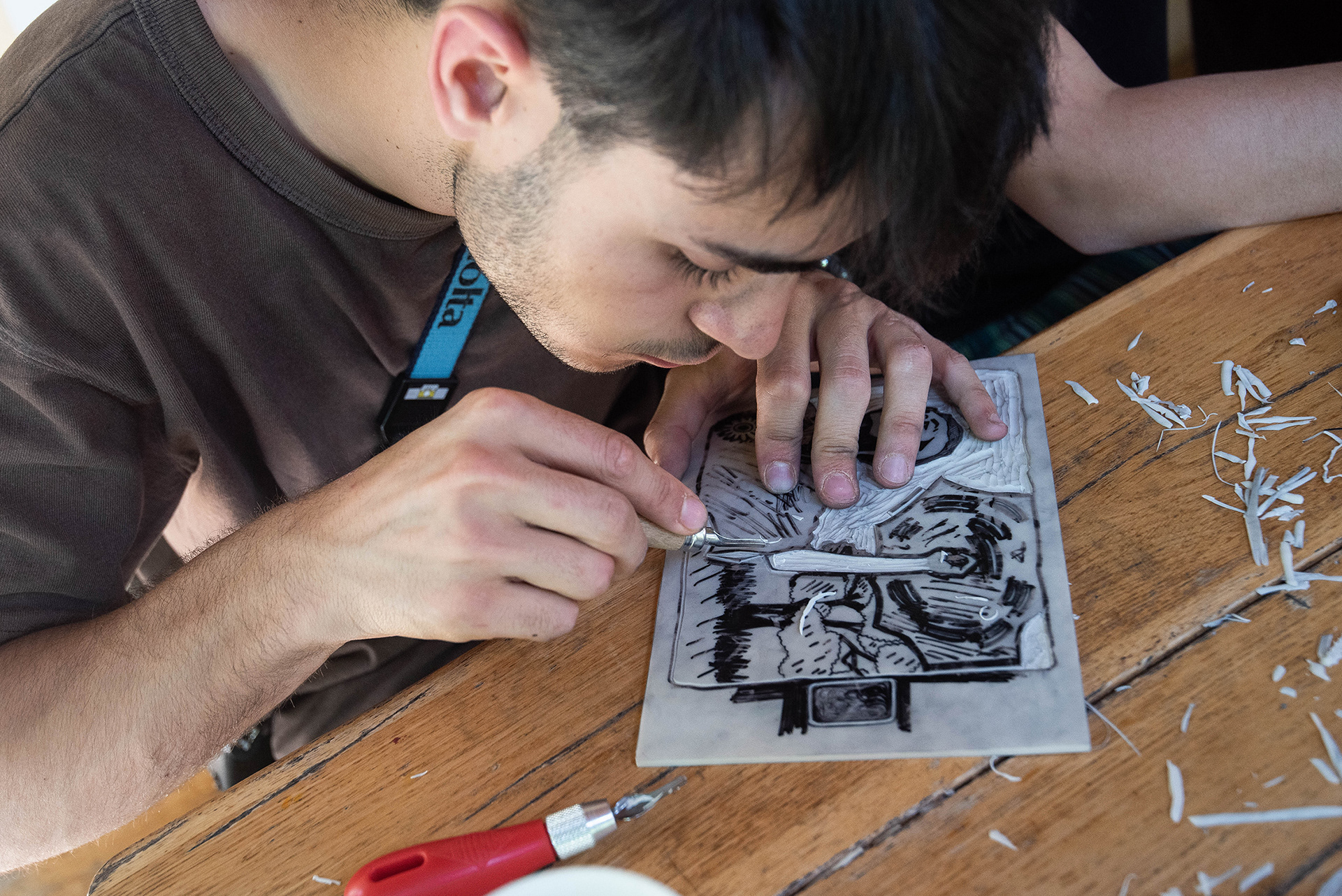
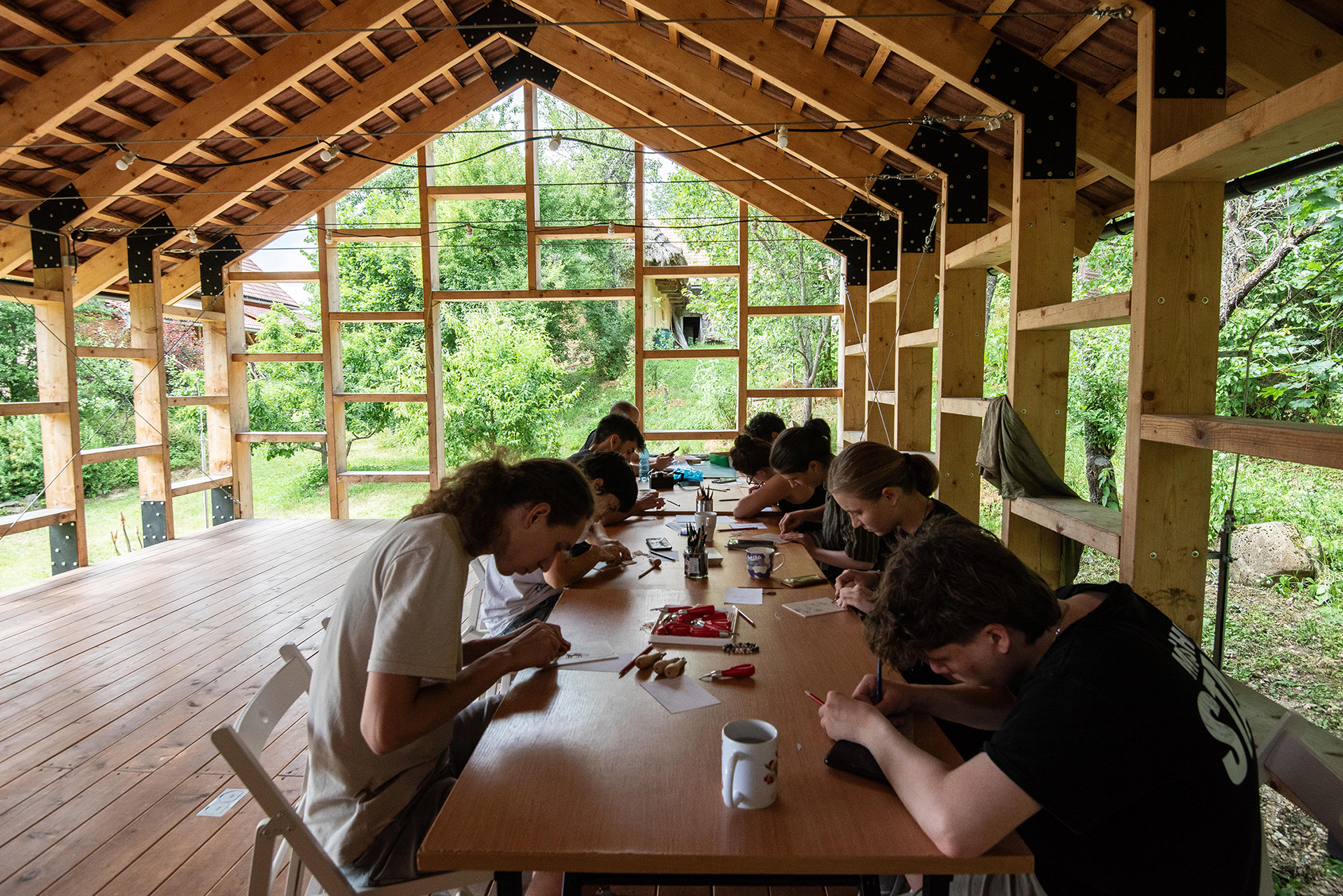
With tools in hand, participants carefully carved their designs into linoleum — a process that demands patience, precision, and a willingness to embrace the unexpected. Each cut was deliberate, each line a decision. The result was a collection of unique personal matrices, ready for printing.
With tools in hand, participants carefully carved their designs into linoleum — a process that demands patience, precision, and a willingness to embrace the unexpected. Each cut was deliberate, each line a decision. The result was a collection of unique personal matrices, ready for printing.
Phase 3 — Printing on Upcycled Clothing & Tote Bags:
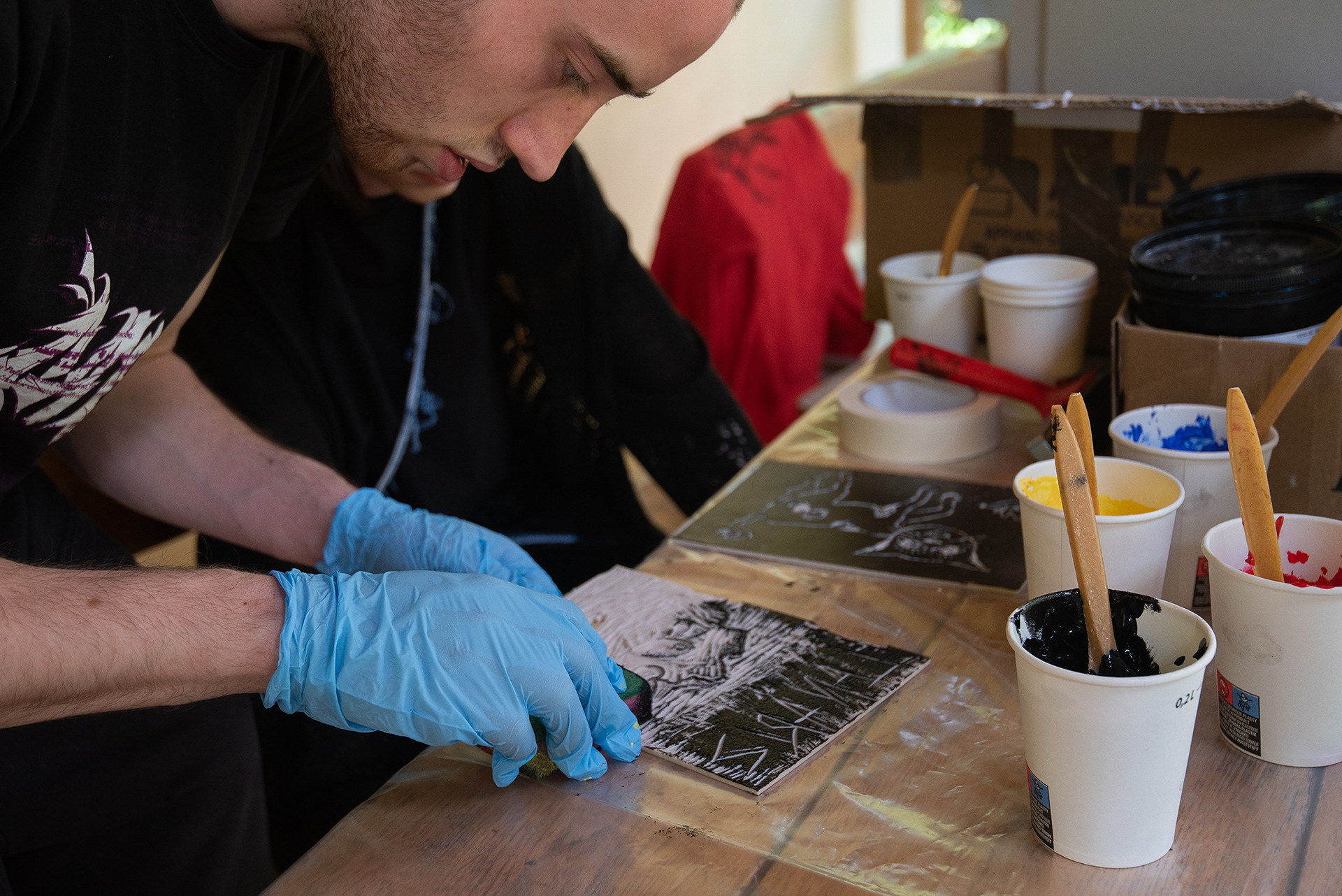
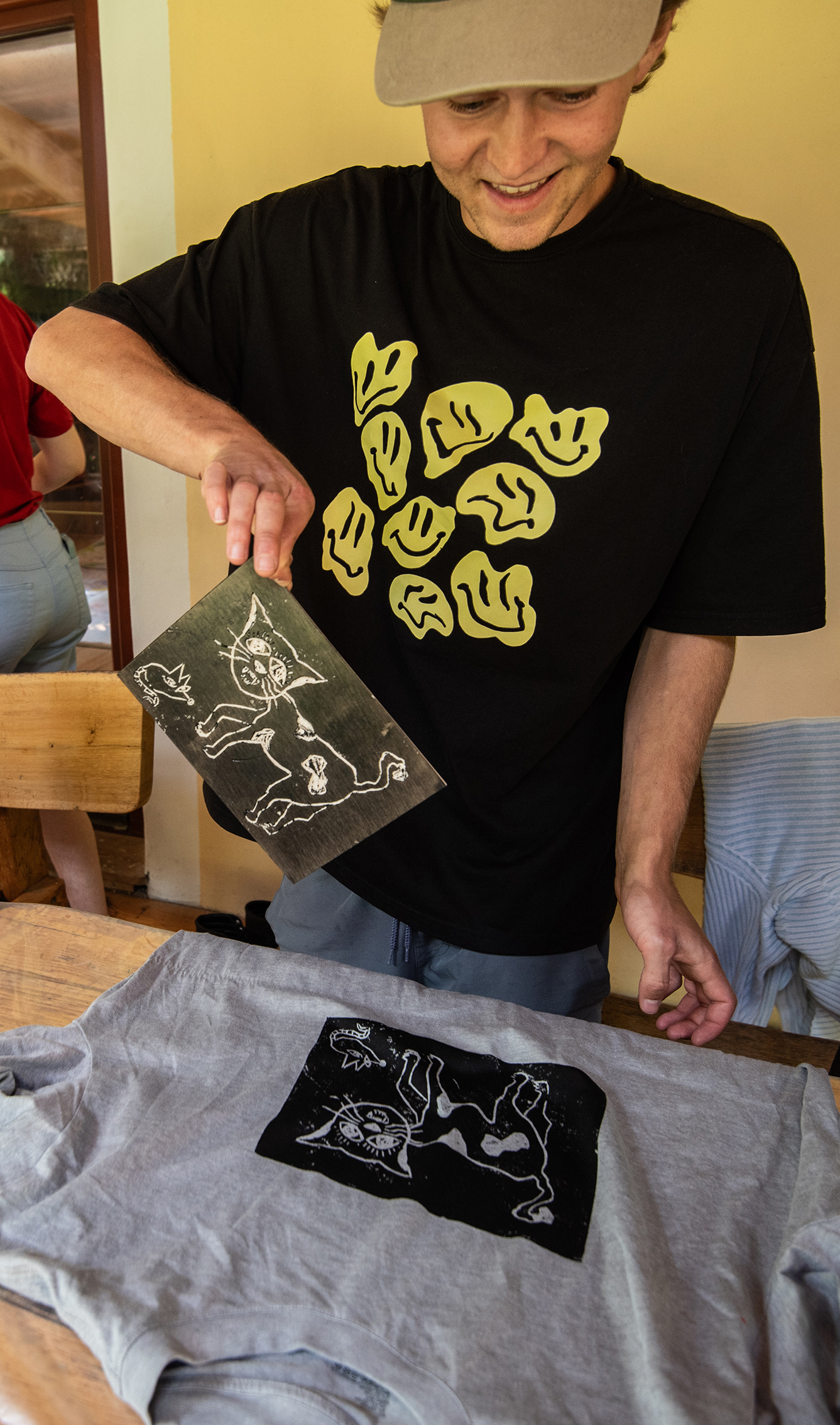
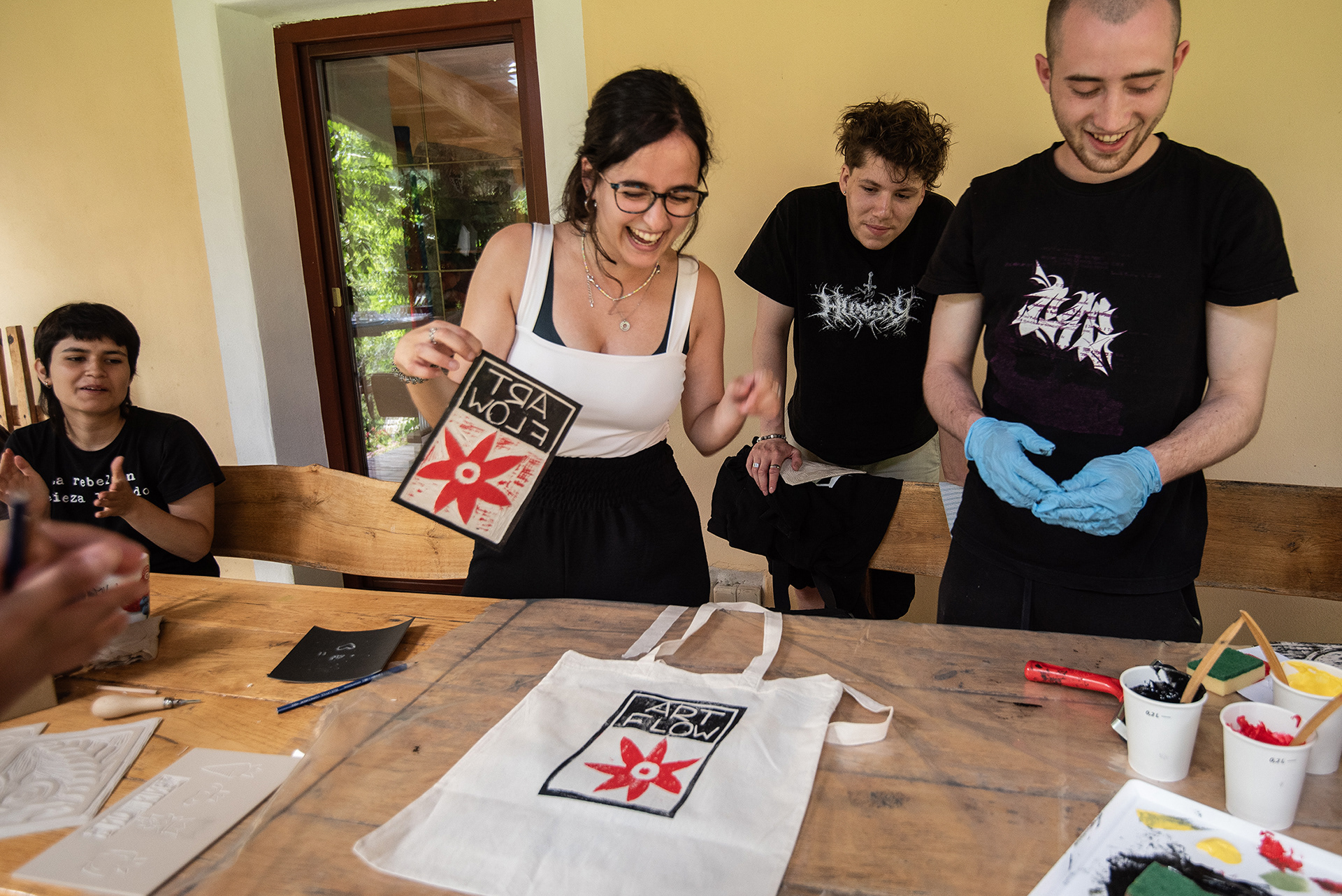
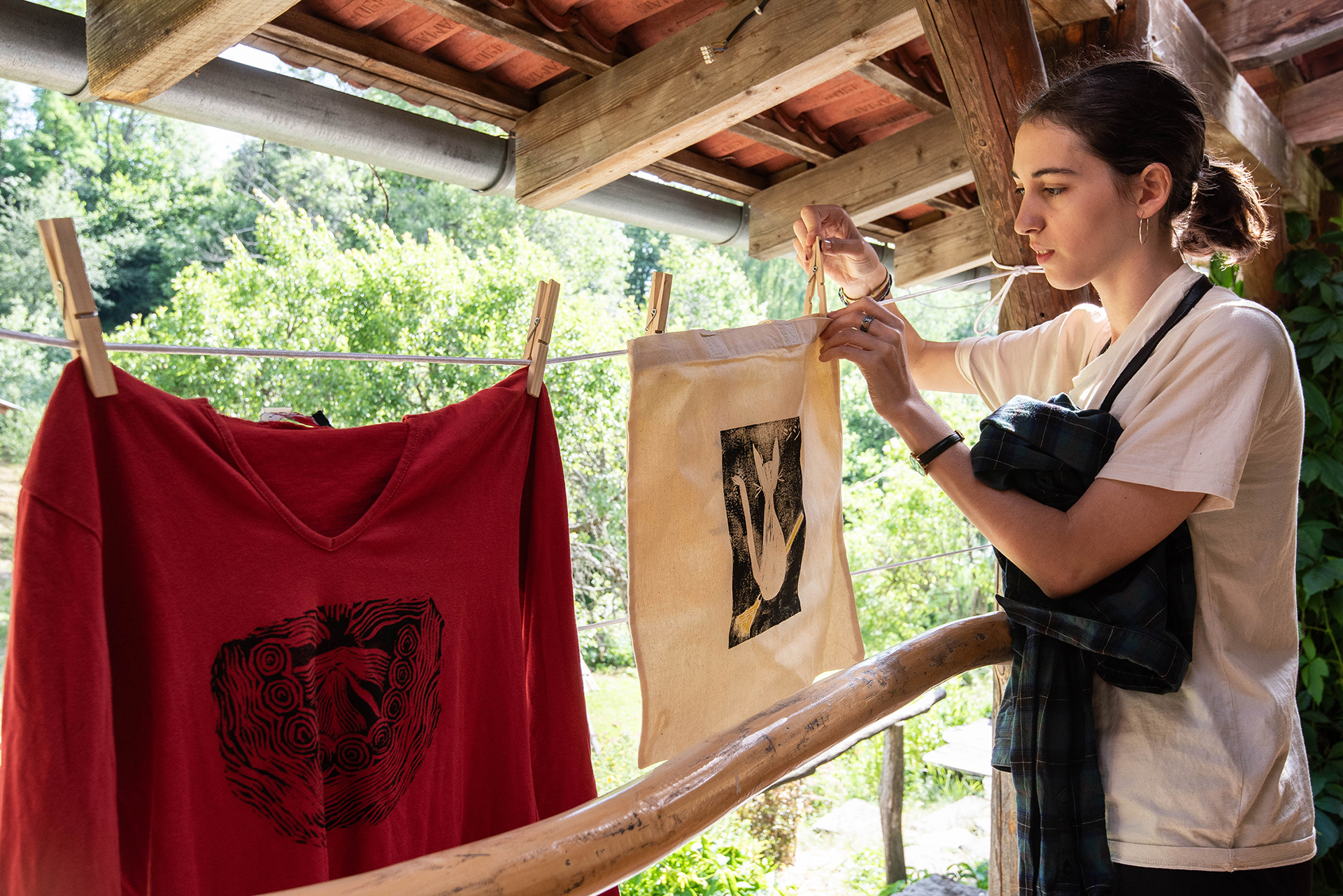
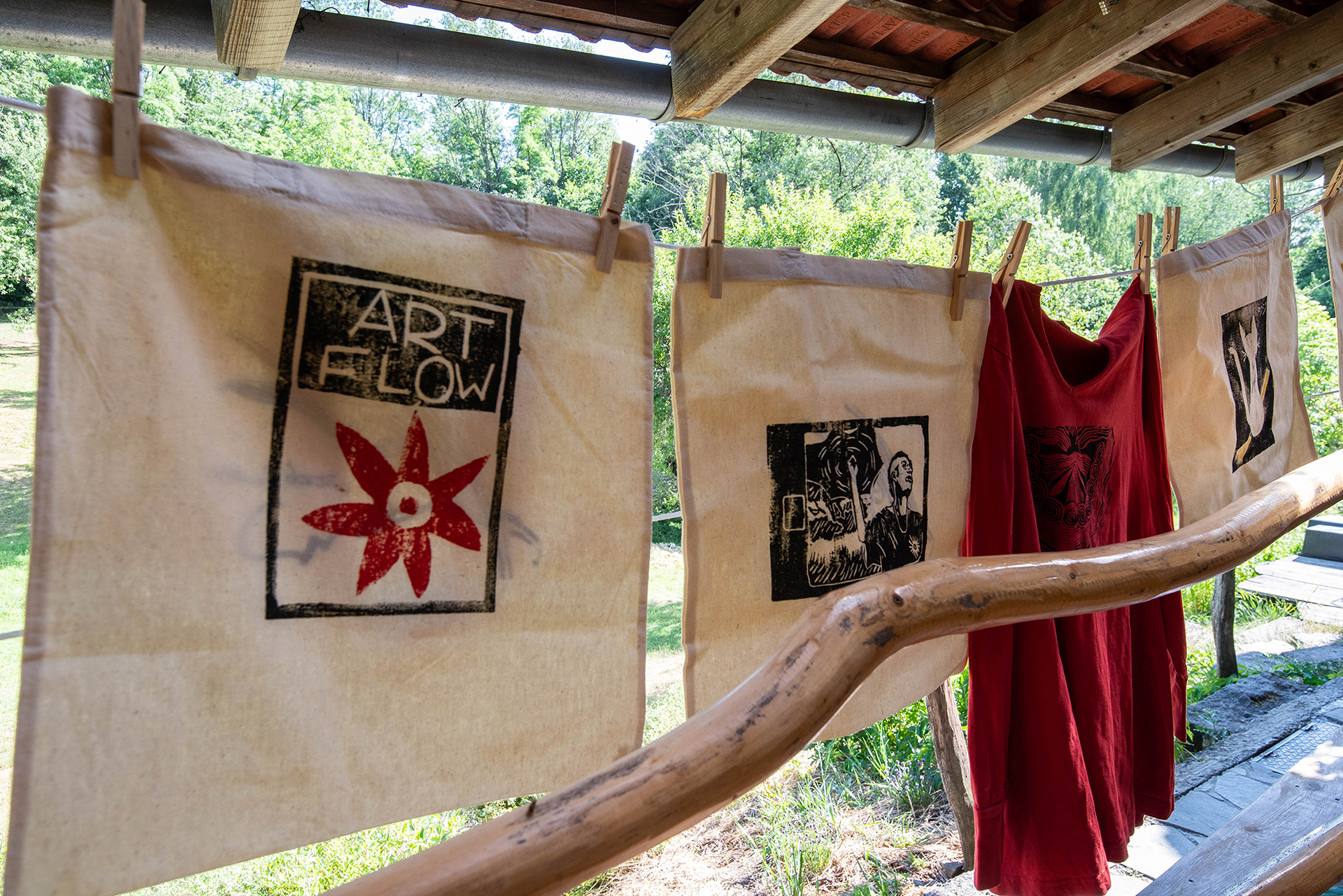
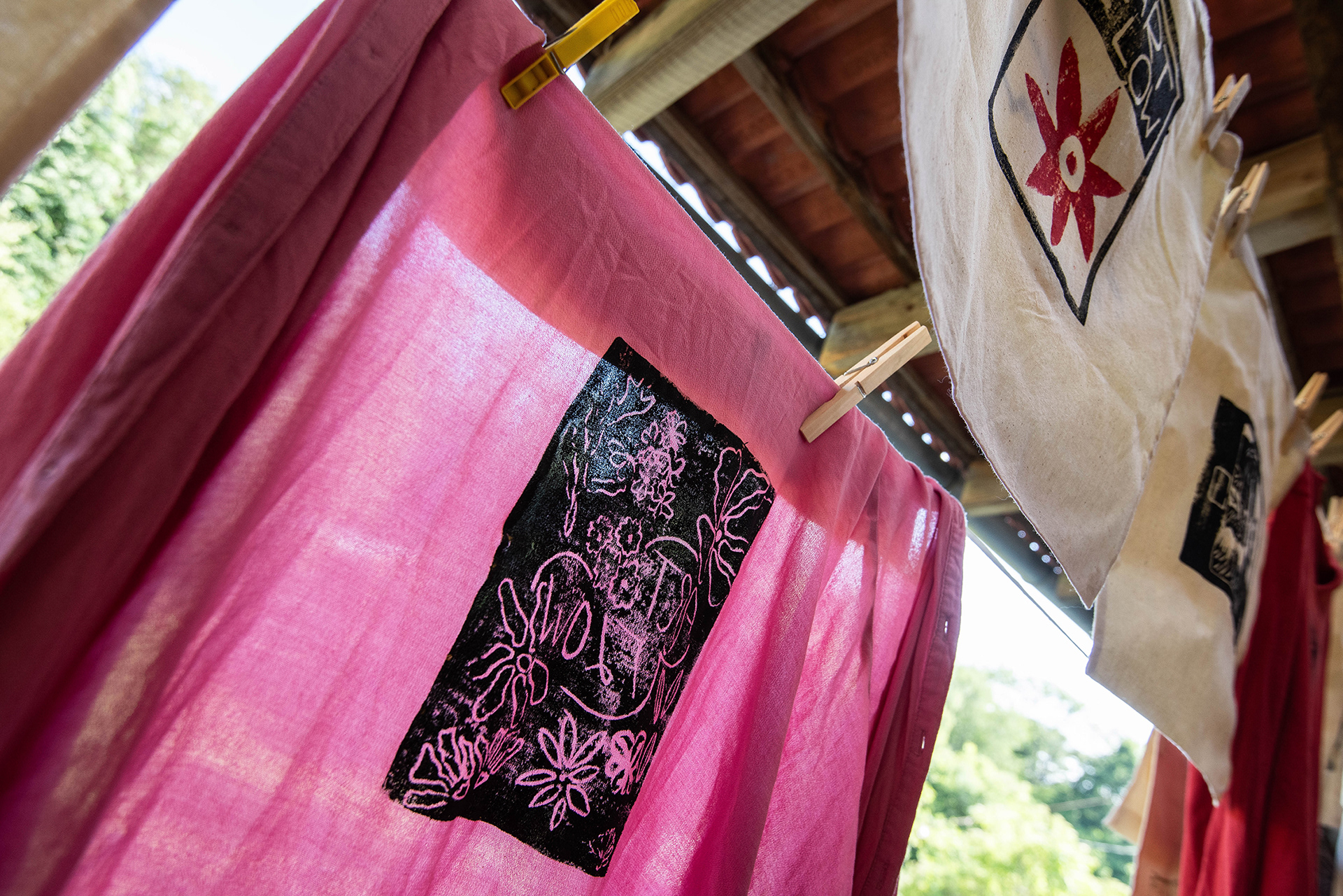
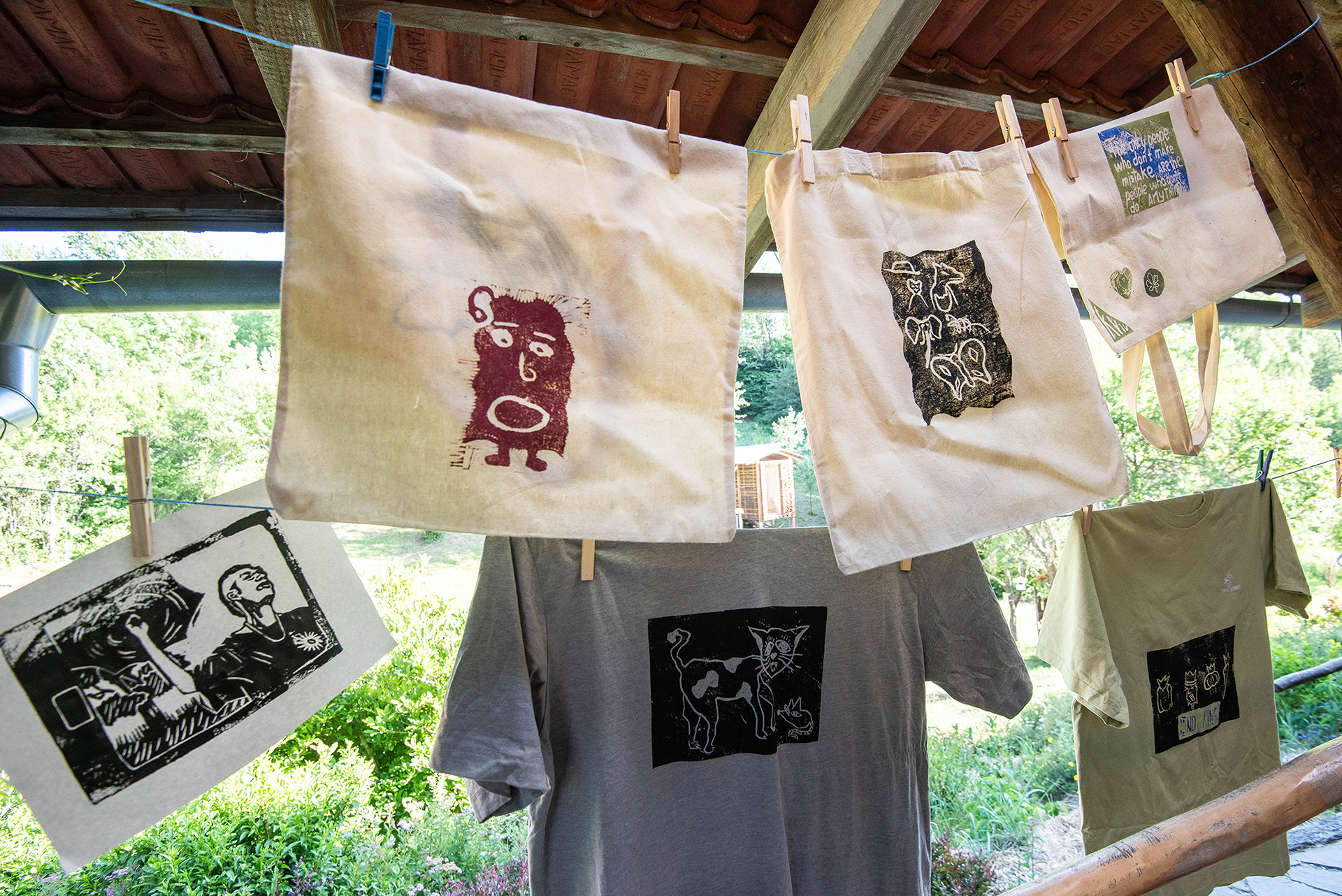
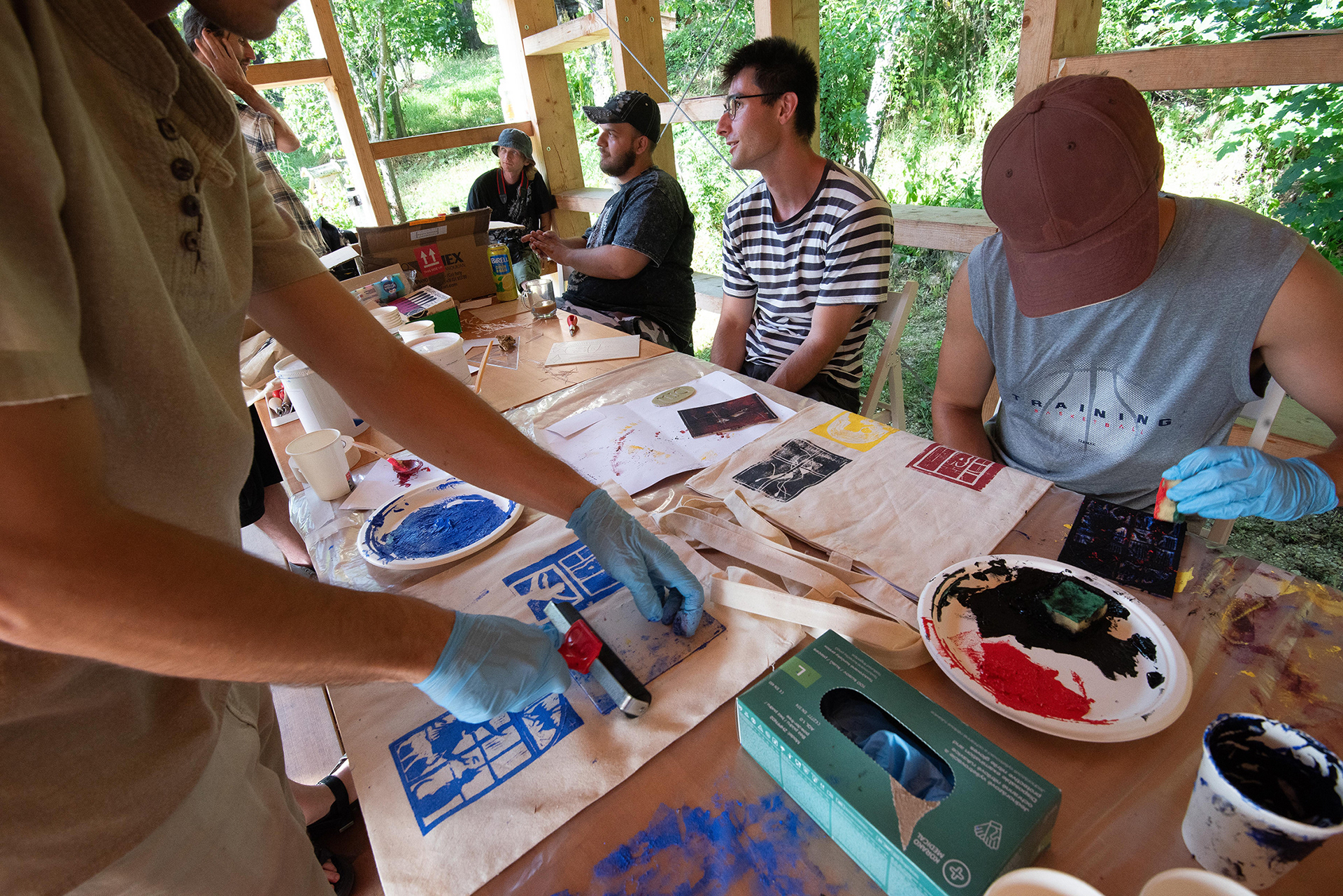
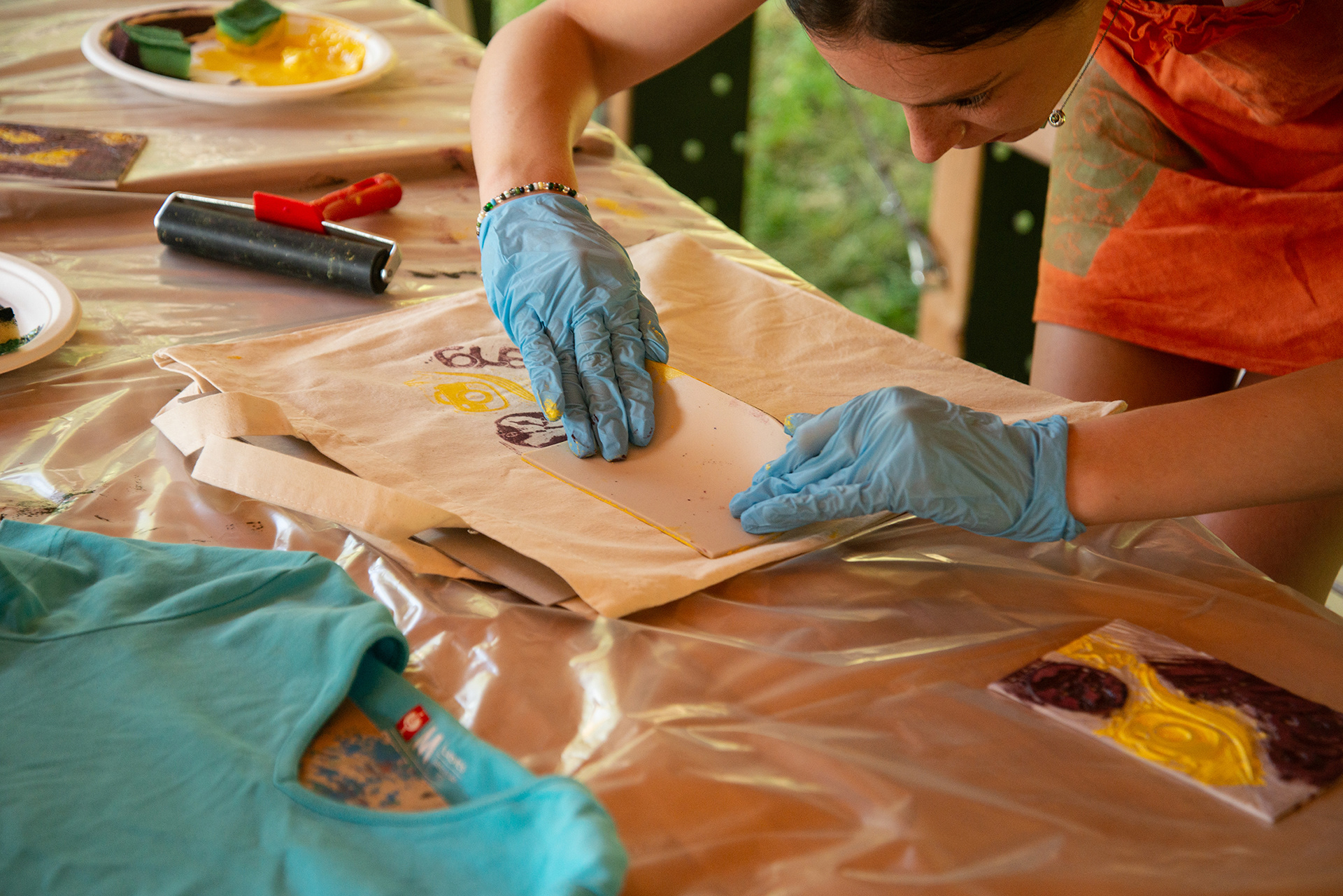
The most anticipated moment — inking the carved blocks and pressing them onto upcycled second-hand clothing and cotton tote bags. Using screen-printing ink, participants transferred their designs onto fabric, watching their carved images come to life in colour. Each piece was entirely unique, made by hand, and carried the mark of its maker.
The most anticipated moment — inking the carved blocks and pressing them onto upcycled second-hand clothing and cotton tote bags. Using screen-printing ink, participants transferred their designs onto fabric, watching their carved images come to life in colour. Each piece was entirely unique, made by hand, and carried the mark of its maker.
Phase 4 — Collective International Prints:
In the final phase, participants formed international groups and collaboratively designed a shared story — a visual narrative told across multiple frames. Each person carved and printed one chapter of the collective work, which was then assembled into a single continuous print on clothing and bags. The result was not just an artwork — it was a document of cross-cultural collaboration and shared imagination.
In the final phase, participants formed international groups and collaboratively designed a shared story — a visual narrative told across multiple frames. Each person carved and printed one chapter of the collective work, which was then assembled into a single continuous print on clothing and bags. The result was not just an artwork — it was a document of cross-cultural collaboration and shared imagination.
Final Exhibition:
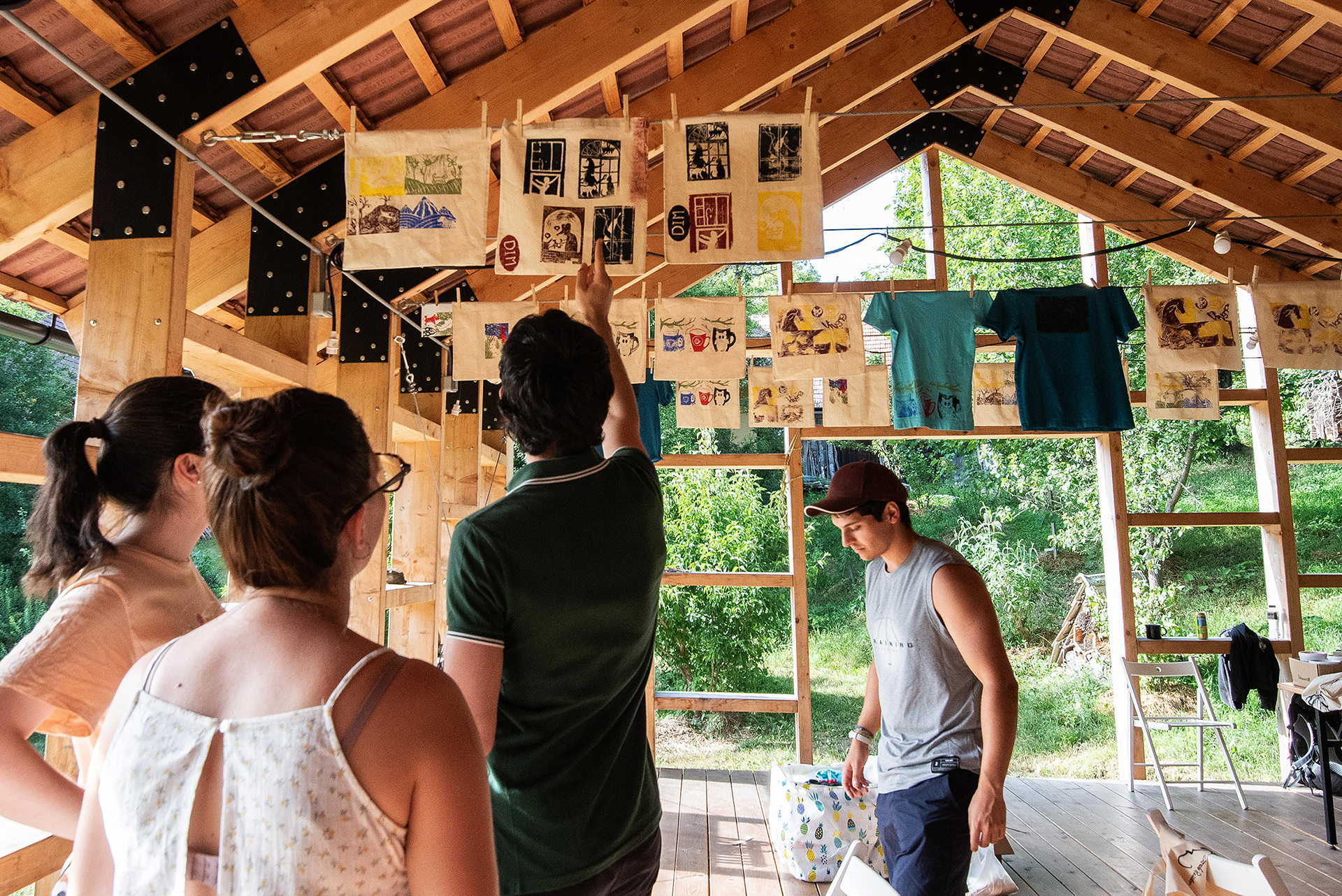
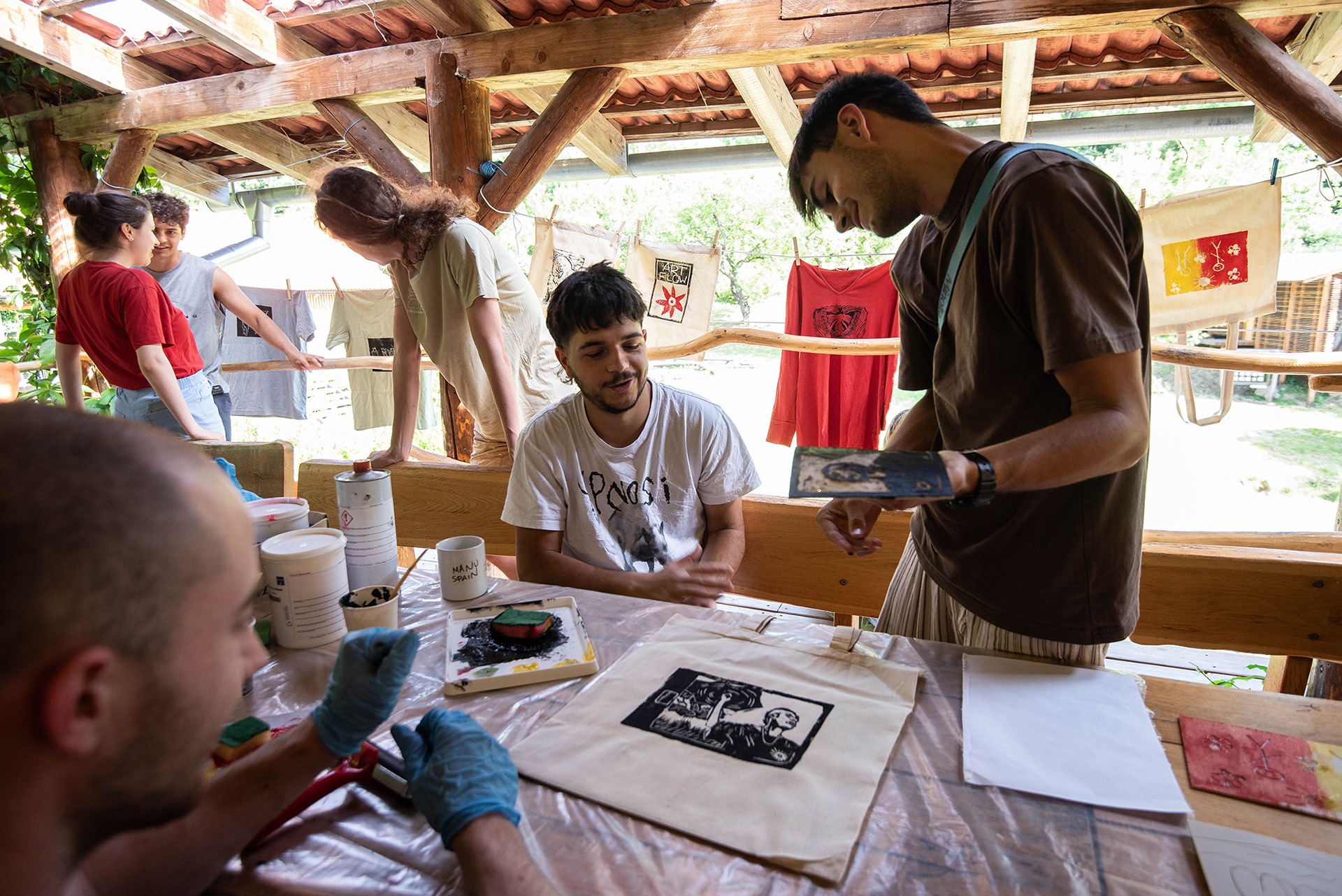
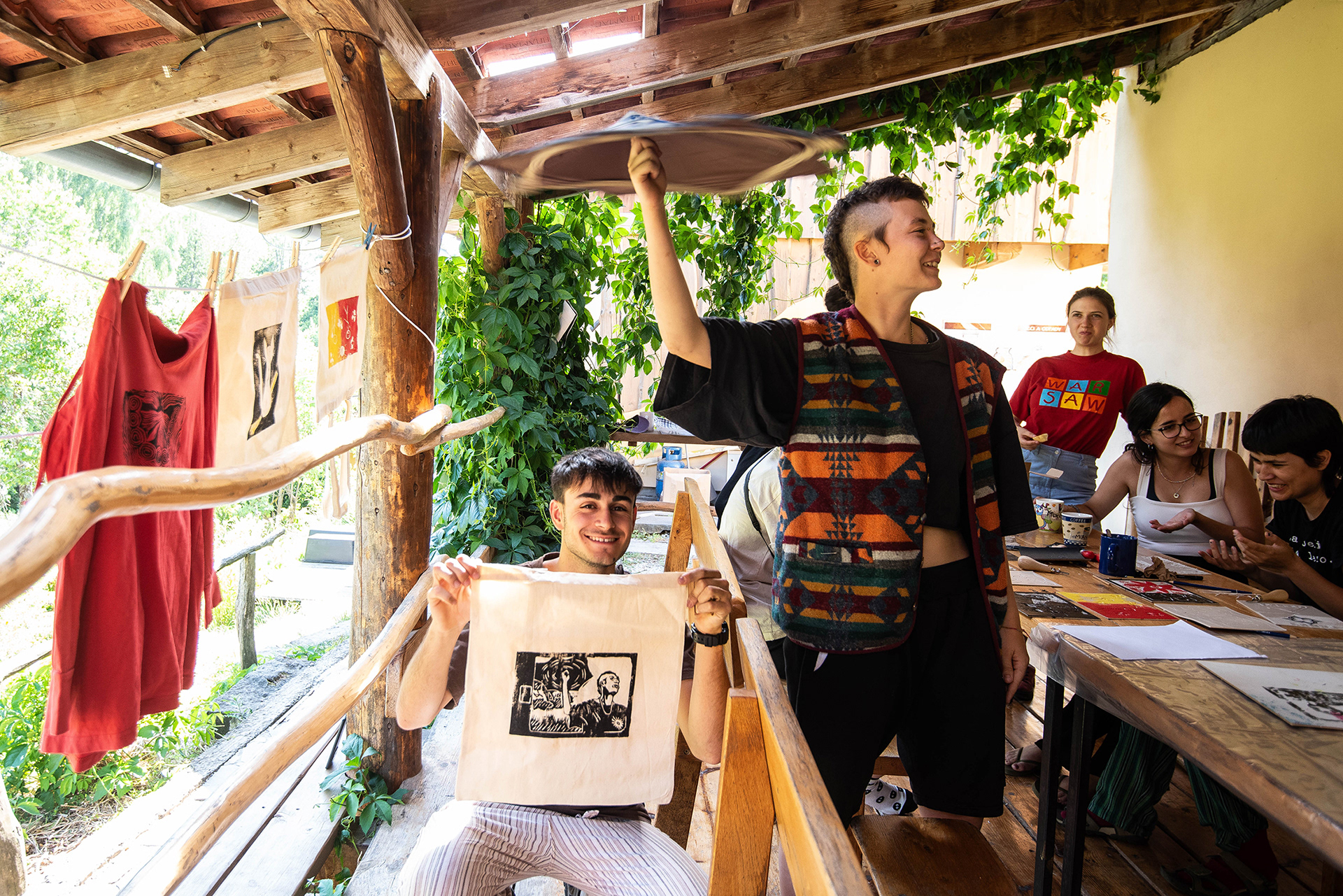
Finished prints were hung to dry under the roof of the open-air workshop space — creating a spontaneous, colourful exhibition that transformed the venue into a living gallery of participant creativity.
Finished prints were hung to dry under the roof of the open-air workshop space — creating a spontaneous, colourful exhibition that transformed the venue into a living gallery of participant creativity.
Results & Impact
👕 Series of Unique Wearable Artworks: Every participant left the workshop with at least one hand-printed piece — a T-shirt, tote bag, or fabric print that was entirely their own creation.
👕 Collective Narrative Prints: International groups produced shared story-prints that exist as both artworks and symbols of cross-cultural collaboration — each frame contributed by a different hand, from a different country.
👕 Upcycling in Practice: By working exclusively with second-hand garments and reusable cotton bags, the workshop demonstrated that sustainable fashion is not a compromise — it is a creative choice.
👕 Technical Mastery: Participants gained hands-on experience with linocut — a traditional printmaking technique with roots in fine art — applicable far beyond the context of the exchange.
👕 Youth Empowerment: Led by a young facilitator, the workshop reinforced the message at the heart of ART FLOW: that young people are not just participants in culture — they are its creators.