Art Flow Activity 🌿 Workshop: "Natural Painting – Colors of the Earth"
Art doesn't always have to come from a tube. Sometimes, the most vibrant palette is hidden right beneath our feet or in our kitchen. In this workshop, we returned to the roots of creativity, discovering how to extract pigments from nature and use them to capture the world around us without a single drop of synthetic chemicals.
Facilitated by: Kristína Mikluščáková (Intermedia student at the Academy of Fine Arts and Design Bratislava, Slovakia)

Educational Approach
Led by Kristína, a young artist specializing in intermedia, the "Natural Painting" workshop was a deep dive into sustainable art-making. Her approach focused on the alchemy of color — teaching participants that the process of preparing the paint is just as important as the painting itself.
By using everyday natural materials, Kristína empowered participants to see the environment as a resource for creation, fostering a sense of eco-consciousness and artistic self-sufficiency.
Objectives
🌿 DIY Pigment Extraction: Learning how to derive rich colors from organic sources like vegetables, spices, and minerals.
🌿 Sustainability in Art: Understanding the ecological impact of materials and exploring non-toxic alternatives.
🌿 Experimental Painting: Breaking away from traditional techniques to explore the unique textures and behaviors of natural dyes.
🌿 Botanical Inspiration: Using the surrounding flora as both a source of color and a subject for artistic expression.
🌿 Sensory Engagement: Connecting with art through smell (turmeric), touch (charcoal), and sight (beetroot).
Activity Process
The workshop was a hands-on journey from raw material to finished gallery piece:
Phase 1 — The Natural Laboratory:
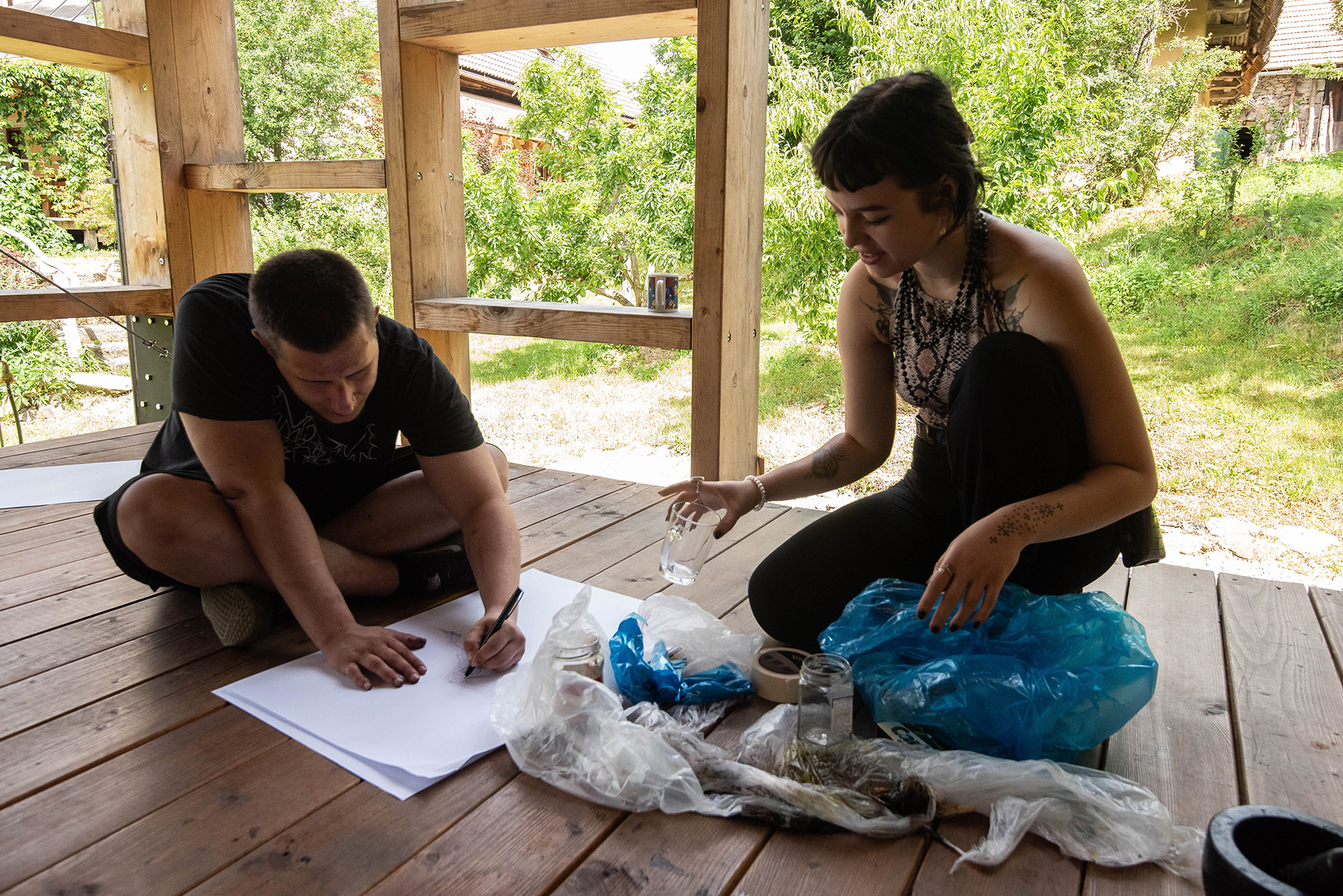
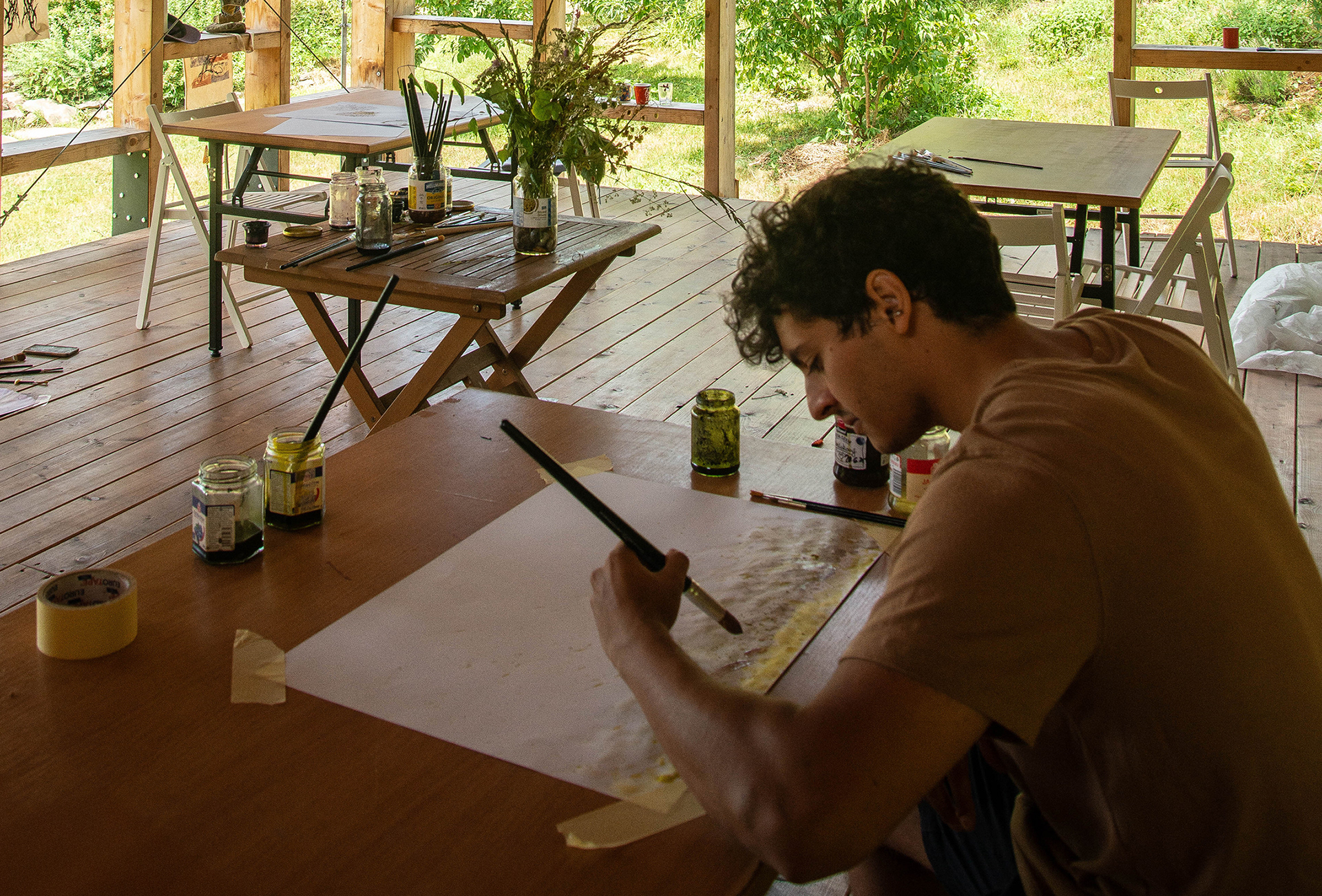
The session began with the preparation of the "paints." Participants experimented with different organic bases:
The session began with the preparation of the "paints." Participants experimented with different organic bases:
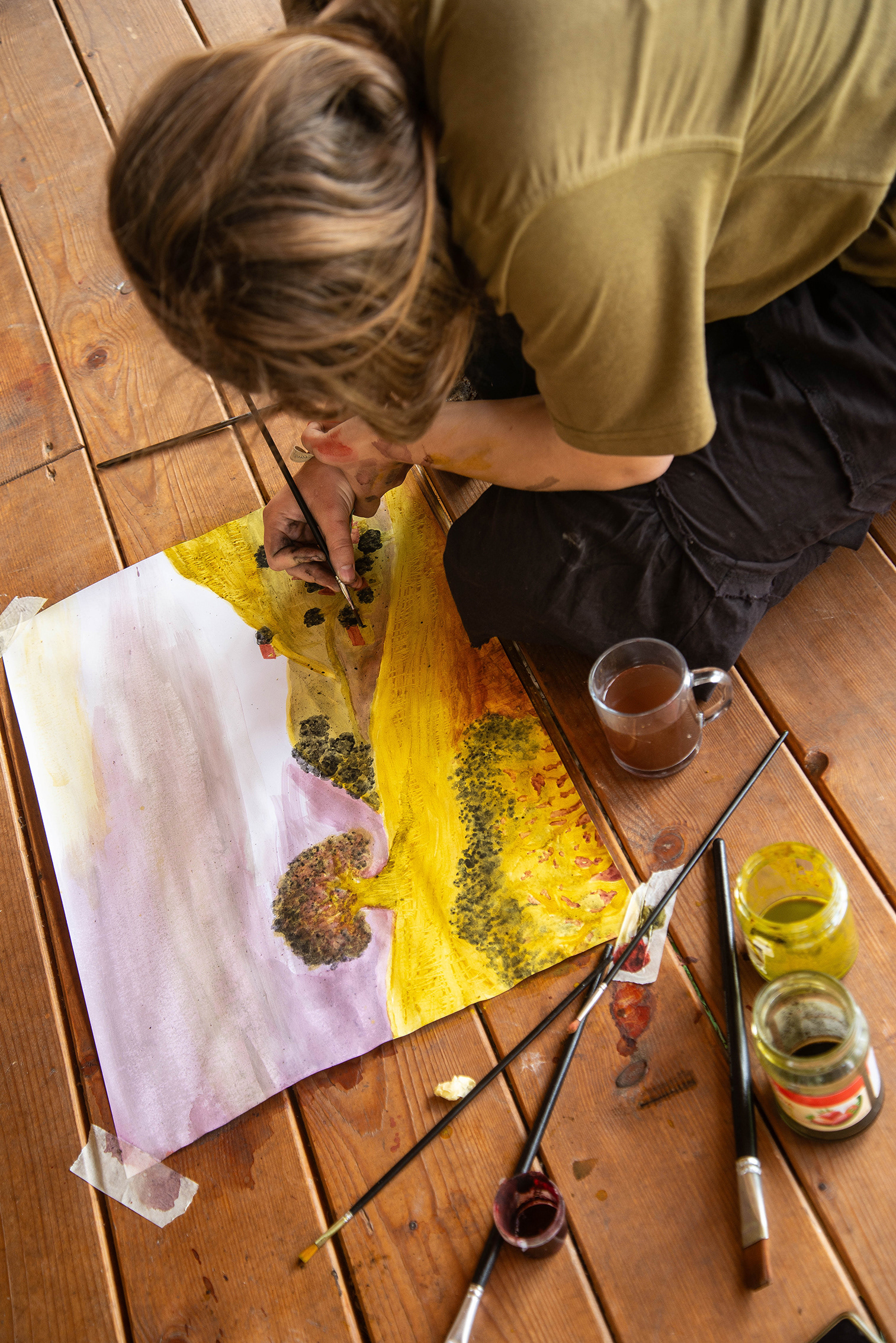
Beetroot: For deep magentas and earthy pinks.
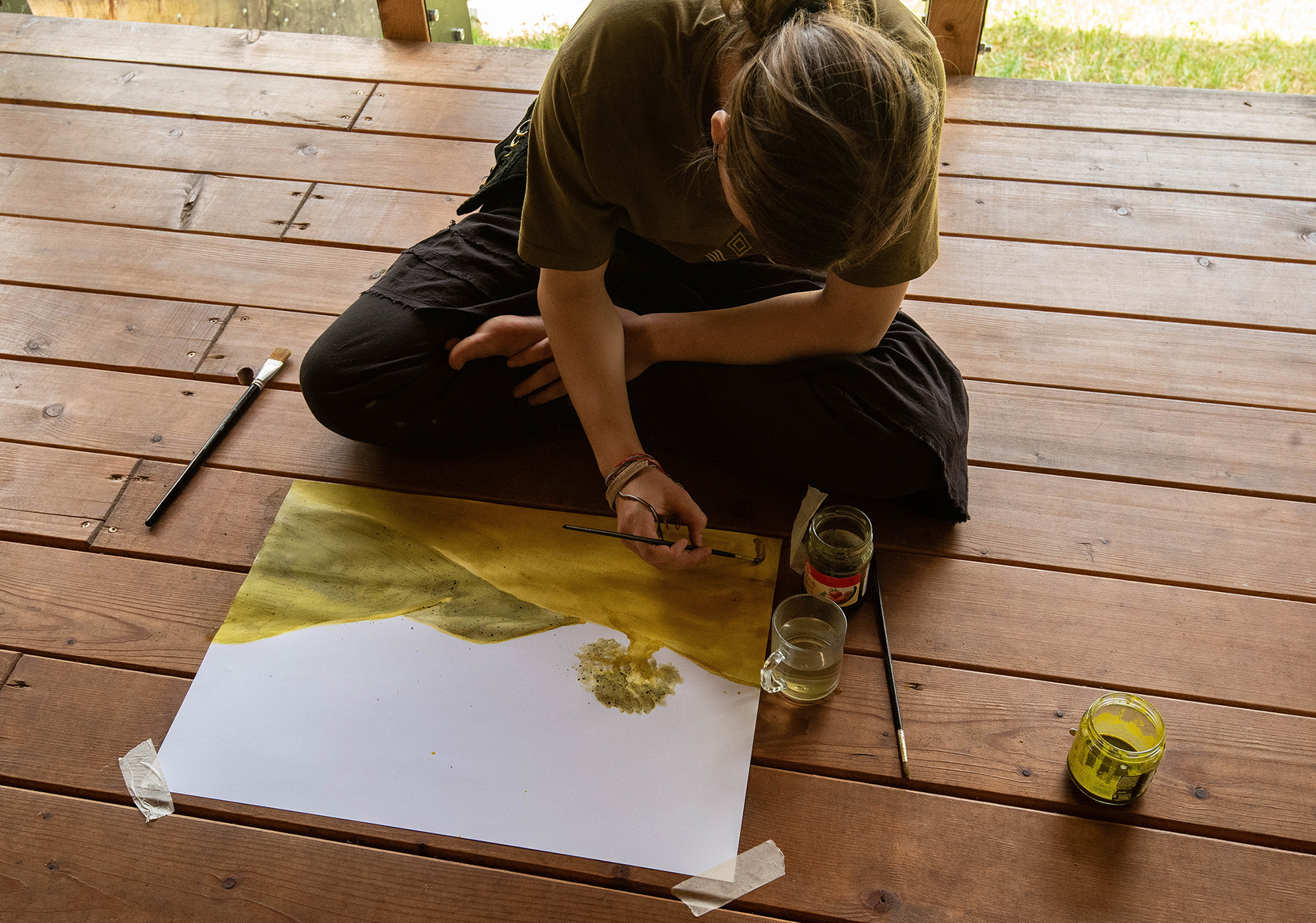
Turmeric: For vibrant, glowing yellows and oranges.
Activated Charcoal: For deep blacks, greys, and textural shadows.
Plants & Soil: For various shades of green and brown found directly on-site.
Phase 2 — Understanding the Medium:
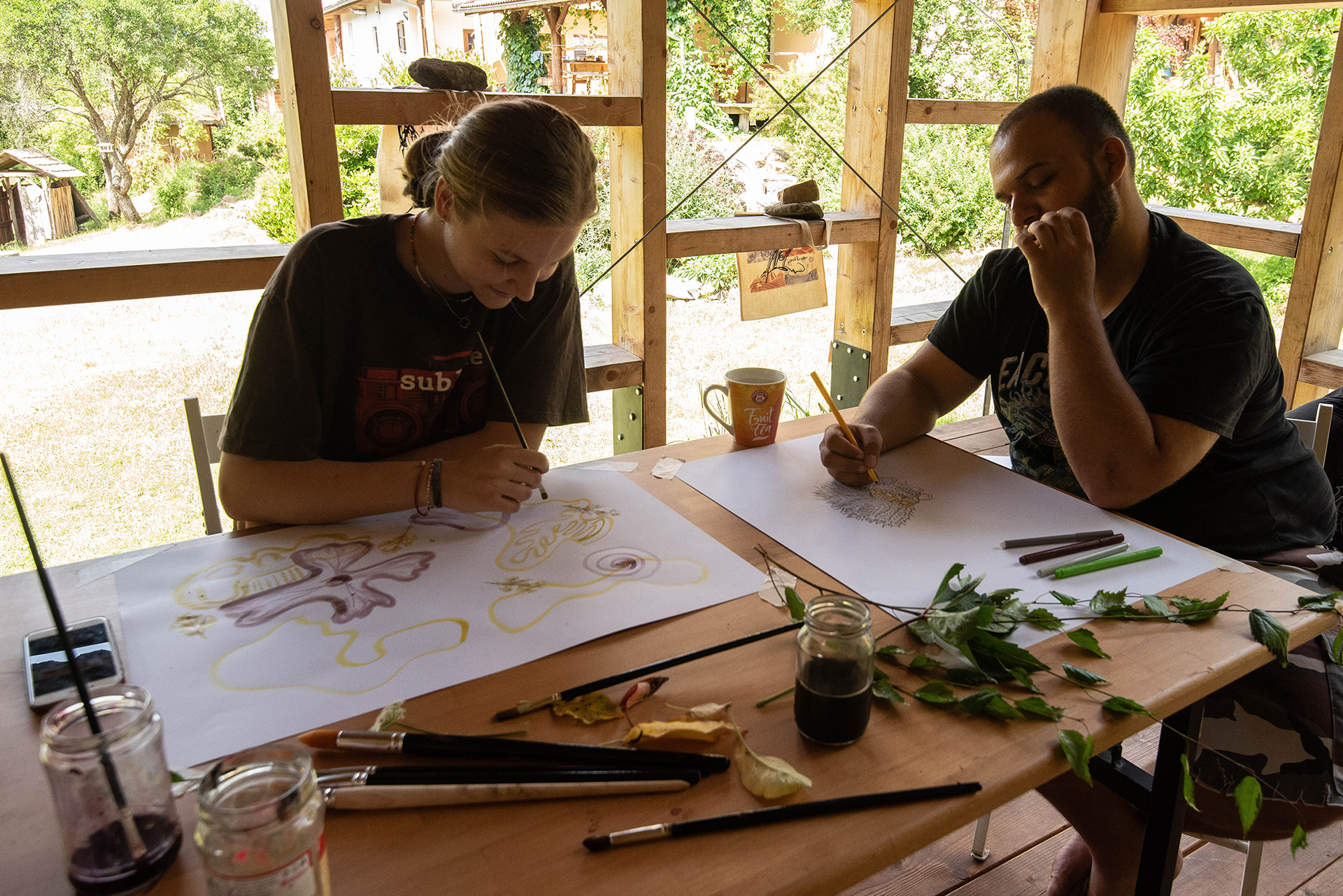
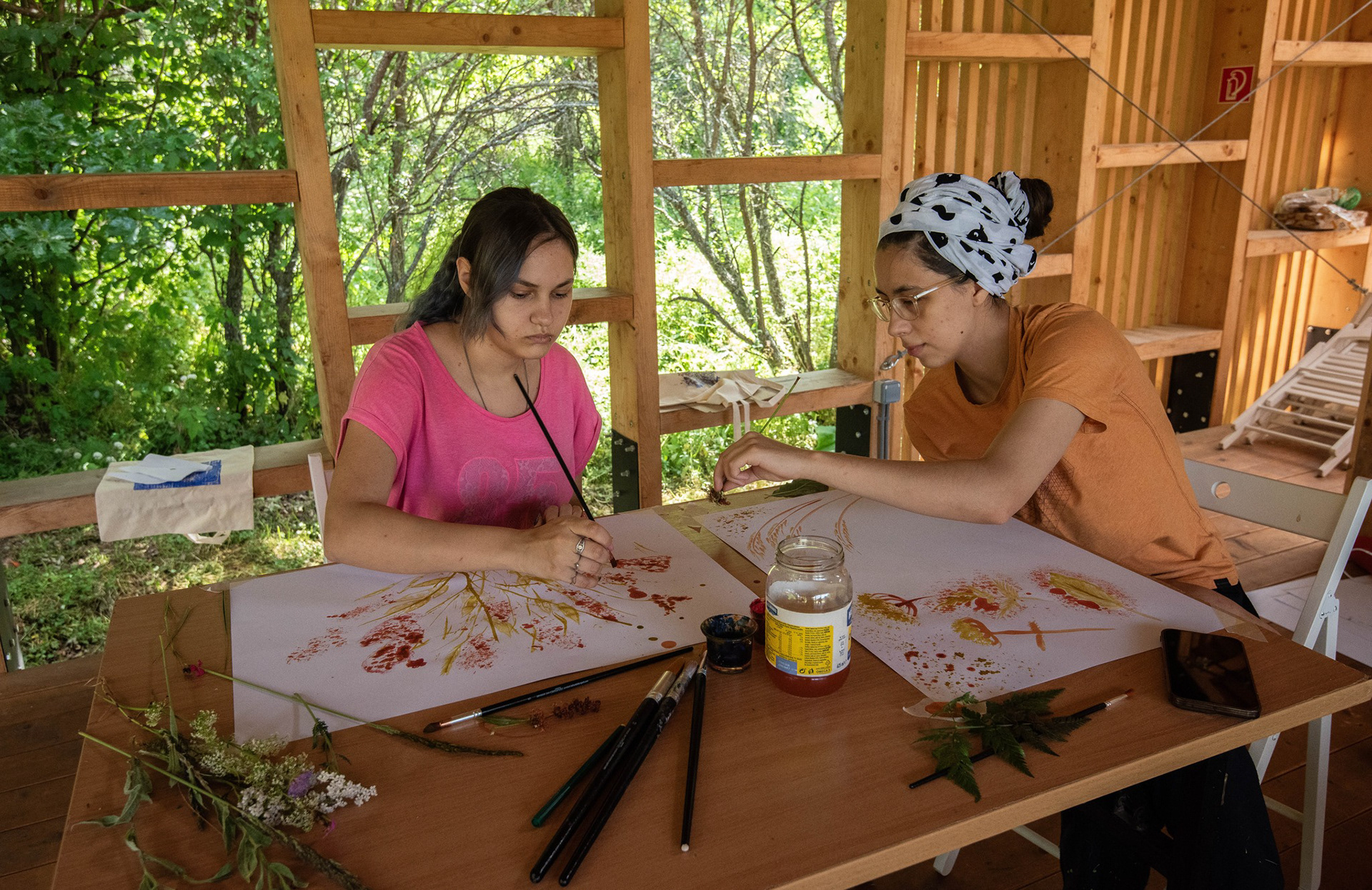
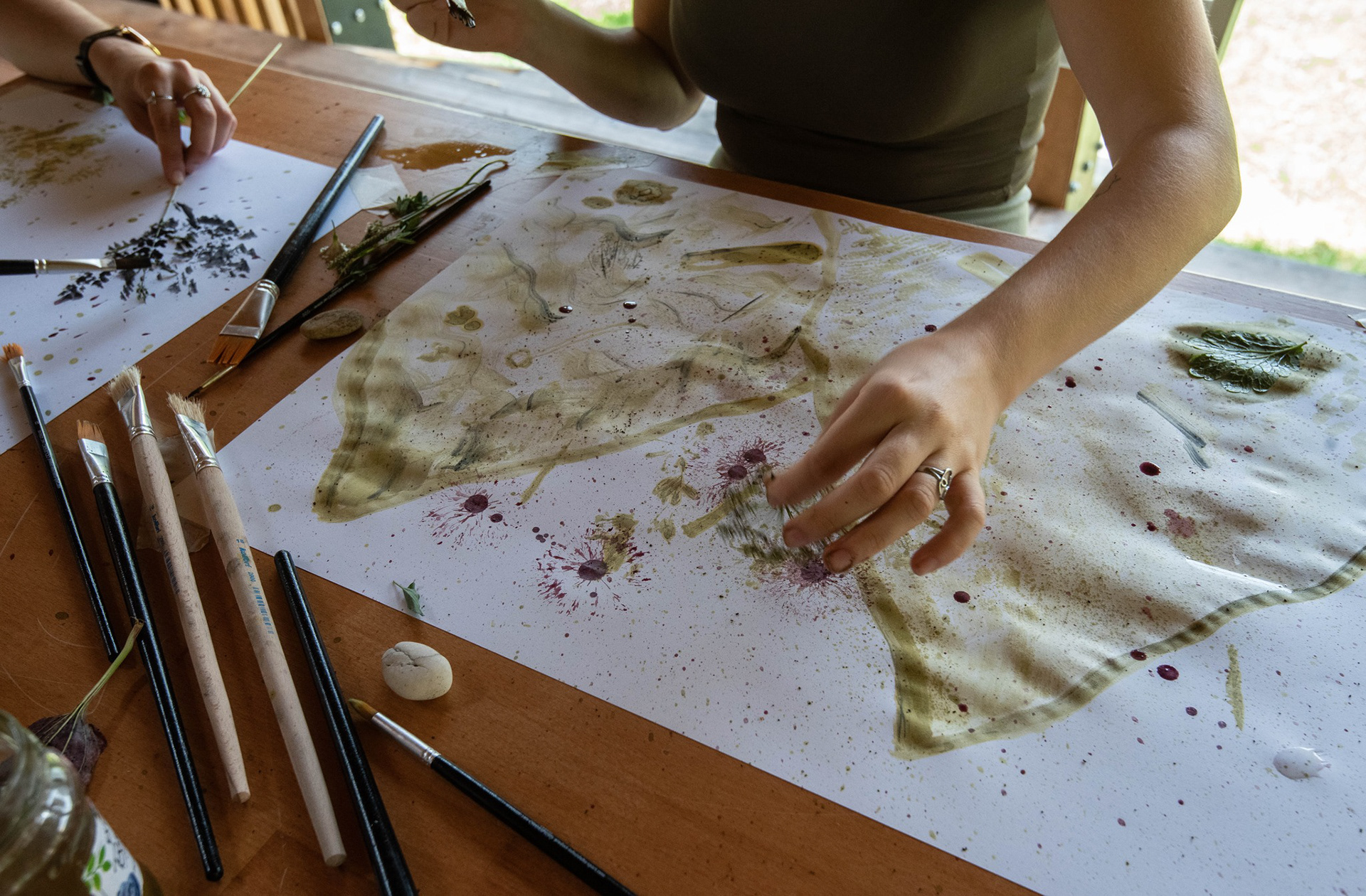
Unlike acrylics or oils, natural dyes behave like watercolors with a soul of their own. Kristína guided participants in understanding how these organic pigments soak into the paper, fade, or intensify as they dry.
Unlike acrylics or oils, natural dyes behave like watercolors with a soul of their own. Kristína guided participants in understanding how these organic pigments soak into the paper, fade, or intensify as they dry.
Phase 3 — Creating in the Flow:
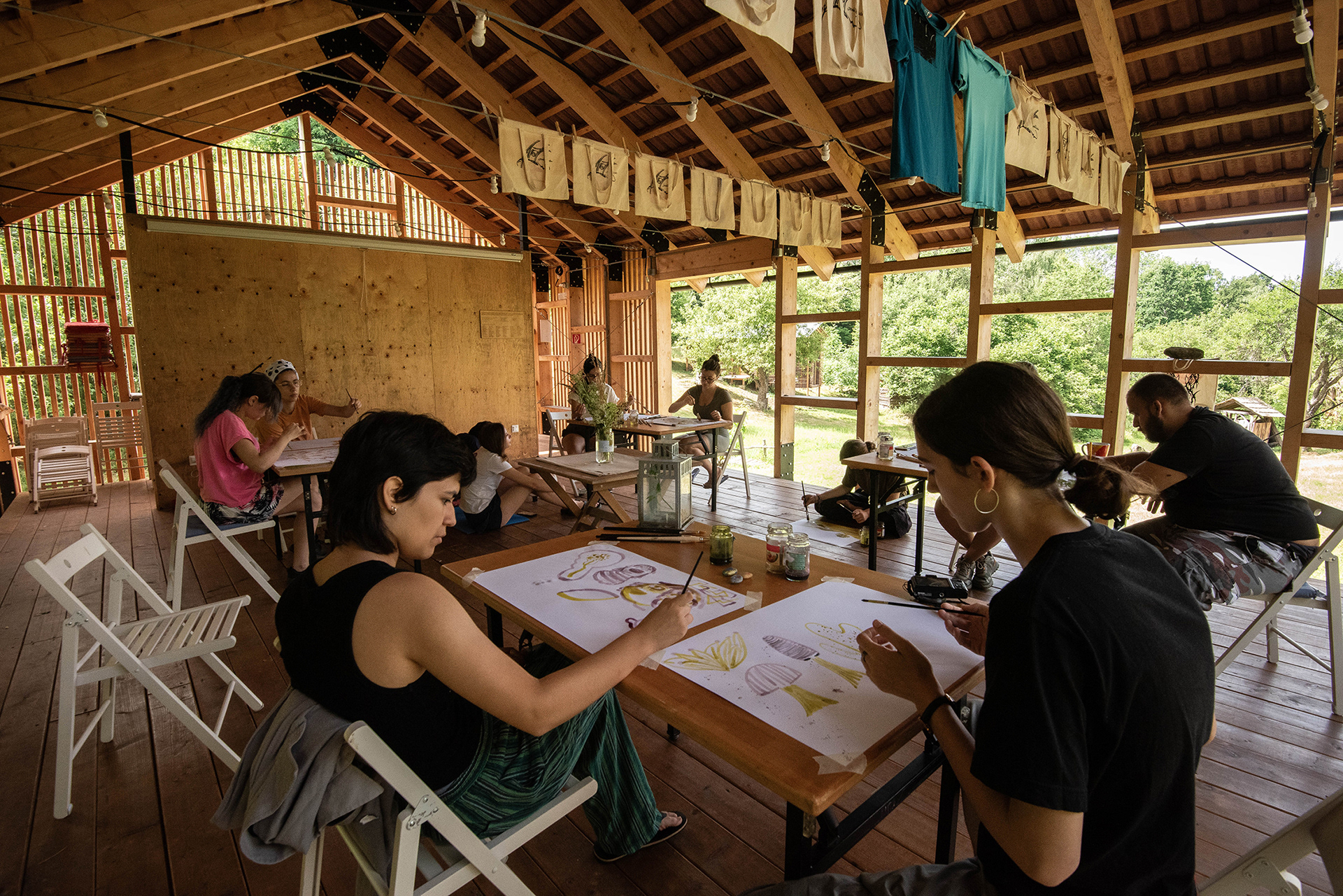
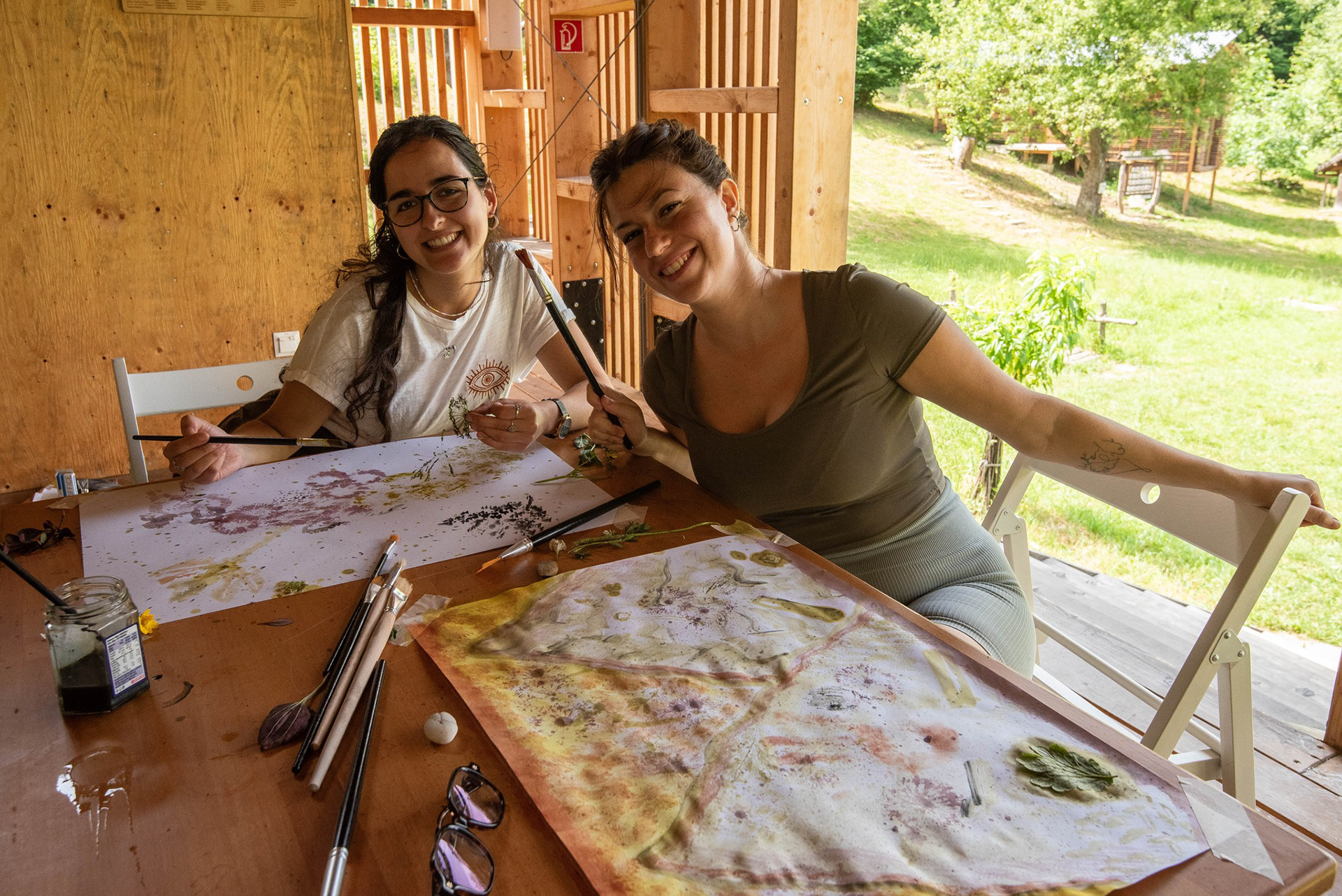
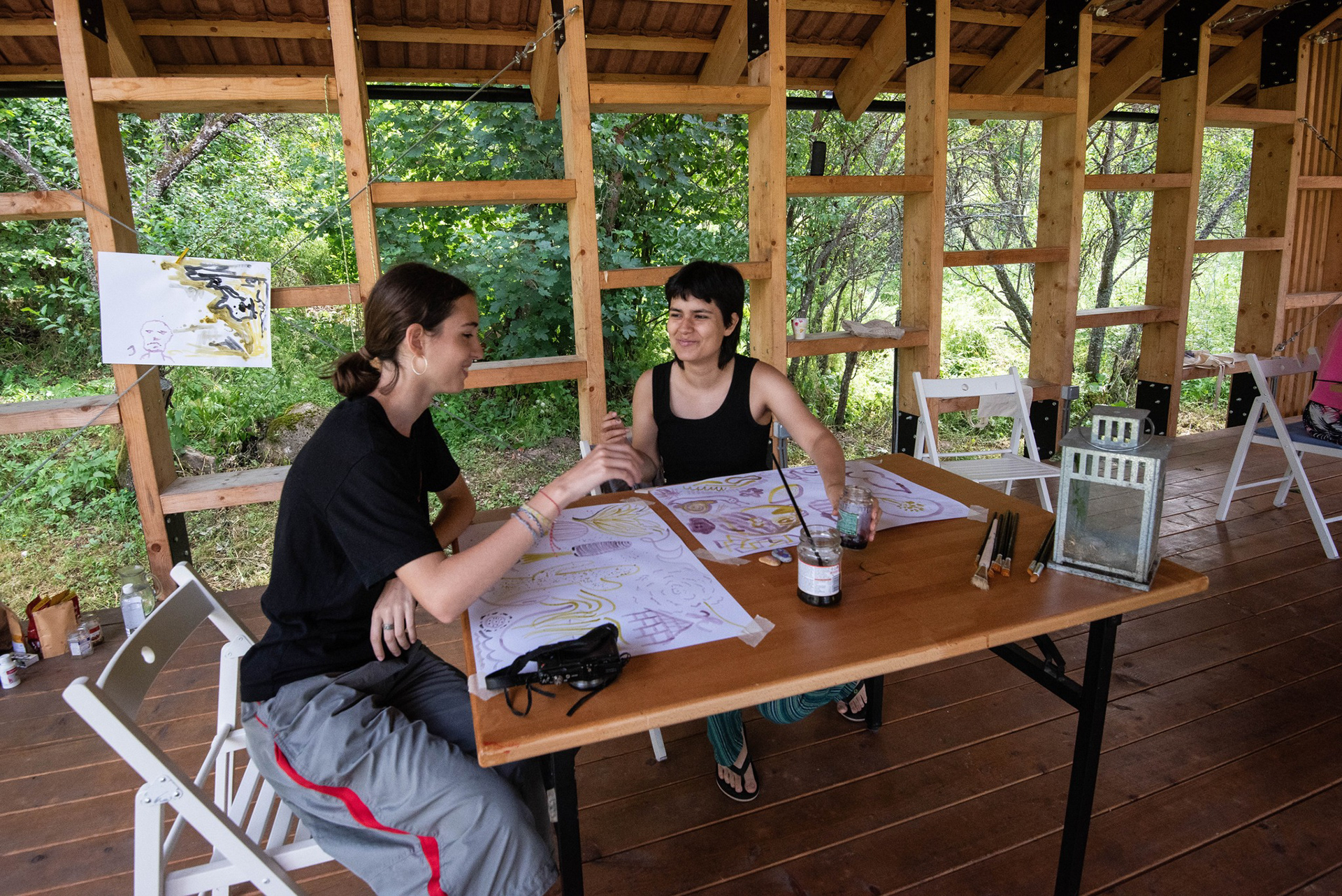
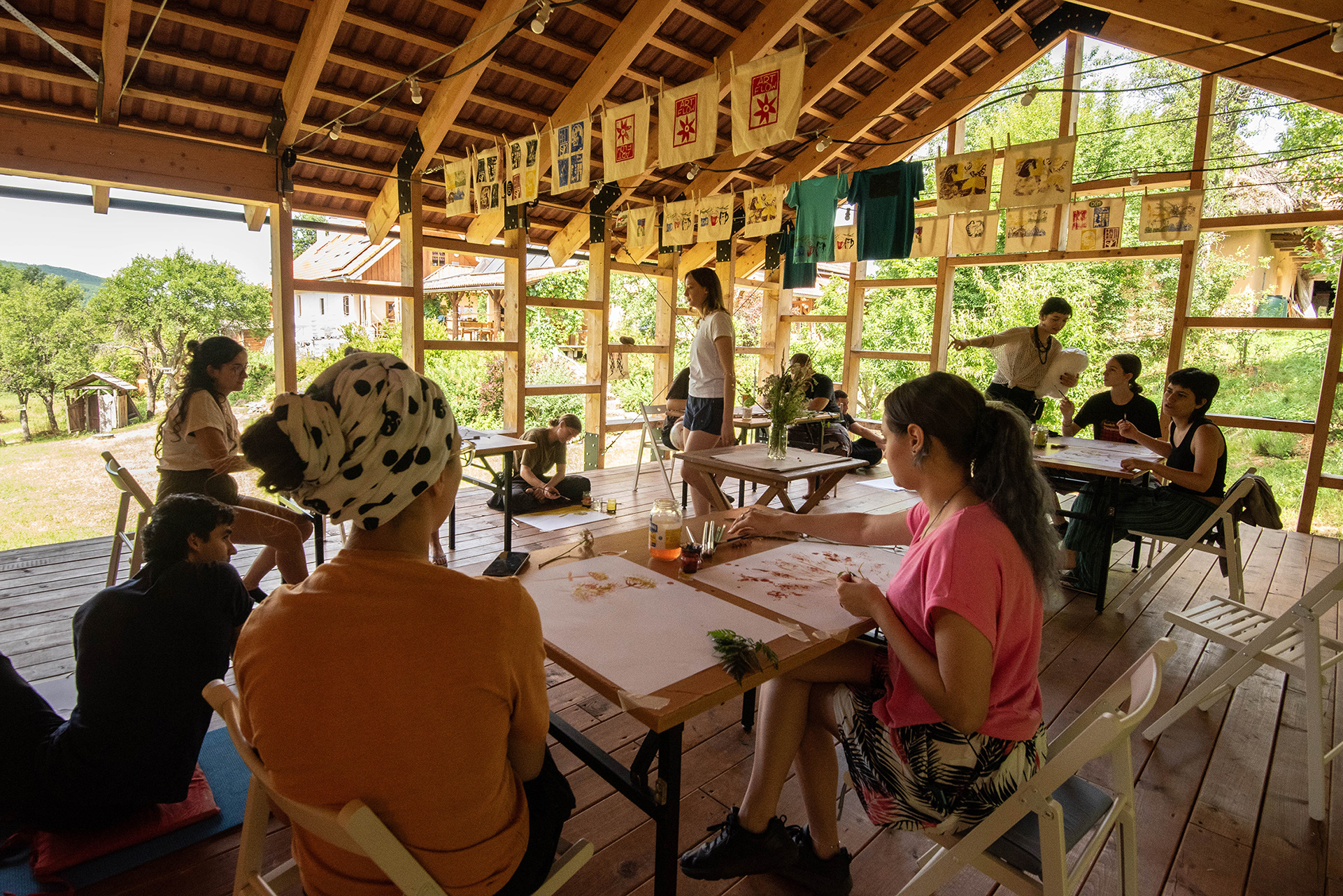
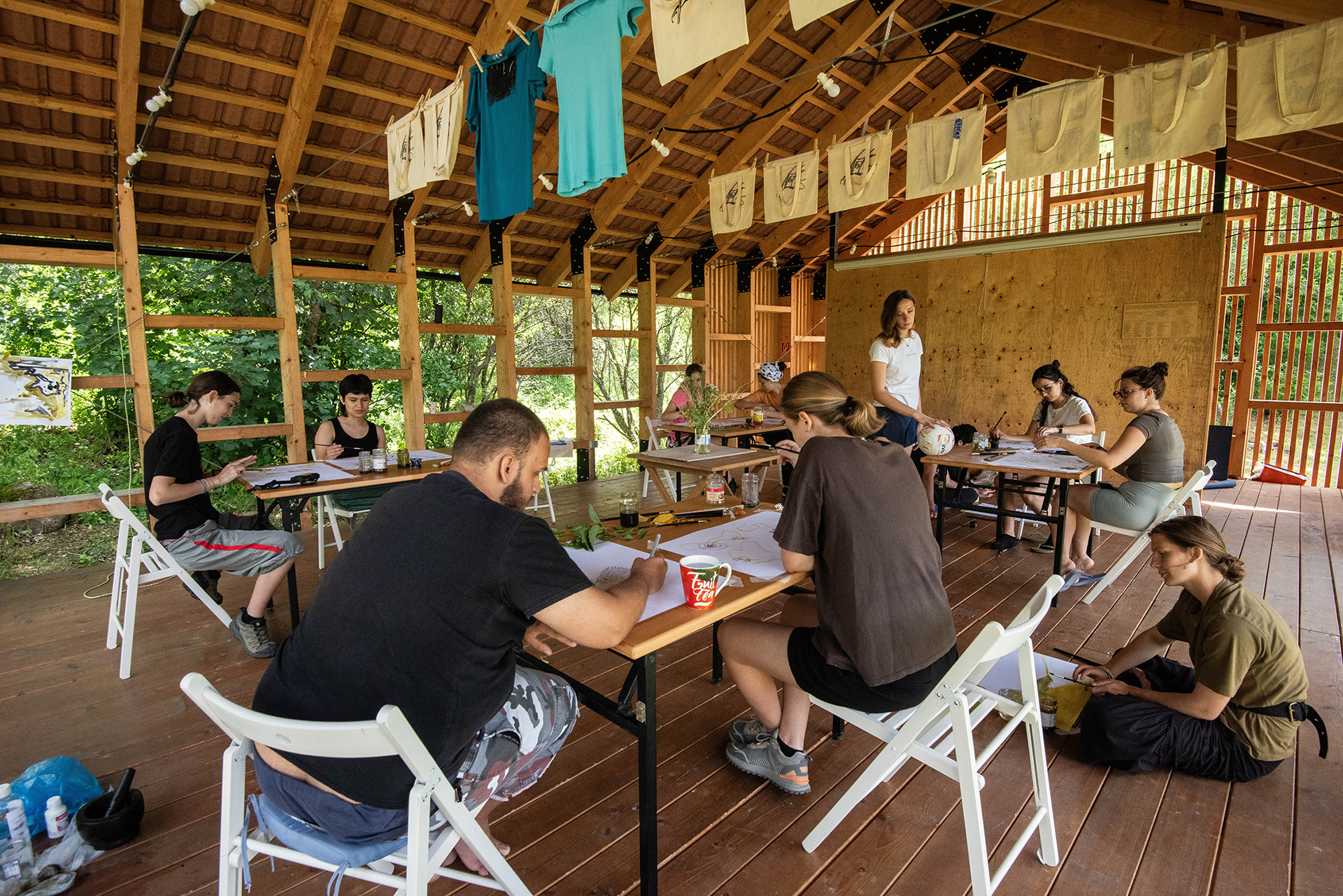
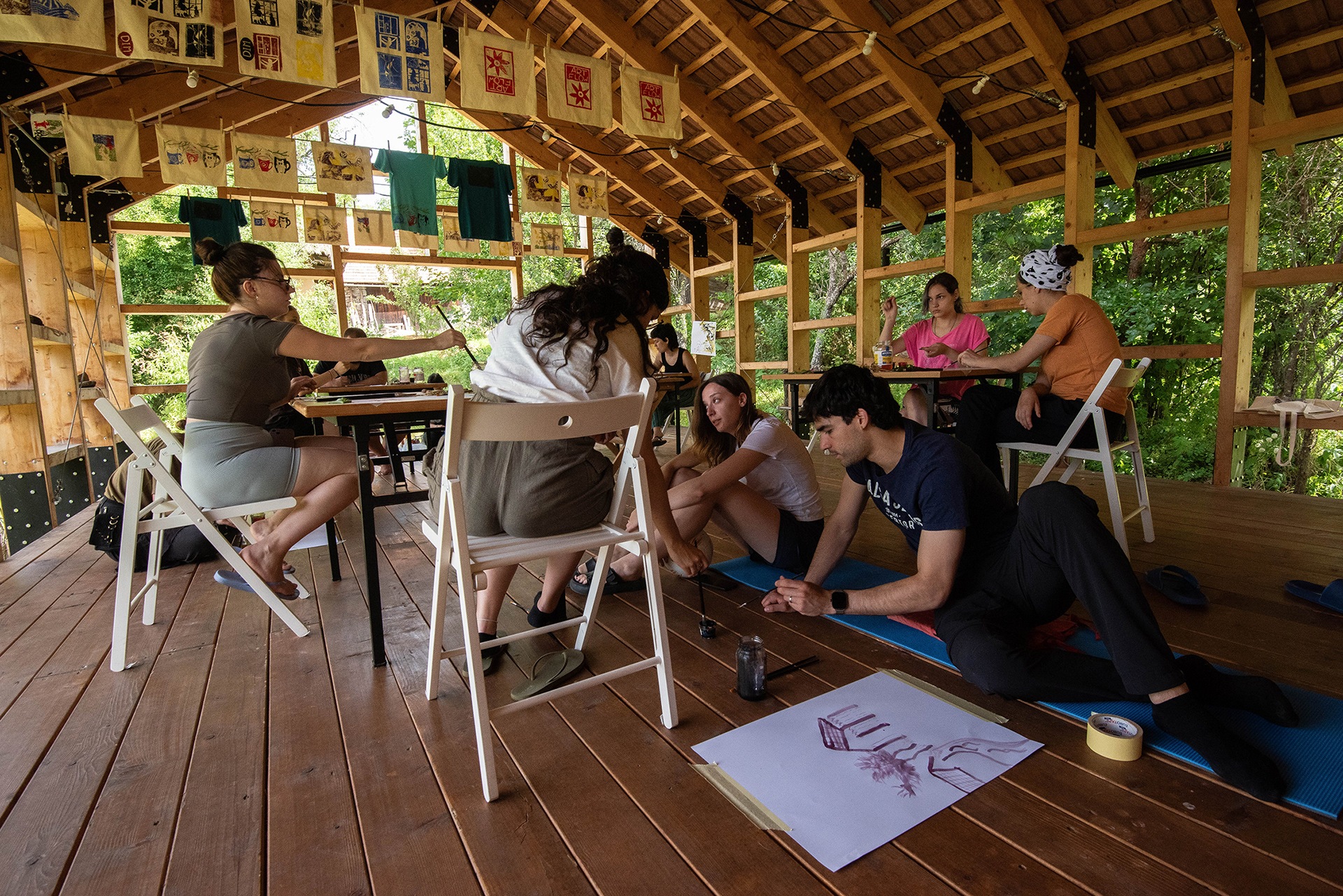
Spread across the wooden deck of the pavilion, participants began their compositions. Many focused on the surrounding landscape, using the very colors of the garden to paint the garden itself. The atmosphere was one of quiet concentration and shared discovery.
Spread across the wooden deck of the pavilion, participants began their compositions. Many focused on the surrounding landscape, using the very colors of the garden to paint the garden itself. The atmosphere was one of quiet concentration and shared discovery.
Phase 4 — The Open-Air Gallery:
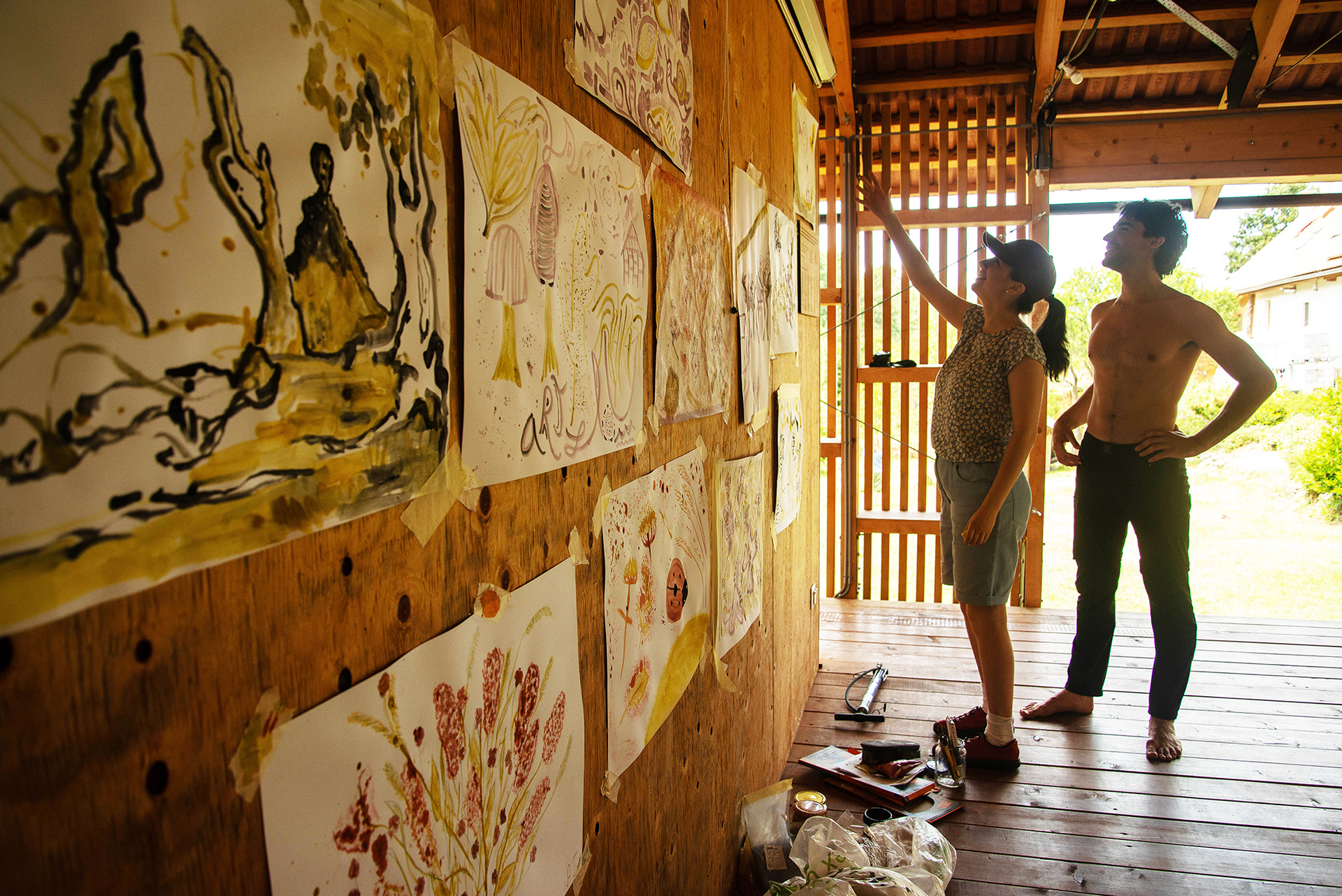
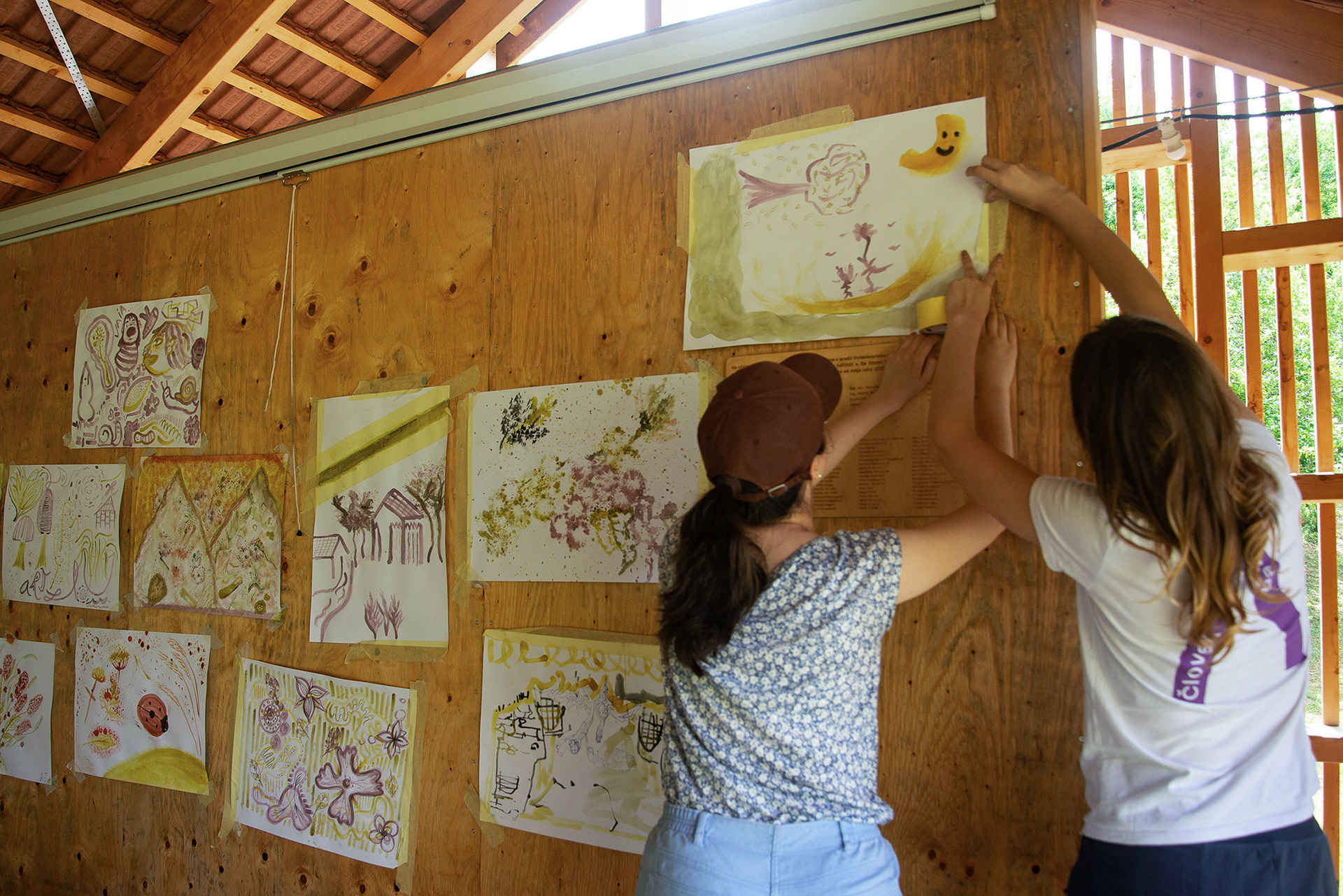
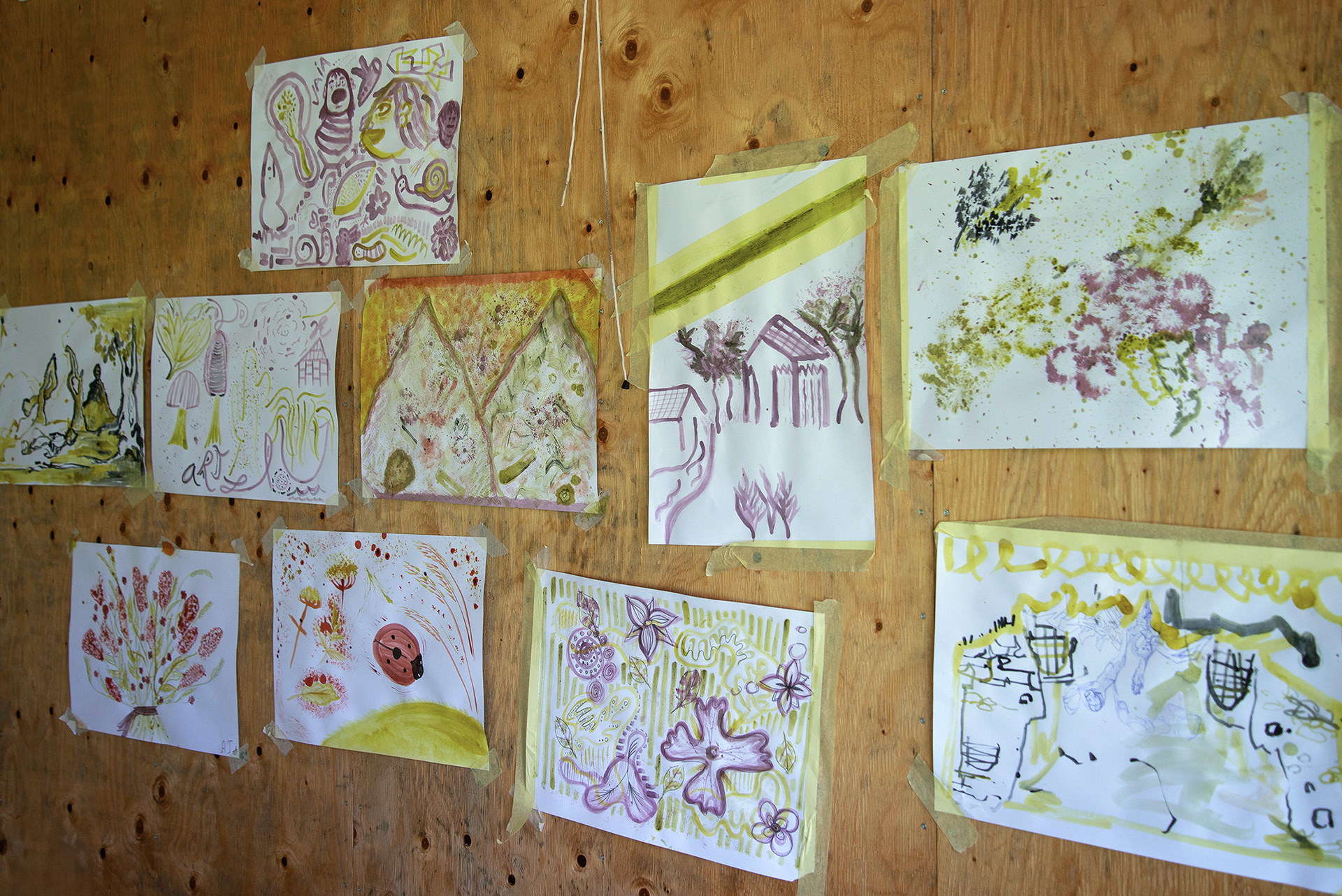
As a final step, the wet paintings were hung and taped onto the wooden walls, creating a collective exhibition that documented the unique "color DNA" of the project location.
As a final step, the wet paintings were hung and taped onto the wooden walls, creating a collective exhibition that documented the unique "color DNA" of the project location.
Results & Impact
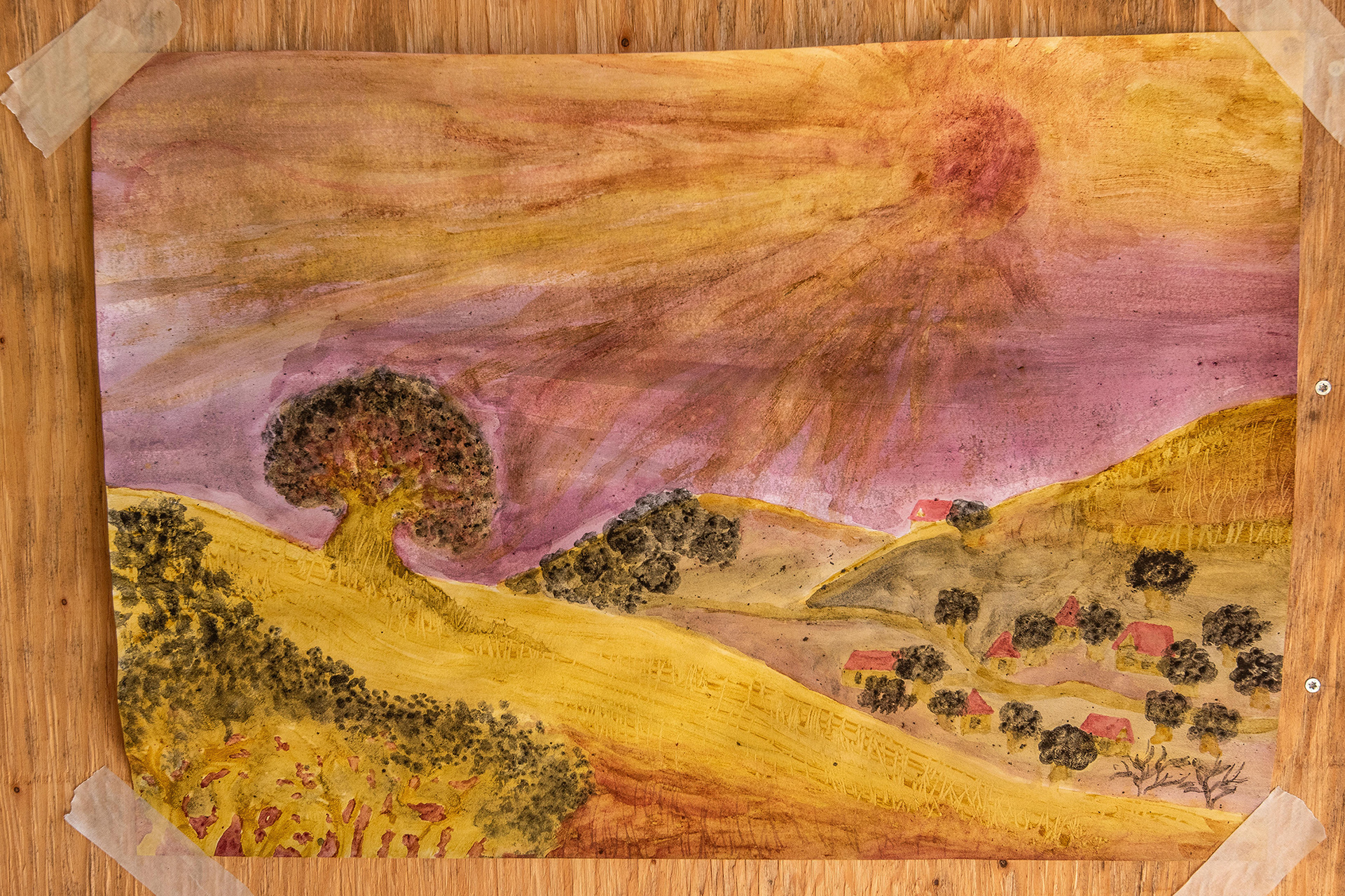
🌿 Eco-Art Portfolio: Each participant created a unique painting — a personal interpretation of nature captured through colors derived from nature itself.
🌿 A New Perspective on Nature: Participants learned to identify plants and materials in their own environments that can be used for artistic purposes.
🌿 Interdisciplinary Learning: The workshop merged chemistry (pigment extraction), biology (botany), and fine arts.
🌿 Sustainable Legacy: The session proved that high-level artistic expression is possible without relying on industrial art supplies, aligning perfectly with the European Solidarity Corps' values of sustainability.